Features

Dark Departure (Night Flying)

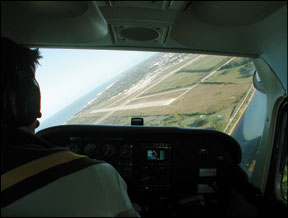
These pages often explore the differences between flying during the day and at night. Weve also been repeat offenders when it comes to emphasizing recent experience with a proposed operation and cautioning about allowing a four- or five-digit number of flight hours cloud our judgment. Despite our wishes to the contrary, its all too frequent when a single event highlights all three of these accident-causing factors. At night, of course, the eye can play various tricks on us. These include false depth perception and autokinesis, where a stationary light appears to move. But even more universal and insidious is our frequent inability to discern the natural horizon at night. Put another way, when flying over remote, unlighted areas, the lack of a natural horizon can make VFR flight problematic at best, and hazardous at worst.
Read More »

Turning Back, Again

Recently, the AOPA Web site featured a video shot by Mooney pilot Dave Keller of an eventful takeoff. Unfortunately, the engine in Kellers Mooney failed shortly after liftoff on February 6, 2009. Fortunately for both the pilot and us, he had set up a video camera to record the flight. Equally fortunate, he was taking off from his home base, and was very familiar with the runway layout and the airplane. Keller turned back to the departure airport, where he managed to land, deadstick, on a different runway. He emerged uninjured and the airplane was undamaged. The video presentation is available online at http://tinyurl.com/yev96er.

Read More »

How Rain May Affect Aircraft Performance

To my mind, only a couple of decent reasons exist to fly through rain: First, because your destination is out there in or beyond the precip-and its light rain and not far through it, at that; second, because youre too cheap or lazy to wash the plane normally. Otherwise, rain stands among those conditions to not take lightly-and on many fronts, to be taken as a condition to avoid as much as possible. When you think about it systematically, a lot goes on with the airplane when exposed to rain and-aside from the possibility of improved cooling on a hot day-its difficult to conjure up much to commend rain flying to anyone. But, we know youre going to fly in the rain; we do, too, but begrudgingly and guardedly-or avoid it if the datalink weather returns show orange or red. So instead of saying, “Dont do what we do, have done, and will probably do again,” we offer five strong reasons to make you think about whats happening to the aircraft when flown in rain.

Read More »

The Mountain Pass And Ridgeline Venturi Effect

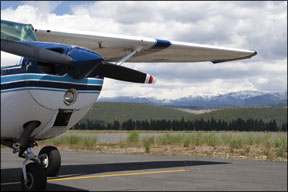
Mountain flying is one of the more challenging but rewarding types of aviation available to most pilots. The scenery is magnificent, landing on remote strips affords access to some of the least-trammeled locations on Earth and its rare to find much of a crowd. Whole books-and careers-have been based on the skills and knowledge needed to fly mountainous terrain safely. Indeed, the hazards of mountain flying in personal aircraft go far beyond what is normally taught to “flatlander” pilots in ground school. Most mountain flying caveats dwell on the vagaries of leeward hazards such as downdrafts, waves, rotors and resulting turbulence. The effects of temperature and altitude on aircraft performance also are part of this equation, as is the reduced power available when a normally aspirated engine is taken up to around 10,000 feet msl and the pilot forgets proper leaning. This is not one of those articles.

Read More »

Why So Many CFITs?

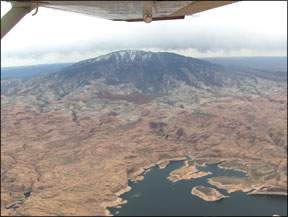
Theres one undeniable constant in aviation: All accidents eventually terminate by contact with the surface of the planet. We have various ways of describing how that contact occurs, thus the somewhat oxymoronic phrase “controlled flight into terrain,” or CFIT. This category of accident is an attempt to explain the unexplainable: why pilots so often fly perfectly functioning airplanes into the ground, killing themselves and all aboard. However anomalous the concept, the occurrence of CFIT is anything but. Pilots fly into the ground-terrain, trees, obstacles, water-nearly as often as they stall or lose basic control of the airplane. As we reported in our January 2010 article on the causes of fatal accidents, stalls lead the list, but CFIT is essentially tied for second, along with loss of control.

Read More »

Five Airspeeds Youve Got To Nail

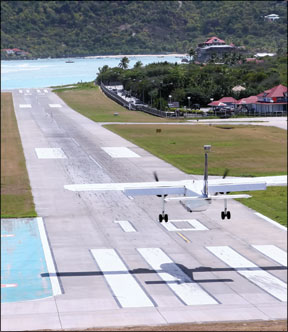
So much of operating personal aircraft is a numbers game: How many gallons of fuel are required, how many inches aft is the center of gravity and how many more minutes until we arrive? The automation available in todays avionics makes some of this childs play, but we still need to know how to do the basic computations, if for no other reason than the day our expensive panel soils the bed. The same is true for just basic stick and rudder skills, also. For example, there are several performance airspeeds that, when the need arises, youve got to be able to predictably attain. Some may be obvious, others perhaps not, and some reference speeds well address a little differently than you might have been taught. Unfortunately, recent NTSB accident histories show a growing trend away from proper airspeed control, so with that in mind, lets review five speeds youve got to nail.

Read More »

The New SFRAs

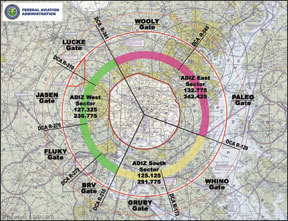
Airspace designations, along with what is and isnt permissible inside specific areas, are perennial sources of frustration and confusion among pilots of even considerable experience. Once ones understanding develops beyond the different classes and past special use airspace, theres always the issue of how to deal with airspace in which more and different rules or procedures apply. In recent years, special flight rules areas, SFRAs, have been created to ease the flow of traffic and prevent unsafe conditions at the Grand Canyon and at the Los Angeles International Airport (LAX). The dimensions, rules and procedures for these areas are clearly documented in various places, including FAR Part 93, the FAAs Airport/Facility Directory and the respective visual charts. (Its always helpful, of course, to ask local pilots about any tricks they may know or additional information necessary to safely operate in these and similar areas.) Meanwhile, two additional SFRAs were created recently-one over Washington, D.C., and the other at New York, N.Y. Both were created in the aftermath of significant events and demand pilots planning to operate in or near them become familiar with their requirements.

Read More »

Missed Expectations

Way back when I was training for the instrument rating, I was enraptured by the entire concept of operating an aircraft without visual reference to the world outside. Part of that love affair-which continues today-had to do with the elaborate rules and procedures designed both to keep the airplane and its occupants out of the weeds while ensuring everyone associated with its operation knew what to expect. For the average VFR-only pilot contemplating the instrument rating, theres a lot to learn-and by no means do I know it all-but theres also a very clear philosophy behind it. Once the underlying rules are understood, the actual flying often is easier than doing the same trip VFR.

Read More »

Failure To Multitask?

Whenever Im around non-pilots and the subject of personal aviation comes up, the conversation inevitably turns to the skill set one needs to safely operate an aircraft. (Im sure this is nothing new and has happened to you.) My generic answer is something to the effect of if you can drive a stick-shift car, you can fly a fixed-wing airplane; the motor skill requirements are pretty much the same. Of course, thats not the end of it, especially if youve never driven a stick but have several thousand hours of flight time; in addition to the requisite motor skills, pilots also must be able to prioritize tasks, often performing one or more simultaneously. An example of the latter might involve maneuvering in a traffic pattern while conversing with ATC over the radio and changing the engines power setting, all at the same time. When the smoke clears, its not unlike downshifting, braking and turning a stick-shift car, all at the same time.

Read More »

Pre-Heating You Engine Increases Flight Reliability

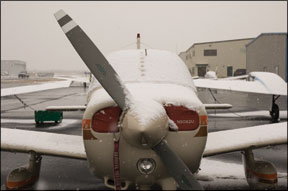
Its been several years now since I inflicted this on the poor thing, but somewhere out there is a Piper Archer II it once took me and a friend several tries to get started one cold, wintry day outside Washington, D.C. A lineguy came by, aimed a torpedo heater into the engine cooling inlets for a couple of minutes apiece, charged us a bunch of money and left. After a few more tries, wed managed to frost the plugs, so we decamped to the FBO for hot coffee. Thirty or so minutes later, we tried again and finally got a start. Based on what I know now-I knew very little about engine or aircraft pre-heating back then-none of what we did could have been good for that engine.

Read More »
Pilot in aircraft
Sign-up for newsletters & special offers!

Get the latest stories & special offers delivered directly to your inbox.

SUBSCRIBE