Commentary

Power And Pitch

If youre like me, youve been watching the ongoing saga of Boeing and its 737 MAX. The gist of it for our purposes is that the new MAX versions of the 737 are powered by larger-diameter engines than the type was originally designed to accommodate. Since the 1980s-when Boeing switched from the types original low-bypass Pratt & Whitney JT8D engines to the CFM International CFM56-the reduced ground clearance when mounting high-bypass powerplants featuring improved fuel economy has required flattening the bottom of the cowlings. It was cheaper and easier than redesigning the landing gear, which is too short to accommodate the larger engines.
Read More »

Flying Your Propeller

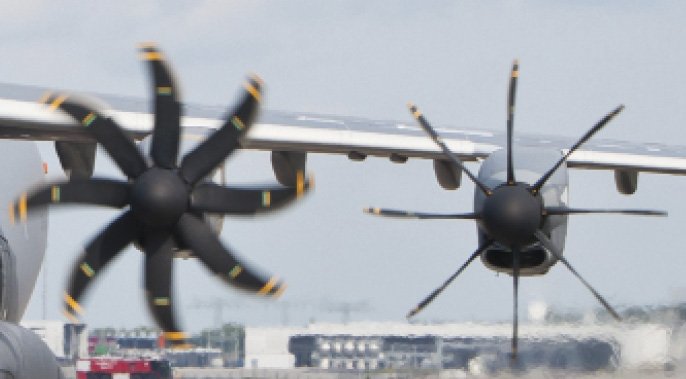
Remember that propeller blades are airfoils moving in a plane different from and usually perpendicular to the direction of flight. As an airfoil, the amount of lift the blade creates when moving through the air depends on its angle of attack, and its angle of attack-plus drag-can depend on a variety of factors, including the airplanes pitch attitude. Remember, too, that the outer portions of long prop blades move faster-they cover greater distance in the same amount of time-than shorter ones.

Read More »

Aircraft Shipments, Billings Up For 2018

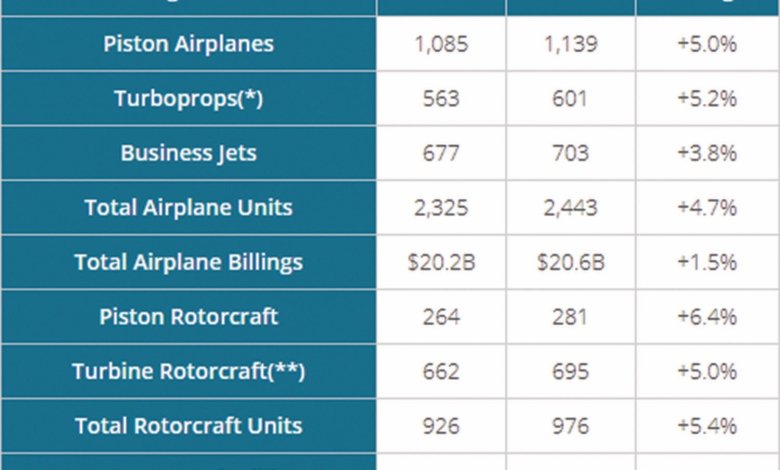
Last year was a good one for general aviation manufacturers. According to the airframers trade association, the General Aviation Manufacturers Association (GAMA), global airplane shipments increased 4.7 percent in 2018, to 2443. Billings-what you and I pay for a new aircraft-increased 1.5 percent, from $20.2 billion to $20.6 billion. Meanwhile, worldwide rotorcraft shipments also rose-by 5.4 percent-from 926 to 976 units. The only disappointment in the year-end was that rotorcraft billings decreased slightly, by 0.7 percent, possibly reflecting growing demand for less-expensive training helicopters.

Read More »

NTSB Reports

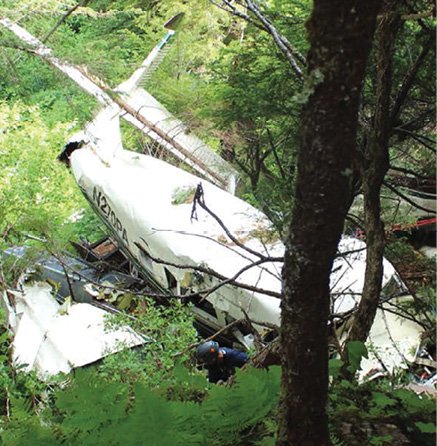
Upon raising the landing gear after takeoff, the gear motor continued to operate longer than normal, and the pilot heard an abnormal sound toward the end of the sequence. The right main gear was hanging at about a 45-degree angle, and the left main gear was not visible. The pilot completed the appropriate checklists, without change. The pilot declared an emergency and ATC confirmed during a fly-by that the main gear was not extended. During the landing, the nose gear remained extended and the two main gear were retracted. The airplane came to rest on the runway and the passengers egressed without further incident.

Read More »

The Transactional Pilot

The advent of the direct to GPS button, which allows us to fly a straight line between two points, was instant gratification for efficiency-loving pilots, especially since IFR flights no longer needed to fly inefficient tinker-toy flight paths connecting VORs as long as ATC cooperated. But instant gratification also came with instant risk tradeoffs. The biggest of them is not obvious until you look beneath the magenta flight path where there might not be many, or any, airports.

Read More »

Disoriented Scans

Fine article about bounced landings. Preventing them should be primary but when we do get a bounce, for some airplanes the recommendation is not to save the landing but just to go around. A number of years ago, there was a series of fatal Cirrus bounced landing accidents. Im not sure if there were official findings that gave common cause, but one theory was that the fixed landing gear acted like a pogo stick and was unforgiving of too much energy on touchdown. The finesse that you describe to salvage this type of bounce was not easily done by some pilots.

Read More »

Shut Down

The recent partial shutdown of the U.S. federal government had a far-reaching impact on aviation, thanks to its parent Department of Transportation (DOT) being one of the agencies lacking an enacted appropriations bill for the current fiscal year. Since related agencies are tacked onto DOT spending bills, the NTSB also closed for the duration, delaying ongoing investigations and postponing new ones. (Our monthly listing of preliminary accident reports might look a bit strange until the NTSB has caught up with the backlog.)

Read More »

Express Elevator Up

As the morning waned, the weather picture improved greatly, with only scattered showers and clouds over the Mojave Desert and clearing over the west side of the Tehachapi Mountains. We ended up filing to go over Victorville and into Bakersfield to visit family. Soon, we were cruising in VMC at 10,000 feet and looking at the activity over the Mojave. Ahead, there were Pireps for icing above 8000 feet, so we asked for and received routing over Edwards AFB at 6000. Based on what we saw visually and on the FAAs flight information system (FIS-B), we thought we were well out of danger.

Read More »

Engine-Failure Risks

It fascinates me that many GA pilots of single-engine airplanes cruise at such low altitudes. Theyre apparently oblivious to the fact that they are flying behind a single engine and if it fails you are on short final to somewhere! Extra altitude not only increases your radius of action, it also adds extra time for trouble shooting (which might eliminate the initial problem altogether) and increases the probability that a Mayday call might be heard. The side benefits include greater aircraft efficiency, cooler temperatures in the summer and possibly a smoother ride, in addition to less-congested airspace. Those long, low, flat, power-on final approaches can put you in the trees if your engine even coughs on short final. Keep a little energy in the bank and make it SOP to shoot for a reasonable aiming point on the runway.

Read More »

Lack Of Peer Pressure

When I was a student pilot, I was lucky to have some grizzled mentors. There were a lot of do this and dont do that admonitions, a lot of tips regarding shortcuts and rules of thumb, plus some sage advice about decision-making. A lot of that advice could be broken down into the old Its better to be on the ground wishing you in the air than to be in the air wishing you were on the ground genre, but it was often accompanied by a Let me tell you what I learned the hard way kind of introduction.

Read More »
Pilot in aircraft
Sign-up for newsletters & special offers!

Get the latest stories & special offers delivered directly to your inbox.

SUBSCRIBE