Airmanship

Squaring Off

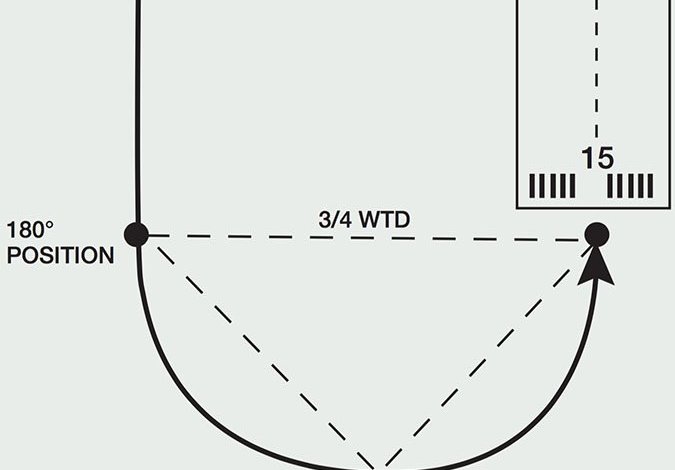
Ive never thought too much about traffic patterns. Turn left or right, fly downwind, turn left or right again. Align with the runway. Land. Or not, since tower controllers may have their own idea of traffic management. The basic idea, of course, is to maneuver the airplane so you can glide to the runway under partial power and execute one of your greasers of a landing. Depending on where you fly and how good (bad) the controllers are, regularly flying a rectangular pattern to land may not be something youve done lately.

Read More »

Circular Approaches?

I own and fly a Cessna 172, and a curved pattern (Circular Patterns, March 2017) would not be an advantage as I would not see the runway until I came out at the end of the turn. I realize the military used this approach but as you know they have very few high-wing aircraft. Also, you would not be able to see if another aircraft cut you off until the last moment. Why change something that has been working just fine?

Read More »

NTSB Reports: March 2017

After taking air samples at various altitudes, the airplane was returning to its base and overshot a turn to the Runway 36 localizer. Shortly thereafter, the pilot reported an on-board fire. The airplane, which was at 1700 feet, lost altitude rapidly and radar contact was lost. The accident site was consistent with the airplane striking the ground at a high velocity, low angle of impact in a left wing slightly low attitude. There was a ground fire after impact.

Read More »

Revising Slow Flight

By now, U.S.-based flight instructors and training organizations should be fully up to speed on last years formal implementation of the airman certification standards (ACS), which is designed to eventually replace all practical test standards (PTS). For now, only the private pilot and airplane instrument rating checkrides employ the ACS, but more are coming. The new standards went into effect June 15, 2016-if youre in the primary training environment and dont know about the ACS, you havent been paying attention.

Read More »

Winter Weather Patterns

Winter is upon us. This doesnt mean we have to strike a baleful note of doom, though it should remind many of us that winter generally brings more cloudy skies to North America. In 2015, an Alaska-based climate blogger, Brian Brettschneider, examined cloud coverage data from selected weather stations in the National Climate Data Center’s (NCDC) Global Historical Climatology Network (GHCN). He created a series of maps showing the cloudiest parts of the U.S., the distribution of cloud cover by month and the cloudiest months for each first order reporting station.

Read More »

5 Ways to Crash an Airplane

Lately, the general aviation community has focused, quite correctly, on the very preventable loss-of-control in-flight type of accident (LOC-I). Too many people somehow manage to bend an airplane-or worse-each year basically because they forget to fly it. Its a broad category, and includes a mix of accident causes, from low-level maneuvering, to VFR-into-IMC and to multi-engine training operations. As complex and dynamic as the LOC-I category is, it most assuredly doesnt include the full range of things pilots do to make the accident reports. For example, a look at the other category of pilot-related accidents, as broken down by the AOPA Air Safety Institute (AOPA ASI) in its 25th Nall Report, highlights some other areas where pilots regularly make contributions to the aviation-accident records. Here are five of them, not related to LOC-I.

Read More »

No Noticeable Damage

I read your magazine every month and have never written a letter on an article in my life, but will now. In the December 2016 issue, the first NTSB report involved a Vans RV-6 Experimental. The report states the commercial pilot and passenger were fatally injured; the airplane was destroyed…there was no noticeable damage to the fields corn stalks. Really? Someone should care about the corn stalks? Everything else was destroyed, including lives, but the corn stalks made it!

Read More »

Emergencies Are Analog

Over the years, Ive had my share of urgent situations, events that were abnormal and required ending a flight in a fashion other than was planned or performing a checklist from the flight manuals emergencies section. These events never really turned into full-fledged emergencies, but emergency is defined by the person experiencing it. Most of us have experienced such episodes-peaking oil temperature, a rough-running engine, an unsafe landing gear indication. The outcome is more likely to be frustrated phone calls from unfamiliar airports, plus unscheduled underwear changes, than an accident report.

Read More »

Wired

During a routine inspection, the technician noted the strobe lights would remain on after the switch was selected off. Troubleshooting revealed the switch to be defective. Removing and disassembling the switch revealed the solder joint holding the braided wire had broken and welded itself to the line post. Switch was replaced IAW AD 2008-13-17 in May 2009.

Read More »
Pilot in aircraft
Sign-up for newsletters & special offers!

Get the latest stories & special offers delivered directly to your inbox.

SUBSCRIBE