Airmanship

Disappearing Runway

I was flying out of Boeing Field (KBFI), something I had done hundreds of times before. Tonights flight was to maintain night landing proficiency, so after making landings at a few airports in the area, the adventure started as I returned home in the dark. The wind was from the north, so the active runway was 31L. And because I was making the approach at night, I did what I always do: approach the runway from the north over Elliot Bay. As expected, I was assigned a left pattern to 31L.

Read More »

Finding The Airport

A student pilot in a Cessna 152 was flying from Denton, Texas, to the Ardmore (Okla.) Municipal Airport (KADM). During the trip, he obtained VFR flight following from ATC. At his last checkpoint, he was told Ardmore was at his 12 oclock and 10 miles. The student contacted what he thought was Ardmore Municipal Tower and reported his position. It is unclear from the report, but it appears that he may have entered the wrong frequency.

Read More »

Hacking VFR Flight Following

No matter what its called-flight following, VFR advisories or the FAAs official term, Radar Traffic Information Service-the radar-based assistance ATC provides VFR pilots to help them identify and avoid nearby traffic often can be a mystery to pilots. The reasons why are complicated- often involving lazy instructors and low-level training flights that rarely use ATC-but its not uncommon for a freshly certificated pilot to not know how to obtain VFR flight following.

Read More »

Know Thy Cargo

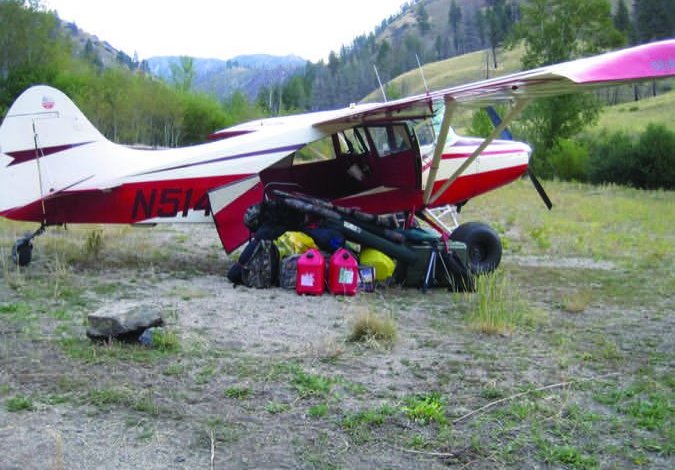
Out flying about here in Idaho, its amazing the kind of useful cargo that gets thrown into a typical personal airplane. Personally, Ive flown white gas, propane, butane, isobutene, bear spray, flares, magnesium metal, petroleum jelly-soaked cotton, windproof matches, fire starter, resin wood, radioactive materials, guns and ammunition. And thats just my emergency kit. I also usually carry (mostly) full tanks of aviation fuel and an engine filled with oil. You probably do, also.

Read More »

Download the Full May 2017 Issue PDF

For almost as long as Ive been flying, the general aviation industry has been in upheaval. By the mid-1980s, product liability concerns and tax law changes helped remove what was propping up things, and the bottom fell out. Among other outcomes, Cessna stopped making piston-powered airplanes altogether while other manufacturers discontinued numerous models, preferring to concentrate on one or two.

Read More »

Performance Margins

At one time or another, weve all passed an FAA knowledge test requiring us to calculate aircraft performance for various phases of flight, such as takeoff, cruise and landing. Even though weve been trained and tested on our ability to interpolate the answer down to the foot, mile, minute or gallon, these calculations alone dont ensure were always operating the aircraft prudently. For one thing, they dont account for poor technique, worn equipment or errors.

Read More »

Curved Approaches, II

There is nothing wrong with the traffic pattern as it stands today. Just like with the emphasis on AOA indicators, we are not concentrating on proper training, which is the only way to reduce LOC-I accidents. Your article on slow flight (Revising Slow Flight, February 2017) was a great example of what CFIs should be adding to their flight reviews and checkrides.

Read More »

More Changes Coming

For almost as long as Ive been flying, the general aviation industry has been in upheaval. By the mid-1980s, product liability concerns and tax law changes helped remove what was propping up things, and the bottom fell out. Among other outcomes, Cessna stopped making piston-powered airplanes altogether while other manufacturers discontinued numerous models, preferring to concentrate on one or two.

Read More »

Is This The Right Runway?

and may cause an aircraft separation standard to be compromised. The area may have a history of surface incidents or the potential for surface incidents. This may be due to any mix of causes: airport geometry; ground traffic flow; markings

Read More »

Download the Full April 2017 Issue PDF

There is a fundamental reason we perform preflight run-ups and engine checks before takeoff: It is a whole lot better to find problems at 1G, 0 feet agl and 0 knots airspeed than it is while airborne. Making sure a power- plant will work as we intend before taking off is just good airmanship. A good run-up doesnt mean every- thing is perfect, however, and we train for airborne engine problems, including full use of its controls and instruments. Sometimes, though, the problems were looking for dont reveal themselves when it is convenient for us, and we have to diagnose engine issues in the air. Urgently. And fly the airplane at the same time. It is not a comfortable experience.

Read More »
Pilot in aircraft
Sign-up for newsletters & special offers!

Get the latest stories & special offers delivered directly to your inbox.

SUBSCRIBE