Airmanship

NTSB Reports

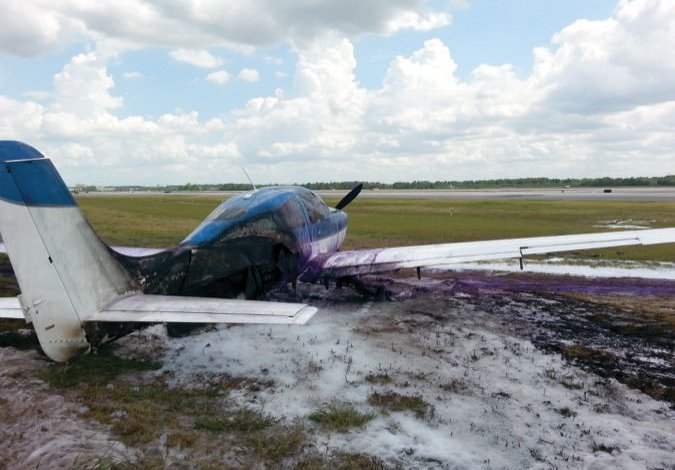
The pilot later stated he selected the landing gear handle to the down position, but the main landing gear did not lock in the extended position. He then selected the landing gear handle up, but the landing gear did not retract. After maneuvering away from the airport, an attempt to pump down the gear with the emergency hand pump was unsuccessful. An airframe-mounted mirror indicated the left landing gear was down. During the landing, the right main landing gear collapsed and the airplane veered to the right and departed the runway surface, coming to rest on the parallel taxiway.

Read More »

FAA Urges Best Practices For Turbocharger Exhaust

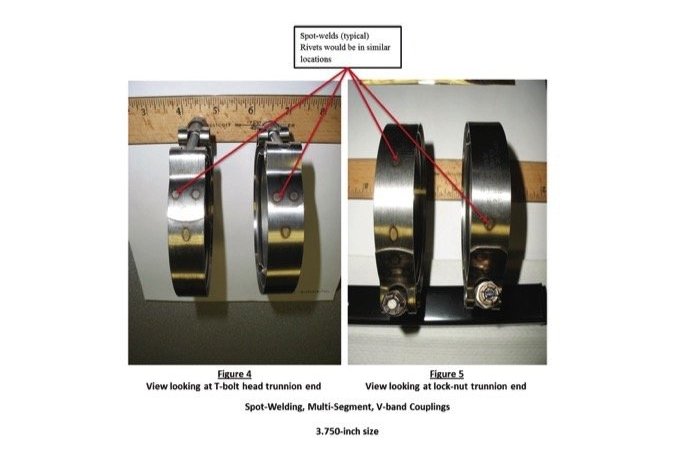
As part of its charter to help minimize GA accidents, the General Aviation Joint Steering Committee (GAJSC; see the article beginning on page 4 for background) earlier this year published a Best Practices Guide designed to ensure airplanes equipped with turbocharged reciprocating engines fitted with turbocharger to tailpipe V-band coupling/clamps, remain in their original type design configuration. It will also help to effectively manage the risk associated with the use of V-band coupling/clamps in this application.

Read More »

Real-World Takeoff Performance

1) A Piper PA-32R-300 Lance attempted to take off from a 3200-foot-long grass runway on a June morning with flaps retracted. It lifted off at the end of the runway, then descended into a shallow valley, touched down and lifted off a second time, before settling back to the ground and colliding with a barbed-wire fence. It was later determined to have been 188 pounds over its maximum gross weight with its center of gravity 0.15 inches aft of limits. Density altitude was about 1800 feet above field elevation.

Read More »

Ground Control

My flight instructor also lives in an airpark development, about 40 nm away, an easy hop. When we fly together, I generally taxi directly to her home. Past palm and pine trees, mailboxes, fences and…well, you get the idea. (Her trash gets collected on Fridays.) So Im no stranger to ground operations in close quarters. It could be said that I dont really know what to do with all the expansive, unobstructed pavement available for taxiing at real airports. Thats not to say Ill never taxi into something; thats always a risk.

Read More »

NTSB Reports

After maneuvering away from the airport, the Piper returned and executed a touch-and-go landing. Radar data indicate the airplane climbed to 900 feet msl at 80 knots of groundspeed before radar contact was lost. Witnesses observed the airplane flying normally, then saw the left wing separate from the fuselage, which impacted a field. Preliminary examination revealed the left wing main spar exhibited cracks from metal fatigue extending through more than 80 percent of the lower spar cap, and portions of the forward and aft spar web doublers. The right wing also exhibited fatigue cracks in the lower spar cap at the same hole location extending up to 0.047-inch deep. The 2007 airplane had accumulated 7690 flight hours since new. Weather at 0953 included wind from 260 degrees at seven knots, 10 statute miles of visibility and few clouds at 25,000 feet.

Read More »

Mooney Issues

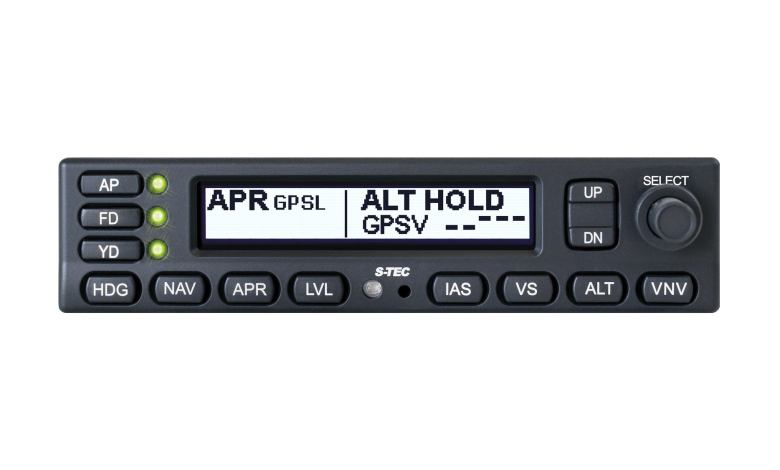
Pilot disconnected the (S-Tec 50) autopilot and hand-flew for several minutes. Shortly after initiating a descent to land, the ailerons began to seize. It took five to 10 seconds to lose aileron authority, followed by elevator authority. Pilot forced to make emergency landing with only a few degrees of operable aileron and elevator, but landed without damage or injury. Examination revealed the autopilot had re-engaged and the servo clutches had frozen.

Read More »

Twenty Miles?

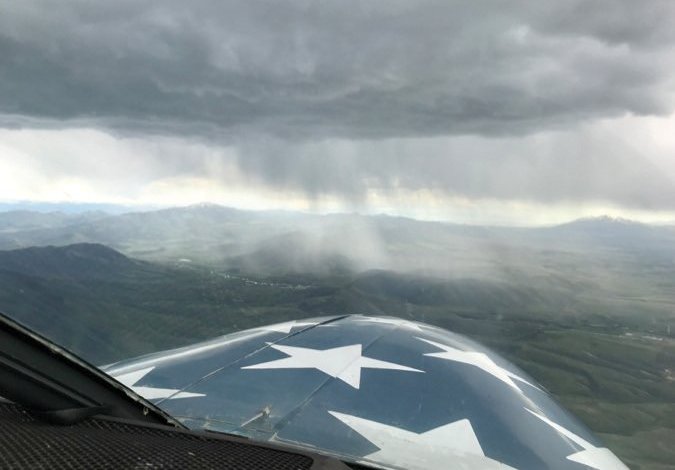
The 20-mile clearance policy is a safe number and probably easy to stipulate, but scale and definitions make it challenging. For every fully visible and developed severe thunderstorm, there are even more smaller cells or building storms that may or may not grow to thunderstorm level. Sometimes a curtain of rain is just a curtain of rain. Other times, it can be hiding something much bigger due to the lurking cumulonimbus that has built up above the overcast.

Read More »

Flight Review: Nuisance Or Opportunity?

Most pilots who fly single-engine piston airplanes in non-commercial operations do not undertake formal training at annual or other intervals. Instead, they are only required to complete a flight review from a certified flight instructor (CFI) every other year to fly as pilot-in-command. For most pilots, this is an exercise to be completed with as little effort as possible. Some pilots resent the requirement while a few even dread it. This doesnt have to be the case, however.

Read More »

Good To Go?

Regardless of what you fly, how its equipped, and how old or new it is, you eventually will encounter inoperative instruments and/or equipment during a preflight inspection. It can be something known to the operator and the maintenance department, or it can be something new. Once the inoperative component is discovered, you have to make a determination whether its legal to fly the airplane without repairs, and then decide if its safe to fly. The two are not the same.

Read More »
Pilot in aircraft
Sign-up for newsletters & special offers!

Get the latest stories & special offers delivered directly to your inbox.

SUBSCRIBE