Aircraft Analysis

Brave New World

Toward the back of the magazine youre holding in your hand, in our Quick Turns department, theres a news item about the FAA formally transitioning to the ICAO-standard/international flight plan form for all domestic non-military operations. If youve been paying attention over the last few years, as we have, youll be happy to know a process that has seen several earlier deadlines come and go seems to have finally staggered across the finish line. As of August 27, the international flight plan form is the law of the land, so to speak.

Read More »

Dude, Where’s My Clearance?

There are two basic ways to obtain an IFR clearance in the U.S. before departing a non-towered airport. One is to telephone Flight Service directly and get the clearance over the phone. Another is to use a remote communications outlet (RCO) to contact Flight Service or a ground communications outlet (GCO) to reach ATC over your aircrafts communication radio. In both cases, of course, youre likely to receive a clearance with a void time, since ATC cant see you on radar until youre airborne, and has to block off some portion of the airspace around your departure airport to ensure separation, at least until youre in radar contact.

Read More »

Preflight, Interrupted

The airline industry long ago figured out that one of the most dangerous things in aviation is two pilots trying to fly the same airplane at the same time. One inevitable result of such an arrangement is that there are times when no one is flying, and one of the ways we know this is from the accident record. Airlines evolved the pilot-flying/pilot-not-flying concept to acknowledge this characteristic of crewed cockpits and established clear responsibilities for each pilot.

Read More »

Managing Risk In Aircraft Certification

Most of my articles for this journal focus on managing the risk of flying piston-powered general aviation aircraft, with examples of good and poor risk management. But risk management is at least equally critical in the world of operating airliners and turbine-powered transport category aircraft. Recent air carrier accidents provide illustration and lessons relevant to operating small general aviation aircraft, especially when designing and certifying them. In fact, and just as during flight operations, the job of managing risk in the design and certification is to identify, assess and mitigate that risk. These procedures apply even more objectively when using rigid design criteria, especially when they involve transport category aircraft.

Read More »

Ill Be Missing You

We all know how to fly a missed approach. We probably did a handful of them on our instrument checkrides, and when were out practicing approaches, even in a sim, we most often go missed. We may not be flying a full missed approach procedure as published, but we still have to reconfigure the airplane and climb away. When were practicing, we know how the approach will terminate: by going around at the missed approach point. Its what we expect when practicing.

Read More »

Downwind Or Downhill?

Pilots are taught to take off and land into the wind, and avoid landing or departing with a tailwind. There is a reason: The performance penalty of a tailwind is much greater than the benefit of a headwind. How big a penalty? Go to your POH and calculate it. The most common figure is to add 10 percent to the takeoff or landing roll for every two knots of tailwind up to 10 knots. The specific penalty will vary based on a number of factors like runway surface, density altitude, and gross weight. Somewhere down in the fine print, you may see an additional penalty for runway slope. But often runway slope is neglected, because most runways are level.

Read More »

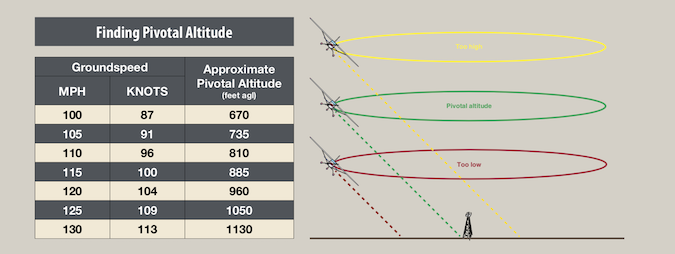
Finding Pivotal Altitude

A long-time pilot-friend of ours tells a story about his first check ride for the commercial certificate. Everything was going relatively well until the examiner asked him to perform the eights on pylons maneuver. His response was something along the lines of, Yes sir, thank you, sir, and what altitude would you like, sir? The examiner ended the check ride and told him to come back after talking with his instructor about pivotal altitude. When he did, he learned that the correct pivotal altitude for a given groundspeed allows a banked line of sight from the cockpit directly parallel to the lateral axis of the aircraft to the pylon, a stationary object on the ground. Our friend went on to be one of the first pilots to fly the Airbus A300 in the U.S., for Eastern Airlines.

Read More »

ELT Care And Feeding

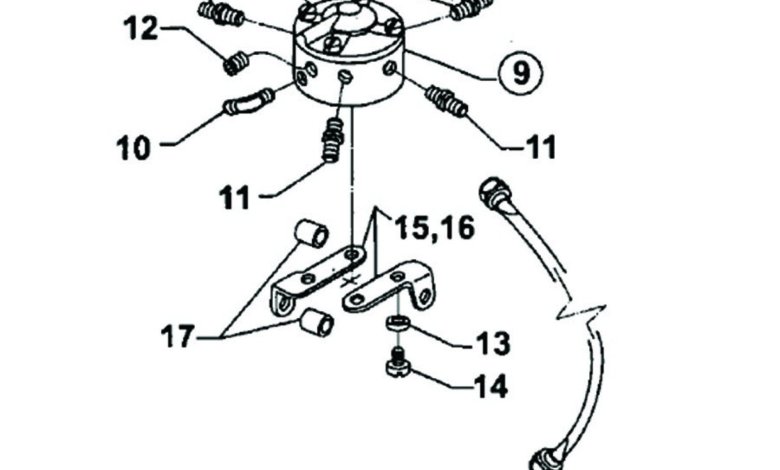
The SAIB is focused on ELTs from ACR Electronics, Inc. (ACR, formerly Artex Aircraft Supplies, Inc., and Chelton Avionics, Inc.), models G406-4, C406-1, C406-1HM, C406-2, C406-2HM, C406-N and C406-NHM. According to the agency, these ELTs may not transmit alert and location signals in the case of an accident involving an aircraft to which they are mounted due to an inoperative or a deteriorated G-switch. The SAIB states that an ELT mounted in a high-vibration environment, for example in the tail of a helicopter, could have its acceleration sensor deteriorate after having been subjected to high levels of shock and vibration for five years or more. The new SAIB recommends best practices for the inspection, modification and replacement of these ACR ELTs located in high-vibration environments. In our view, these recommendations can be applied to similar ELTs from other vendors.

Read More »

Navigation Failure

When we approached the centerline, she nudged me on the shoulder. I rolled the plane to where I thought the runway centerline was. At this point we were totally in the soup, and I was flying by training instinct. I saw the ADF needle swing to the rear, indicating wed passed the outer marker, and I initiated a standard approach descent of 500 fpm, as I figured that would keep us close to the glideslope.

Read More »

Fuel Injection Systems

After installation of a factory-rebuilt engine, a ground-run was performed. At all settings, the engine ran too rich, and adjustments had no effect. Aircraft was not airworthy. Removed fuel servo from engine, sent out for repair. Reinstalled fuel servo after repair, and engine performed satisfactorily. Returned aircraft to service.

Read More »
Pilot in aircraft
Sign-up for newsletters & special offers!

Get the latest stories & special offers delivered directly to your inbox.

SUBSCRIBE