Accident Probes

EAA Lauds Experimental Aircraft Safety News

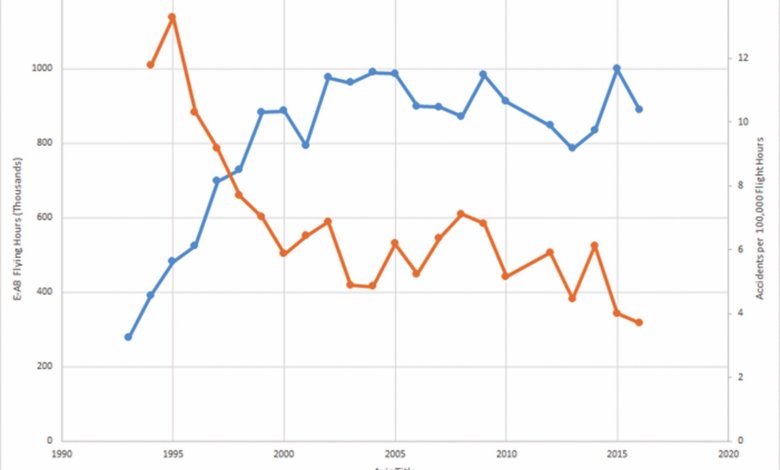
Experimental amateur-built aircraft in 2017 achieved their safest year ever, according to the Experimental Aircraft Association (EAA). The association based its findings on the recently finalized results of the FAAs 2017 General Aviation and Part 135 Activity Survey (GA Survey). Pilots of experimental amateur-built (E-AB) aircraft were involved in fatal accidents at a lower rate than has ever been recorded, with 2.63 fatal accidents per 100,000 flight hours last year, the association said. That fatal accident rate-2.63-breaks a record set the previous year, when E-AB pilots were involved in 3.6 fatal accidents per 100,000 flight hours, EAA added.

Read More »

NTSB Reports

A witness observed the airplane make a normal landing aligned with the runway centerline. His attention was momentarily diverted and when he looked back, the airplane was established in a gradual left turn, maneuvering at a slow speed in a three-point attitude. The airplane then collided with the airport perimeter fence and came to rest about 600 feet past the touchdown point. The pilot stated that, despite application of brakes and right rudder, the airplane veered off the runway. Damage included the right wing strut.

Read More »

Fixations

A pilot-buddy and I were flying two airplanes to the runway at Cape Hatteras, N.C., to spend the day on the beach. Both my rented Cessna 172 and his recently purchased Piper Warrior were loaded with people and gear for the trip, and we both had departed with restricted fuel. Wed hooked up en route at a prearranged time, location and altitude, and were chatting back and forth on the air-to-air frequency. Plan A was to stop in Elizabeth City, N.C., and take on enough fuel for each of us to get back to our respective bases that evening without stopping.

Read More »

Trajectories

As someone whos researched my share of aviation accident reports over the years, its frustrating to dissect those reports and pick out the various missteps made and the points at which a change in direction, a precautionary landing or other mitigation would have altered the outcome. Loyal readers of this journal understand that aviation accidents arent preordained and, instead, often result from a complex series of events occurring over time. Its often called the accident chain, a term recognizing how these events are linked. Often, individual events occurring in an accident chain, by themselves, would not result in a new accident report. The accident chain concept has great value, but Ive come to think of it as a trajectory instead of a chain.

Read More »

Full Frontal

As I gained more experience, including an instrument rating, my weather understanding never really progressed beyond those big three hazards, plus airframe icing as I logged more IMC. It was more a matter of convincing myself I didnt need that additional knowledge-Id already made up my mind that I wasnt going to fly in those conditions-than an outright refusal to learn more. On one of my first forays into IMC as the pilot in command, I learned a hard lesson on cold fronts.

Read More »

Two Guys In A Learjet

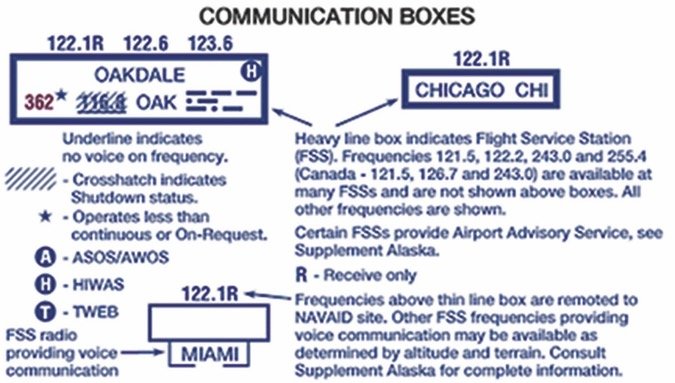
After the usual say again your callsign back and forth, the controller determined there was no flight plan on file. A new voice from the Learjet, probably the captain, asked if he could air-file over the ATC frequency. The controller instead suggested the Lear could file its flight plan over the radio by talking to Flight Service. This is when it got interesting: The Learjet then asked for the Flight Service frequency and a clearance to 17,500 feet. It got even more interesting when ATC suggested calling Flight Service on 122.1 MHz. All of a sudden, here were three blatant examples of poor airmanship and incomplete knowledge.

Read More »

Return Strategies

We were ready to take off from a nontowered airport into a 700-foot overcast ceiling. Through a remote communications outlet (RCO), Id received my IFR clearance with instructions to hold for release and call ATC when I was number one for takeoff. Taxiing out, I saw a Cessna Citation Mustang light jet at the hold line. I swung onto the run-up pad, knowing I had plenty of time because the Mustang pilot would be holding for his release, and I would not be permitted to depart until he was airborne and well away from the airport.

Read More »

Undoing An Upset

Lets start by dispensing with the obvious: Loss of control in flight is a lousy explanation, and not much better as a description. Eventually well come up with something better, which hopefully will reflect the myriad ways pilots can let aircraft get away from them. Spatial disorientation in IMC is as different from a moose stall as wake turbulence is from sloppily flown S-turns on final. At best, the ICAOs accident taxonomy-adopted by the FAA and NTSB, presumably in the name of harmonization-provides snapshots of how accident sequences end with negligible insight into what triggered them or how they developed. As a safety strategy, Dont lose control is about as useful as Dont let the engine quit.

Read More »

Canceling IFR Too Soon

Tom Turners article in the October issue, When To Go Visual, touched on one of my pet peeves about canceling IFR after breaking out on an approach to a nontowered airport: the need to maintain VFR to the runway in an IMC environment. While we all need to be courteous and try to expedite other traffic, canceling IFR at, say, 500 agl after breaking out of a 700-foot ceiling puts us 200 feet below the clouds, too close for legal VFR in Class E airspace. And canceling two miles out on the final can provide all the evidence one needs that youre operating in less than VMC without a clearance. Enterprising feds have brought enforcement actions in similar circumstances. And theres always the guy who pulls his pickup truck onto the runway forcing you to go around and fly the miss.

Read More »

The Real Risks Of Engine Failures

Before taking steps to minimize the risk of engine failures, we probably should try to quantify it. Thanks to the way U.S. aviation mishaps are cataloged, its safe to say that engine failures happen more often than the data reflect. The sidebar at the bottom of the opposite page goes into greater detail, but its safe to say engine failures that dont result in substantial damage, serious injury or death arent part of the data. In fact, the NTSBs definitions specifically exclude [e]ngine failure or damage limited to an engine if only one engine fails or is damaged…. The punchline is that official data underestimate the actual and unknown engine-failure rate. Personal experience bears this out.

Read More »
Pilot in aircraft
Sign-up for newsletters & special offers!

Get the latest stories & special offers delivered directly to your inbox.

SUBSCRIBE