Accident Probes

The Transactional Pilot

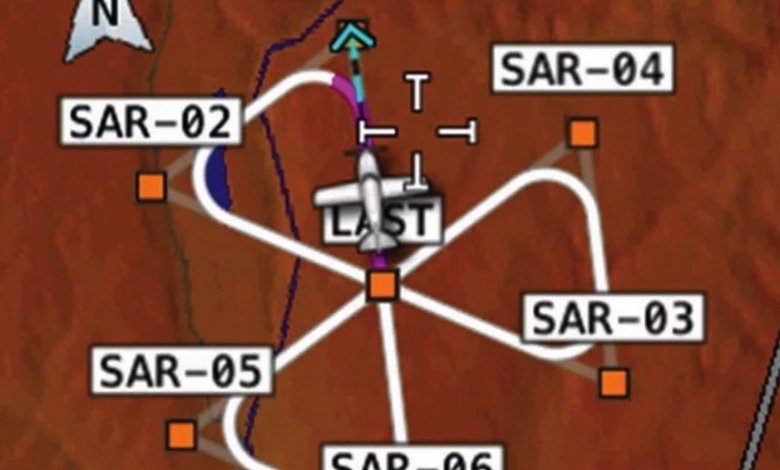
I tap on a location I observe to be free of obstructions, offering a clear approach corridor and suitable landing surface, and after I get the dot on my apps chart, I change its name to an approach course, e.g., like F17, or G18, and use those designators (you can make up any letter/number you wish), as Field/Approach 170 degrees, or for the other as Grass/Approach 180 degrees. The letters can be for road, crop, highway or water, or whatever looks better-as always, the closer to roads, the better for emergency services access.

Read More »

Stress In The Cockpit

True story: A USAF F-105 Thunderchief pilot was shot down over North Vietnam, ejected and landed in the jungle. Coming up on his emergency radio, he was told a rescue mission was on the way, to hide out and to come back up on the frequency in an hour. The pilot waited for what seemed like an hour and called back; he once again was told to call back when the hour was up-in 55 more minutes.

Read More »

Odds And Ends

This issue likely will hit your mailbox just before the Sun n Fun International Fly-In Expo in Lakeland, Fla. The annual event informally kicks off each years air show season, and 2019 will be no different. If you plan to attend SnF or any other fly-in event (cough, EAA AirVenture, cough), youre not alone. In fact, thousands of your closest friends are planning the same thing, and well all want to arrive and depart at more less the same time.

Read More »

Disoriented Scans

Fine article about bounced landings. Preventing them should be primary but when we do get a bounce, for some airplanes the recommendation is not to save the landing but just to go around. A number of years ago, there was a series of fatal Cirrus bounced landing accidents. Im not sure if there were official findings that gave common cause, but one theory was that the fixed landing gear acted like a pogo stick and was unforgiving of too much energy on touchdown. The finesse that you describe to salvage this type of bounce was not easily done by some pilots.

Read More »

The Transactional Pilot

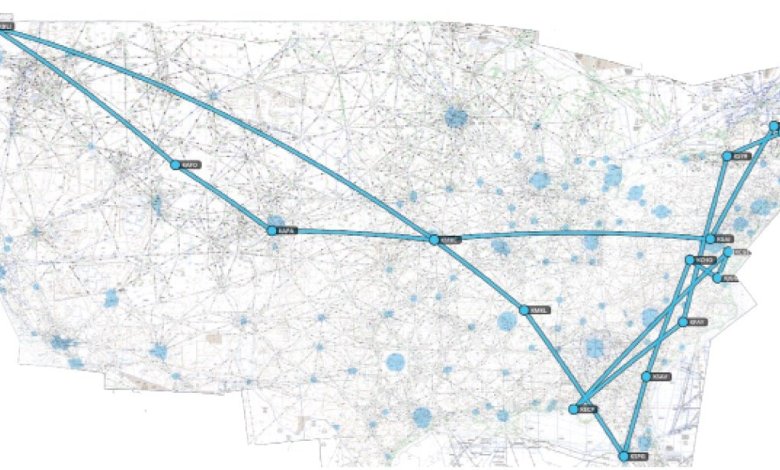
The advent of the direct to GPS button, which allows us to fly a straight line between two points, was instant gratification for efficiency-loving pilots, especially since IFR flights no longer needed to fly inefficient tinker-toy flight paths connecting VORs as long as ATC cooperated. But instant gratification also came with instant risk tradeoffs. The biggest of them is not obvious until you look beneath the magenta flight path where there might not be many, or any, airports.

Read More »

Air Traffic Awareness

Tom Turners February 2019 article, The Big Picture, highlighted for me that we should find ways to continuously improve the way we operate within the National Airspace System (NAS) and one way I can help-to give back, if you will-is to try explaining to pilots more about what goes on in the towers, Tracons and Centers throughout the U.S. Its not mysterious or difficult to understand, but it may be different from what you have been told, or told to expect.

Read More »

Single-Stage Go-Around

Convincing the airplane that youve changed your mind and now want to climb-at the best rate, by the way-requires adding power, arresting the descent and beginning a climb, reconfiguring the airplane and ensuring directional control. While the order in which we perform these tasks varies-check your POH/AFM for the details-we still have to fly the airplane as we accomplish them. That means we can be tempted to add full power when doing so is probably not what we want to do.

Read More »

Autopilots

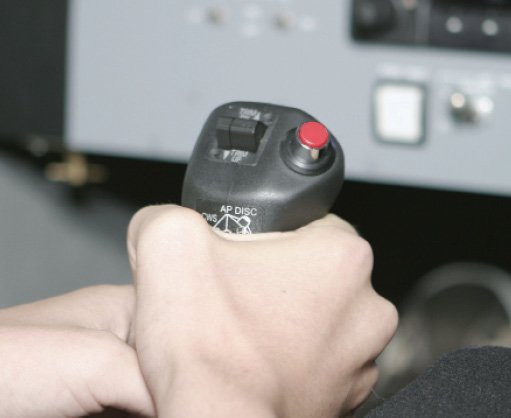
While in IFR cruise at 4000 feet, the pilot observed the flight director command bars move out of view as the airplane started a gradual descent. When the pilot corrected, the electric trim started to run nose down and the aircrafts descent rate increased. The pilot attempted to disconnect the autopilot and trim with the control switches and the red disconnect switch. None of this had any effect. With the turbulence and conditions, the pilot was unable to reach the autopilot and electric trim circuit breakers. After all other remedial procedures had failed, he shut off the avionics master switch at about 1000 feet and recovered the airplane at about 500 feet.

Read More »

NTSB Reports

Upon raising the landing gear after takeoff, the gear motor continued to operate longer than normal, and the pilot heard an abnormal sound toward the end of the sequence. The right main gear was hanging at about a 45-degree angle, and the left main gear was not visible. The pilot completed the appropriate checklists, without change. The pilot declared an emergency and ATC confirmed during a fly-by that the main gear was not extended. During the landing, the nose gear remained extended and the two main gear were retracted. The airplane came to rest on the runway and the passengers egressed without further incident.

Read More »
Pilot in aircraft
Sign-up for newsletters & special offers!

Get the latest stories & special offers delivered directly to your inbox.

SUBSCRIBE