











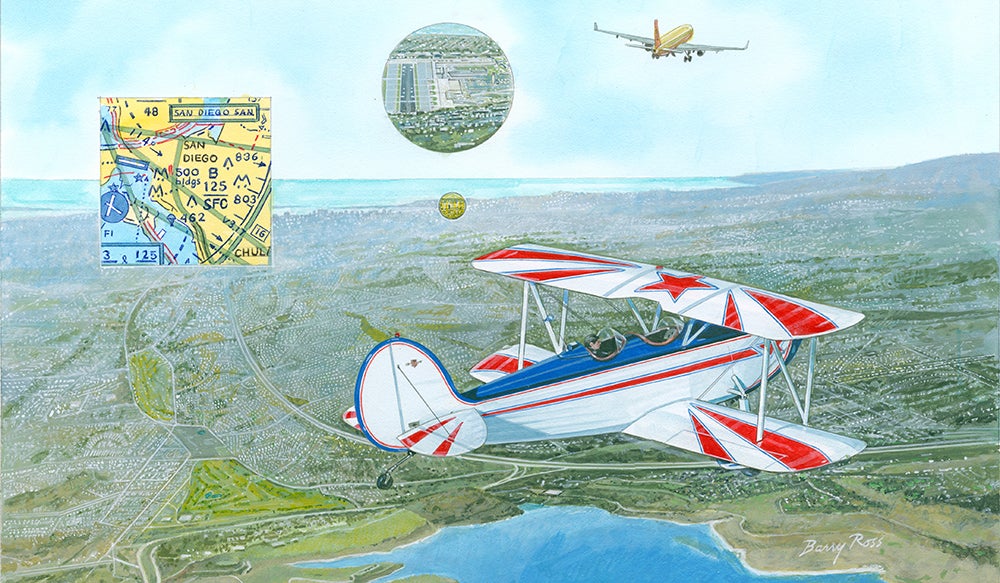
It was a beautiful Sunday morning, and nobody was flying. My open-cockpit biplane, a Great Lakes 2T-1A-1, was just the answer for a relaxing start to the day. It’s a great airplane for sightseeing. It flies low and slow, and turns on a dime. I departed Montgomery Airport (KMYF) in San Diego and put down at nearby Gillespie Field (KSEE) for a delicious cheese omelet. When I departed, it was still a ghost town; the Gillespie controller even offered an intersection departure on the perpendicular runway, just for fun. I departed into the clear, gorgeous empty sky. What could possibly go wrong?
An Alpha Male Flirts with Bravo Airspace on a Sightseeing Excursion

Key Takeaways:
- A confident pilot meticulously flew just below Class Bravo airspace near a major airport, relying on his navigation tools but not contacting Air Traffic Control.
- Despite not technically busting the airspace, his uncommunicated flight path caused ATC to divert an incoming commercial airliner as a safety precaution.
- The pilot learned that even when legally clear of controlled airspace, communicating intentions to ATC is crucial when flying near busy areas to prevent significant disruptions and ensure overall safety.
Key takeaways sponsored by Aviator Pro | Start Your Training ->
See a mistake? Contact us.

