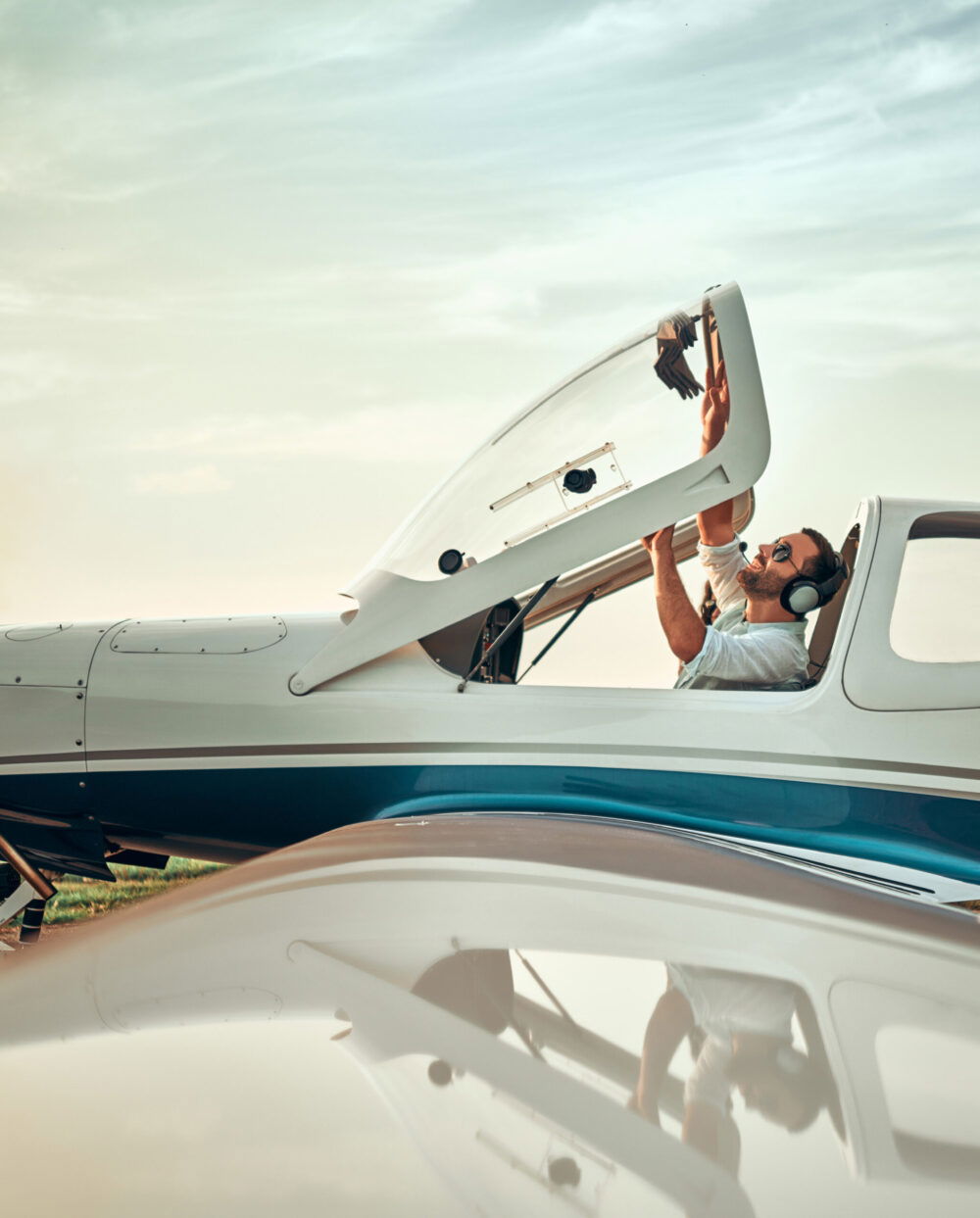
![During the arduous journey to becoming an airline pilot, the author says his ‘saving grace was the people I flew with...’ [Courtesy: Sam Weigel]](https://flyingmag1.b-cdn.net/wp-content/uploads/sites/2/2025/09/FLY0925_3.3_Taking-Wing.jpeg?width=360&height=347)


The last five years have been a wild ride in the airline industry. We went from a healthy job market in 2019 to the apparent cataclysm of COVID-19—coming within a hair’s breadth of mass layoffs—to the abrupt recovery of 2021, the airlines’ belated realization that they had trimmed too much, and a veritable blowout of pilot hiring in 2022-24.
For three years the major carriers grabbed up new airline pilot hires at staggering rates, regional and low cost airlines struggled to fill classes and retain first officers, and both corporate flight departments and the military struggled with attrition as the word got out about that greener grass just over the fence.
If you're not already a subscriber, what are you waiting for? Subscribe today to get the issue as soon as it is released in either Print or Digital formats.
Subscribe Now
The ripples traveled far and wide. Pay went up for most everybody, hiring requirements plummeted, and a fair number of lucky 20-somethings went from zero to major-airline hero in an astonishingly short time. The “pilot shortage” was widely reported on the news and in social media, and commercial certificate issuances shattered records as the allure of a golden career enticed thousands to throw their hat in the ring—never mind the exploding cost of flight training or increasingly usurious interest rates to finance it.
Alas, in 2025 we have fallen from the glittering firmament to mere workaday earth.
The legacy airlines have trimmed pilot hiring to essentially replace retirements. Alaska and Hawaiian are busy working through their merger. The low-cost carriers (LCCs) are all struggling financially and none are hiring. The regional airlines no longer have an attrition problem and have axed their classes accordingly. They’ve also gotten much pickier as they finally have many thousands of experienced CFIs to choose from.
- READ MORE: Ultimate Hangar Coming Together Quite Nicely
For those of us who’ve been in the industry a while, none of this comes as a surprise. We knew the madness couldn’t last. Aviation has always been a cyclical business, habitually prone to bubbles and bursts. I knew that coming in as a young lad, and I suspect that many of today’s newcomers know it too. But it’s one thing to have knowledge of the possibility of instability and stagnation in one’s chosen career field, and quite another to live it.
On September 11, 2001, I was in my senior year at the University of North Dakota, finishing up my aviation degree and flight instructing on the side. The previous years had been heady ones, with large-scale hiring and fat new contracts at the major airlines, and increased hiring of low-time applicants into shiny new regional jets at the “commuters.”
On that fateful Tuesday morning, as we watched the airliners we admired being used as weapons of mass destruction, we all instinctively knew that everything had changed. But few foresaw just how long the turbulence would last. The following years brought mass furloughs, bankruptcies, gutted contracts, the Great Recession, industry consolidation, and a five-year increase in the mandatory pilot retirement age. Those of us who lived it call it the “Lost Decade.”
The day I finished classes, I drove out to the West Coast and settled in for a grind. I ended up flight instructing for 18 months, flew single-pilot Part 135 cargo for two years, and then worked for two regional airlines for exactly one decade, to the day. The first of these, Horizon Air, was then a very good airline with a comparatively high cost structure in an industry sector in which low cost had become king. Facing the prospect of my career withering there, I jumped ship to Compass Airlines, which accrued a fantastic pilot group but was otherwise more cheap than good.
For 13 years I flew my butt off, made tough decisions, scared myself, endured exhausting and disheartening days, witnessed countless moments of sublime beauty, explored a hundred places I’d never heard of, made friendships I’ll treasure until the day I die, and occasionally wondered if I’d made a terrible mistake.
I saw a lot of pilots quit—some soon after 9/11, others years later once the industry had worn them down. Others became bitter. I saw blasé instructors treat students badly. Later, there were captains who habitually abused their first officers and flight attendants. I knew a few pilots who died pursuing their dream, including one colleague, Mike Ahn, who was covering my cargo run when he plowed into a lonely mountaintop in California’s Owens Valley.
As the years wore on, I got the feeling of being on a treadmill, my goals never getting closer no matter how hard I tried. Financially speaking, I was spinning my wheels. Student loans hung over my head like the Sword of Damocles.
When I was stuck at Horizon Air with zero turbine PIC time, I sent out résumés and applications by the dozens, with almost no response. A good friend noticed a marked souring of my attitude and called me out on it. Thankfully, Compass called, I upgraded quickly, and I had a great deal of fun flying with young crews to varied locales.
Yet for the last few years, that dream job always remained tantalizingly just out of reach. Little did I know, when the fateful email arrived from my present employer, that I would have the good fortune to be hired at the very start of the largest airline hiring wave in history.
There were a few things that saw me through. The flying itself always remained thoroughly enjoyable. I never lost the surging thrill of liftoff, or the sublime pleasure of watching the slumbering earth passing miles beneath my wings, or the pleasant flush of pride and adrenaline after executing a skillful approach in difficult conditions.
I had grown up poor, so the financial strain wasn’t particularly novel, and I could recall times in my teens when I wanted to fly so bad it hurt, but I couldn’t afford a lesson. Most of all, my saving grace was the people I flew with—both pilots and flight attendants.
On the face of it we were mere colleagues, people brought together by chance in pursuit of a paycheck. Yet a great many of us truly cared for each other and went out of our way to take care of one another. Most of us were in the same boat—young, broke, and hungry, but energetic and eager to take whatever scraps life handed us and wring the last little bit of enjoyment from them. It was a special time for me, and I’ll treasure it always.
I tell my newer first officers these things and they kind of get it, but not really. Most of the civilians had lucky timing and a fantastically quick ride through the lower flight levels. I don’t begrudge them this. They’re a bright young lot, and I really enjoy flying with most of them, but there’s a chasm of unshared experience.
Ironically, I have more in common with my ex-military first officers these days. Many of them experienced that sense of family, of mutual affection borne of shared struggle, during long deployments with their squadrons.
For those of you who took up professional flying in the past few years, we will have much in common in years to come. You came to the industry in heady times, only to encounter the back end of a cycle.
You will grind away for years and wonder if it will ever pay off. You’ll feel like you were born too late. You’ll scare yourself and learn a lot, and enjoy countless moments of sublime beauty, and make lifetime friendships. I hope you never lose your love of flying, keep your sense of humor, and see the work through until you finally make it.
Then someday we’ll talk about these things, quietly and with the fellowship of shared experience, in a darkened cockpit while we watch the slumbering earth pass miles beneath our wings.
This column first appeared in the September Issue 962 of the FLYING print edition.