











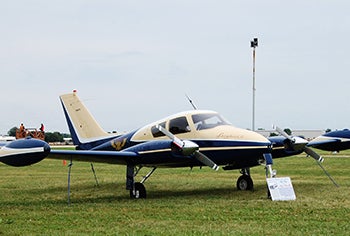


Since 1997, Cessna has been telling pilots of most of its light twins not to fly in known icing — but not all, as a previous report in Flying‘s eNewsletter suggested. Cessna issued a Mandatory Service Bulletin back then (MEB97-4) requiring that those twins not approved for flight in known icing (FIKI) have placards installed to that effect, and also advising an increase in approach speed should icing be encountered by accident. But the FAA has decided that the accident record since then shows the service bulletin wasn’t enough, and has issued an official airworthiness directive (AD), effective April 7, making it against the FARs not to comply with Cessna’s Mandatory Service Bulletin.
Bob Thomason, President of The Twin Cessna Flyer, pointed out that the original Flying eNewsletter report was incorrect in suggesting that all aircraft of the series specified in the AD were included. Several Cessna light twin models remain eligible for FIKI approval “when properly equipped and certified,” and the AD does not remove that authorization for those that were previously approved. When news of the AD came from the FAA, Twin Cessna Flyer’s Technical Director, Tony Saxton, emailed the membership with a clarification, including a partial list of the specific models and serial number ranges that may be approved for FIKI, and thus not subject to the AD. The original Cessna Mandatory Service Bulletin contains a detailed list of the specific aircraft serial number ranges from each model that may be eligible for FIKI, “when properly equipped and certified.” Saxton said it is unclear how many Cessna light twins are so equipped and certified.

