














DOT Invests Over $800M to Replace Old ATC Facilities

Funding will replace eight towers and terminal radar approach control (TRACON) facilities and upgrade 41 contract towers.

FAA air traffic control tower
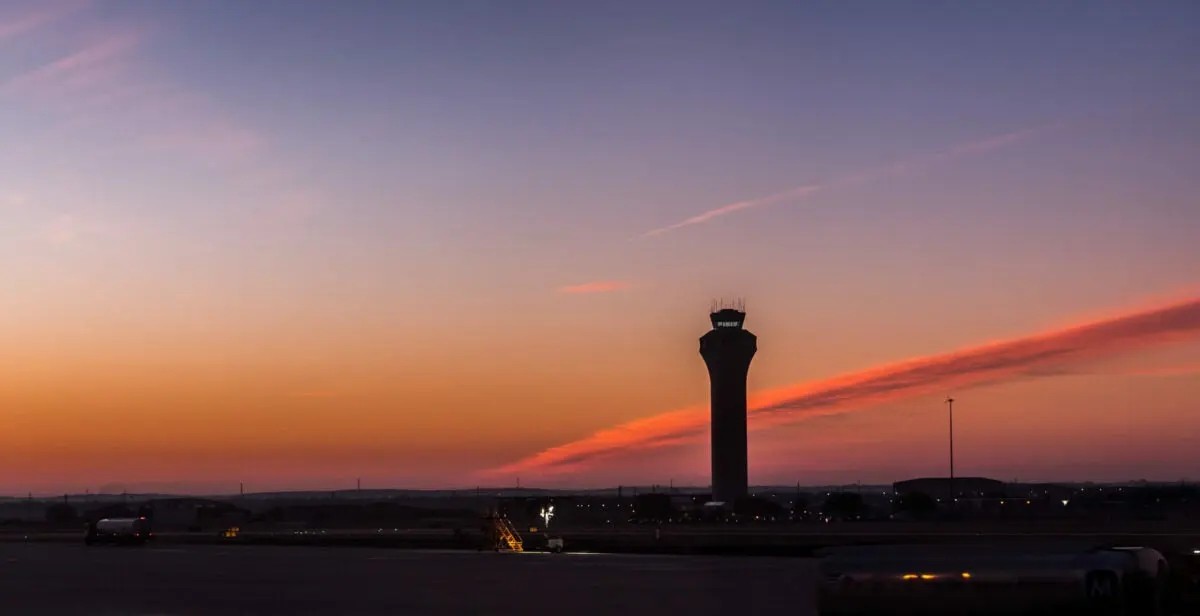
Funding will support replacements of tower and terminal radar approach control (TRACON) facilities and federal contract tower (FCT) upgrades. [Credit: Shutterstock]
Gemini Sparkle

Key Takeaways:

  • The U.S. Department of Transportation (DOT) is investing over $800 million to replace and upgrade aging air traffic control (ATC) facilities, including eight main towers/TRACONs and 41 federal contract towers, to enhance safety and reliability.
  • This initiative targets decades-old infrastructure experiencing issues like failing systems and aims to modernize sites with state-of-the-art equipment and standardized designs.
  • The funding is part of a larger $12.5 billion ATC modernization effort that includes upgrades to surveillance radars and communication systems, with future plans for facility consolidation and advanced technologies to improve efficiency and address staffing.
See a mistake? Contact us.

The U.S. Department of Transportation (DOT) said Friday that it will invest more than $800 million to replace existing air traffic control (ATC) facilities, some of which it said are “decades old,” with “brand new, state-of-the-art” sites.

“These investments will replace aging infrastructure with modern, state-of-the-art towers and equipment that strengthens safety, improves reliability, and supports the future of the National Airspace System [NAS],” FAA Administrator Bryan Bedford said in a statement.


More than $750 million will support the replacement of eight ATC towers and terminal radar approach control (TRACON) facilities. Locations were picked based on need. The agency said many sites experience issues from leaking roofs to failing ventilation systems, causing ATC service disruptions.

The DOT will replace towers at airports in Grand Forks, North Dakota; Lawton, Oklahoma; Pocatello, Idaho; Tamiami, Florida; and Sacramento and San Jose, California. Consolidated tower and TRACON facilities in Charleston and Greer, South Carolina, will also be replaced.

In addition, the FAA will allocate about $86 million to upgrade federal contract towers (FCTs)—which are staffed by contractors rather than agency personnel—at 41 airports in 24 states. As of mid-2025, there were 265 FCTs in the U.S., representing about half of the nation’s towers.

An FTC grant program will provide $20 million annually over the next five years to support a range of infrastructure upgrades, including the installation of modern ATC and communications equipment.

A $10 million grant for Wiley Post Airport (KPWA) in Oklahoma City will support construction of a new, sponsor-owned contract tower. The Missoula County Airport Authority, which owns Missoula Montana Airport (KMSO), will receive $1 million for infrastructure improvements. Another $800,000 will go to the construction of a contract tower for Marana Regional Airport (KAVQ) in Arizona, which is nontowered.

In a 2024 letter addressed to members of Congress, a coalition of 26 groups including the Air Line Pilots Association (ALPA) and Airlines for America (A4A) estimated that one-quarter of the FAA’s more than 350 facilities—including all 21 air route traffic control centers (ARTCCs)—are at least 50 years old.

Per the DOT, the ARTCCs are 61 years old on average. The agency’s Brand New ATC System effort aims to build the first new ARTCC since the 1960s, with plans for up to six in total.

The FAA wants these new facilities to be standardized, “in essence building one ARTCC six times,” per a request for services (RFS) it published last year. That would help the agency ramp up its tower replacement cadence from one to five or six sites annually.

With modern technology, the regulator believes it can reduce the number of facilities and allocate funding elsewhere. Consolidating ARTCCs could also address the ATC system’s chronic staffing shortage of more than 3,000 controllers.

Per a summary published in March, the FAA also plans to build 15 new towers and colocated TRACONs.

ATC Modernization Continues

Importantly, DOT said the new ATC facilities will have modern infrastructure and equipment, from new windows, roofing, and heating and cooling systems to upgraded radios, automated voice recorders, and lighting controls.

These are just a few of the improvements the agency is undertaking with the $12.5 billion “down payment” it received from Congress last year.

A chunk of the money went to RTX and Spain’s Indra, which will replace up to 612 aviation surveillance radars with new systems that are more accurate and reliable. RTX this week invested $26 million in its Largo, Florida, facility to ramp up production of its Condor Mk3 and ASM-XR radars.

Another $5 billion was awarded to Rohde & Schwarz USA, which will replace more than 450 antiquated voice switches with digital voice communication systems.

Peraton, picked in late 2025 to be the effort’s prime integrator—essentially a general contractor—is overseeing all of the work under a unique contract that rewards positive progress and penalizes negative outcomes.

However, Department of Transportation Secretary Sean Duffy has repeatedly asked Congress for an additional $20 billion that would support further ATC improvements.

Among these is a common automation platform (CAP) that would consolidate the FAA’s existing terminal and en-route systems used to track aircraft. RTX is reportedly vying for that contract as well.

Palantir, Thales, and Air Space Intelligence (ASI) have been reported as bidders for another ATC modernization project called SMART (Strategic Management of Airspace Routing Trajectories). Frank Matus, director of uncrewed aircraft system (UAS) integration for Thales, told FLYING in April that the FAA envisions SMART using artificial intelligence to predict weather, traffic, and other airspace conditions up to six months in advance.

The system would not separate or deconflict aircraft. Rather, it would be designed to identify scheduling and traffic bottlenecks, better informing ATC staffing needs and reducing disruptions.

Jack Daleo

Jack is a staff writer covering advanced air mobility, including everything from drones to unmanned aircraft systems to space travel—and a whole lot more. He spent close to two years reporting on drone delivery for FreightWaves, covering the biggest news and developments in the space and connecting with industry executives and experts. Jack is also a basketball aficionado, a frequent traveler and a lover of all things logistics.

Ready to Sell Your Aircraft?

List your airplane on AircraftForSale.com and reach qualified buyers.

List Your Aircraft
AircraftForSale Logo | FLYING Logo
Pilot in aircraft
Sign-up for newsletters & special offers!

Get the latest stories & special offers delivered directly to your inbox.

SUBSCRIBE
