














RTX Invests Millions in New ATC Radars

Funding will accelerate the production of ground-based aviation surveillance systems, though more funding could be required.

Collins Aerospace commercial aviation surveillance radars
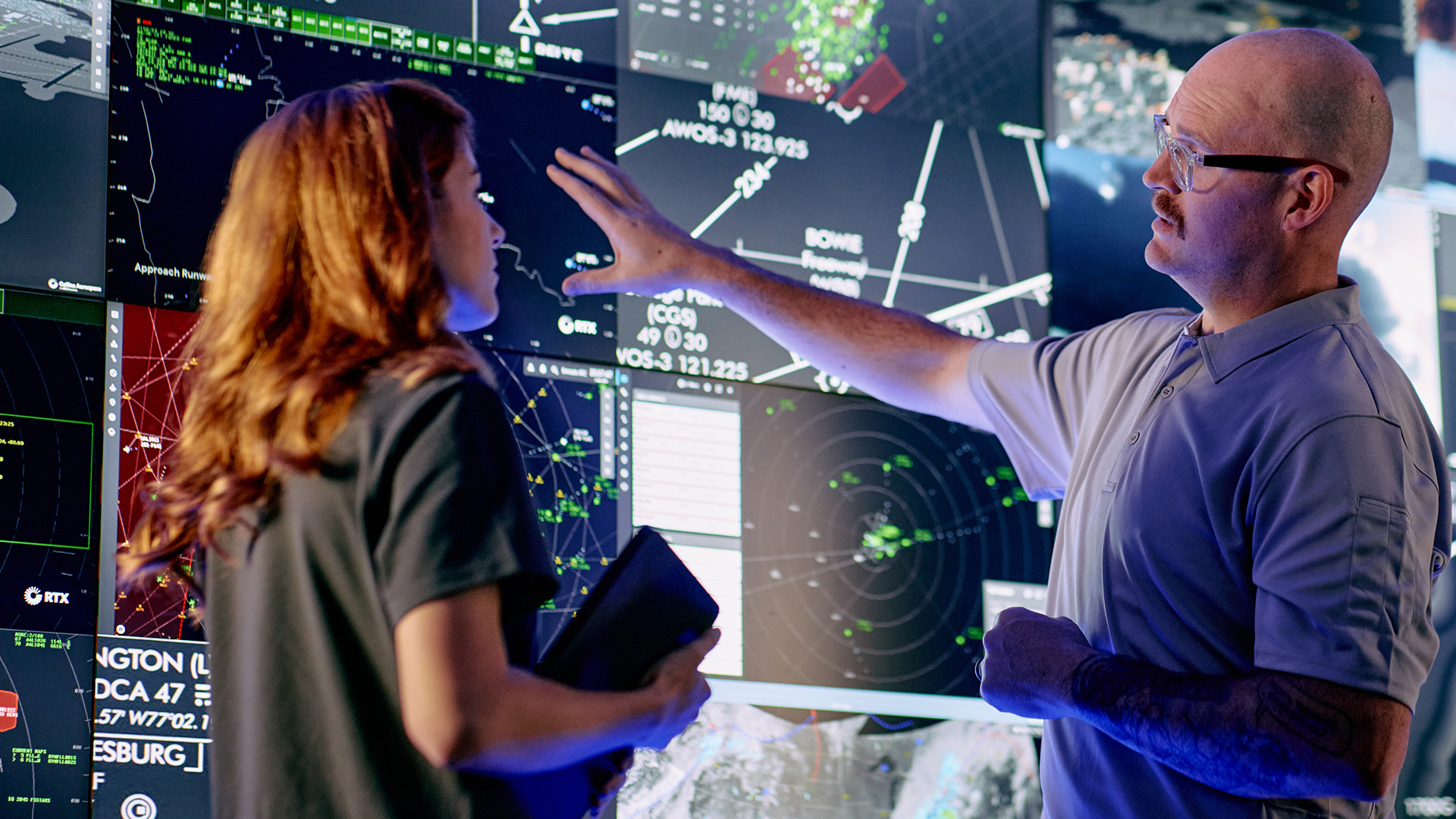
RTX’s Collins Aerospace is one of two contractors the FAA picked in January to replace hundreds of antiquated commercial aviation radars. [Credit: Collins Aerospace]
Gemini Sparkle

Key Takeaways:

  • RTX is investing $26.5 million to expand its Florida facility, boosting the production of upgraded commercial aviation radars by its subsidiary Collins Aerospace.
  • This expansion supports Collins Aerospace's $438 million FAA contract to replace over 600 outdated air traffic control radars across the nation by 2028.
  • The new Condor Mk3 and ASM-XR radars will enhance controllers' situational awareness, reliability, and aircraft tracking, while mitigating interference from sources like 5G.
  • The radar modernization is a foundational component of the FAA's larger $12.5 billion (with more requested) Brand New Air Traffic Control System project, aiming to overhaul critical infrastructure including radios, voice switches, and potentially advanced AI systems.
See a mistake? Contact us.

RTX on Monday said it will put millions of dollars toward the production of upgraded commercial aviation radars, which are being installed at airports nationwide as part of the FAA’s Brand New Air Traffic Control (ATC) System project.

A $26.5 million investment will expand the company’s Largo, Florida, facility to add a radar production area by late 2026. The systems are produced by RTX subsidiary Collins Aerospace, which in January won a $438 million FAA contract.


Together with another contractor, Indra, Collins will replace more than 600 radars, some of which date to the 1980s. The FAA also hopes to install thousands of new radios, hundreds of digital voice switches, and several new ATC towers and centers—all by 2028.

ATC modernization became a major priority for officials after the failure of the FAA’s previous NextGen effort and the fatal collision between a commercial jet and military helicopter over the Potomac River in January 2025.

What the New Radars Will Do

Collins’ Radar System Replacement Program contract covers the installation of Condor Mk3 and ASM-XR ground-based aviation surveillance radars.

The Condor system pinpoints the position of nearby aircraft by communicating directly with their transponders. ASM-XR uses reflected signals. Both are already deployed in the National Airspace System (NAS).

“For controllers, the goal is better situational awareness, improved reliability, and greater confidence in the information they are using to manage traffic,” a Collins spokesperson told FLYING.

The spokesperson said that compared to legacy radars, the new systems are more resilient and better at tracking aircraft, while mitigating disruptions from 5G, wind farms, and other sources. They also require less maintenance.

“That translates into a clearer and more dependable operating picture to support faster, more informed decision-making in increasingly complex airspace,” the Collins spokesperson said. “Importantly, these systems are not intended to replace the controller. They are designed to support controllers with better information and modernized tools, helping them manage traffic more safely and efficiently.”

Some of the systems Collins will replace are decades old. It will consolidate the 14 different surveillance radar configurations the FAA currently uses.

“Many of the units have exceeded their intended service life, making them increasingly expensive to maintain and difficult to support,” FAA Administrator Bryan Bedford said in January.

Per a U.S. Transportation Department (DOT) news release, initial radar installations this year will focus on “high-traffic” areas. Collins declined to say how many are complete.

RTX Seeks a Larger Role

Further investment may be required to meet the FAA’s demands.

Asked whether the $26.5 million is enough to fulfill all of its contract obligations, the Collins spokesperson called it an “important step” that “strengthens our ability” to meet demand. They did not say whether it would be enough to complete all deliveries by 2028.

FlightGlobal in March reported that RTX is vying for another chunk of the $12.5 billion that Congress has allocated for the ATC modernization effort.

The company reportedly pitched its AutoTrac system to officials as a new common automation platform (CAP). The FAA wants the CAP to consolidate its existing terminal and en route automated management systems.

AutoTrac automates terminal, en route, and oceanic and surface operations by integrating flight data and other information from radar, ADS-B, and other sources. It continuously monitors and assesses airspace, displays flight plans and weather data, optimizes the flow of traffic at airports, and provides real-time conflict detection and alerts.

“This approach allows for platform capabilities to evolve along with a dynamic air traffic environment, eliminating vendor lock scenarios and providing the foundational structure for new entrants and technologies to integrate with speed,” Cedric Vigil, RTX-Collins’ associate director for automation and air traffic systems, told FLYING in March.

AutoTrac systems have been used by air navigation service providers (ANSPs) worldwide since the 1990s. RTX is the FAA’s prime Standard Terminal Automation Replacement System (STARS) contractor, giving it a possible leg up on competitors.

However, Transportation Secretary Sean Duffy reiterated in April that the $12.5 billion does not cover the CAP. Duffy has requested a further $20 billion from Congress to complete the modernization effort.

The extra funding would also support an AI-powered traffic management software that Duffy and Bedford discussed at an event in Washington, D.C., in April. An executive of Thales, rumored to be competing for the software contract, said the FAA envisions the system predicting weather, traffic, and other airspace conditions up to six months in advance.

The FAA has plenty more in store beyond the new radars, CAP, and software.

The agency in April gave a one-year update on its progress, announcing that it has replaced half of the antiquated copper wiring that carries ATC radar and communications data with fiber optic, satellite, or wireless connections. It has installed 40 of 462 planned digital voice switches and recently awarded a $5 billion contract to Rohde & Schwarz USA for its Certium voice communication system.

In addition, 17 towers out of 89 have swapped paper for electronic flight strips and installed Terminal Flight Data Management (TFDM) systems. More than 3,000 radios have been installed across 250 sites. Two surface movement radars and 54 surface awareness systems are also online.

Other planned improvements include Enterprise-Information Display Systems (E-IDS) at 450 facilities, 117 tower simulation systems, and 174 new weather cameras in Alaska. The effort involves 52 vendors and about 4,600 FAA facilities in total.

According to the Collins spokesperson, the Condor Mk3 and ASM-XR radars will drive meaningful improvements on their own, but their full value will be unlocked as other modern systems come online.

“That is why modernization needs to be viewed as a system-of-systems effort,” the spokesperson said. “Radar is a foundational layer, but the greatest benefit comes when surveillance, automation, communications, and aircraft equipage work together.”

Jack Daleo

Jack is a staff writer covering advanced air mobility, including everything from drones to unmanned aircraft systems to space travel—and a whole lot more. He spent close to two years reporting on drone delivery for FreightWaves, covering the biggest news and developments in the space and connecting with industry executives and experts. Jack is also a basketball aficionado, a frequent traveler and a lover of all things logistics.

Ready to Sell Your Aircraft?

List your airplane on AircraftForSale.com and reach qualified buyers.

List Your Aircraft
AircraftForSale Logo | FLYING Logo
Pilot in aircraft
Sign-up for newsletters & special offers!

Get the latest stories & special offers delivered directly to your inbox.

SUBSCRIBE
