














First Part 135 Operator Joins FAA’s Advanced Aviation Research Effort

Membership gives Surf Air Mobility access to exclusive task orders, working groups, and more.

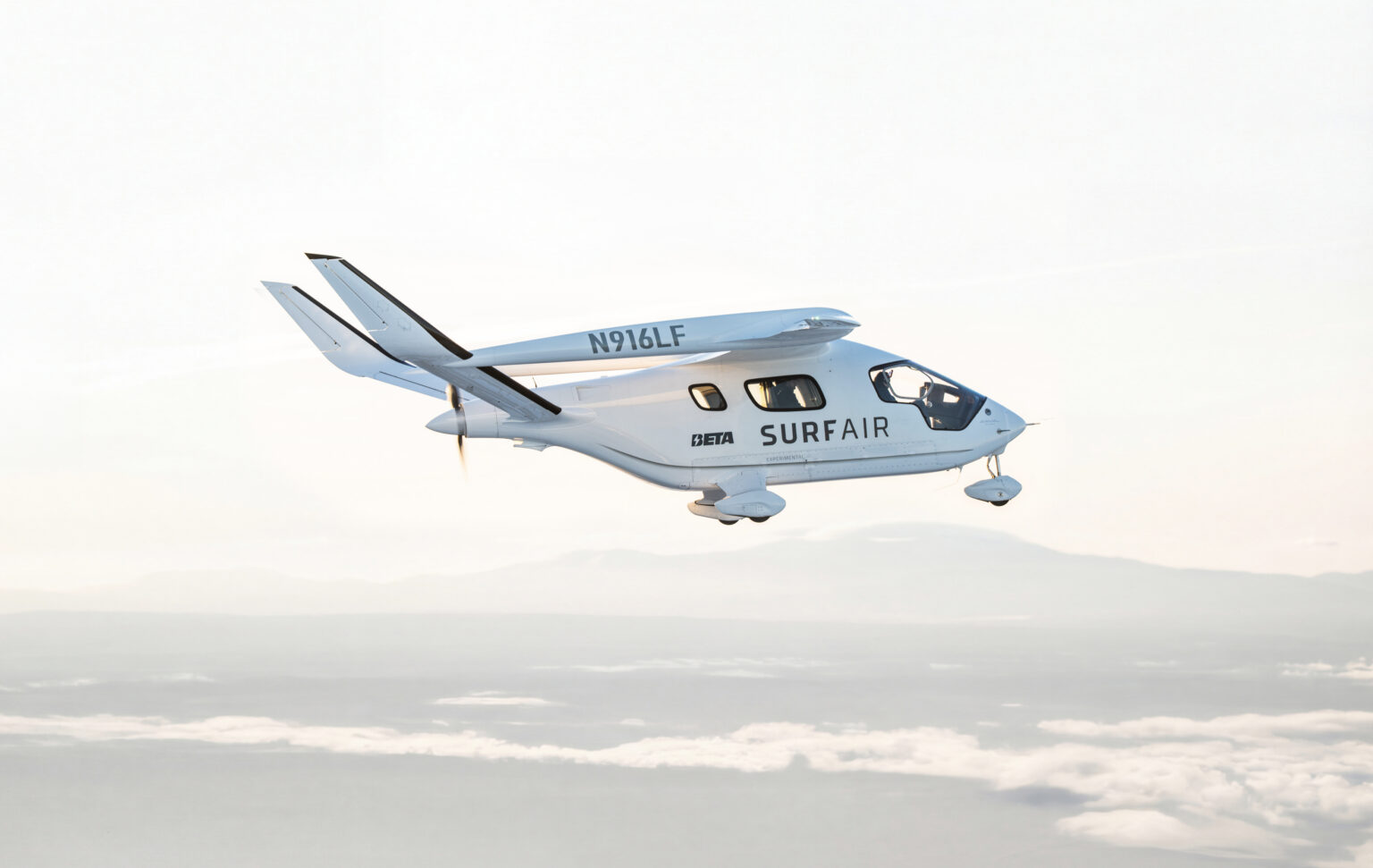
Beta Technologies Alia with Surf Air Mobility livery in flight
Surf intends to be the first operator to fly paying customers with Beta Technologies’ electric Alia aircraft. [Credit: Beta Technologies]
Gemini Sparkle

Key Takeaways:

  • Surf Air Mobility is the first Part 135 passenger operator to join the FAA's exclusive Center for Advanced Aviation Technologies (CAAT) consortium.
  • The CAAT's primary mission is to research and ensure the safe integration of advanced aviation technologies, such as electric and autonomous aircraft, into the National Airspace System.
  • Surf's membership grants it direct access to FAA research and collaboration opportunities, while it contributes its real-world operational data, experience, and AI-enabled SurfOS software to shape the future of air mobility.
See a mistake? Contact us.

Los Angeles-based Surf Air Mobility is the first Part 135 passenger operator to join an exclusive FAA consortium that is researching the future of air mobility.

Surf’s membership in the Center for Advanced Aviation Technologies (CAAT) gives it new access to FAA research, task orders, working groups, and opportunities to collaborate with academic, industry, and government partners, the company said.


The FAA in an April 2025 news release said CAAT will “play a pivotal role in advancing aviation technologies”—including electric and autonomous aircraft—and “ensuring their safe integration into the National Airspace System (NAS).” The center is overseen by the regulator and operated by Texas A&M University.

“The CAAT gives us a direct connection to the FAA’s research and development priorities that will shape the future of aviation,” Deanna White, CEO of Surf, said in a statement. “Membership puts us alongside the organizations defining how next-generation aviation technologies integrate into the national airspace and positions us to leverage the impact of our operational, data, and AI-enabled software capabilities.”

SkyGrid—the airspace management subsidiary of electric air taxi manufacturer Wisk Aero, a unit of Boeing—won the first CAAT task order in February. It will develop tools for cooperative aircraft separation.

The only other publicly announced members of the consortium are universities. FLYING has reached out to the FAA for a more detailed list.

Surf’s Role in CAAT

Acting CAAT associate director Albert Bejarano said Wednesday that Surf will enhance the coalition by bringing real-world experience, operational data, and software capabilities.

The company during the first quarter of 2026 flew more than 65,000 passengers via its Southern Airways and Mokulele Airlines brands, per its most recent earnings statement. Those trips were flown by conventional aircraft. But Surf aims to electrify its fleet, making it a logical choice to be included in a consortium dedicated to advanced air mobility (AAM) integration.

The company’s SurfOS software—powered by Palantir’s Foundry platform that is also widely used by the FAA—uses artificial intelligence to adjust pricing, schedule crews, source aircraft, and recover aircraft on ground (AOG) for broker, operator, and enterprise customers. Its BrokerOS system is already in the hands of six independent users. The firm plans to launch its OperatorOS platform later this year.

SurfOS is designed to serve Part 135 private aviation as well as emerging AAM aircraft, such as the Beta Technologies Alia and Electra EL9 models it plans to add to its fleet. It placed a firm order for 25 Alia aircraft, with options for 75 more, in March, with plans to demonstrate a cargo variant of the aircraft in Hawaii this June. Beta made Surf its launch customer for passenger operations, the first of which will be in Hawaii.

Surf also has an exclusive relationship with Textron Aviation to electrify the Cessna Grand Caravan EX using electric and hybrid-electric powertrains it is developing. They are targeted to reduce emissions by 50 percent without a drop-off in performance.

The company’s fleet mainly comprises small turboprops optimized for 50-to-500-mile trips, which are easier to electrify than larger planes. It operates the Cirrus Vision Jet, Embraer Phenom 300, HA-420 Hondajet, Piper Meridian, and multiple airframes from Beechcraft, Bombardier, Cessna, Dassault, Gulfstream, and Pilatus.

Jack Daleo

Jack is a staff writer covering advanced air mobility, including everything from drones to unmanned aircraft systems to space travel—and a whole lot more. He spent close to two years reporting on drone delivery for FreightWaves, covering the biggest news and developments in the space and connecting with industry executives and experts. Jack is also a basketball aficionado, a frequent traveler and a lover of all things logistics.

Ready to Sell Your Aircraft?

List your airplane on AircraftForSale.com and reach qualified buyers.

List Your Aircraft
AircraftForSale Logo | FLYING Logo
Pilot in aircraft
Sign-up for newsletters & special offers!

Get the latest stories & special offers delivered directly to your inbox.

SUBSCRIBE
