














Wing, Walmart Gear Up for Drone Delivery in Three Cities

Partners begin laying the groundwork for their planned three-state expansion into Florida, Georgia, and North Carolina.

Wing Walmart drone delivery nest
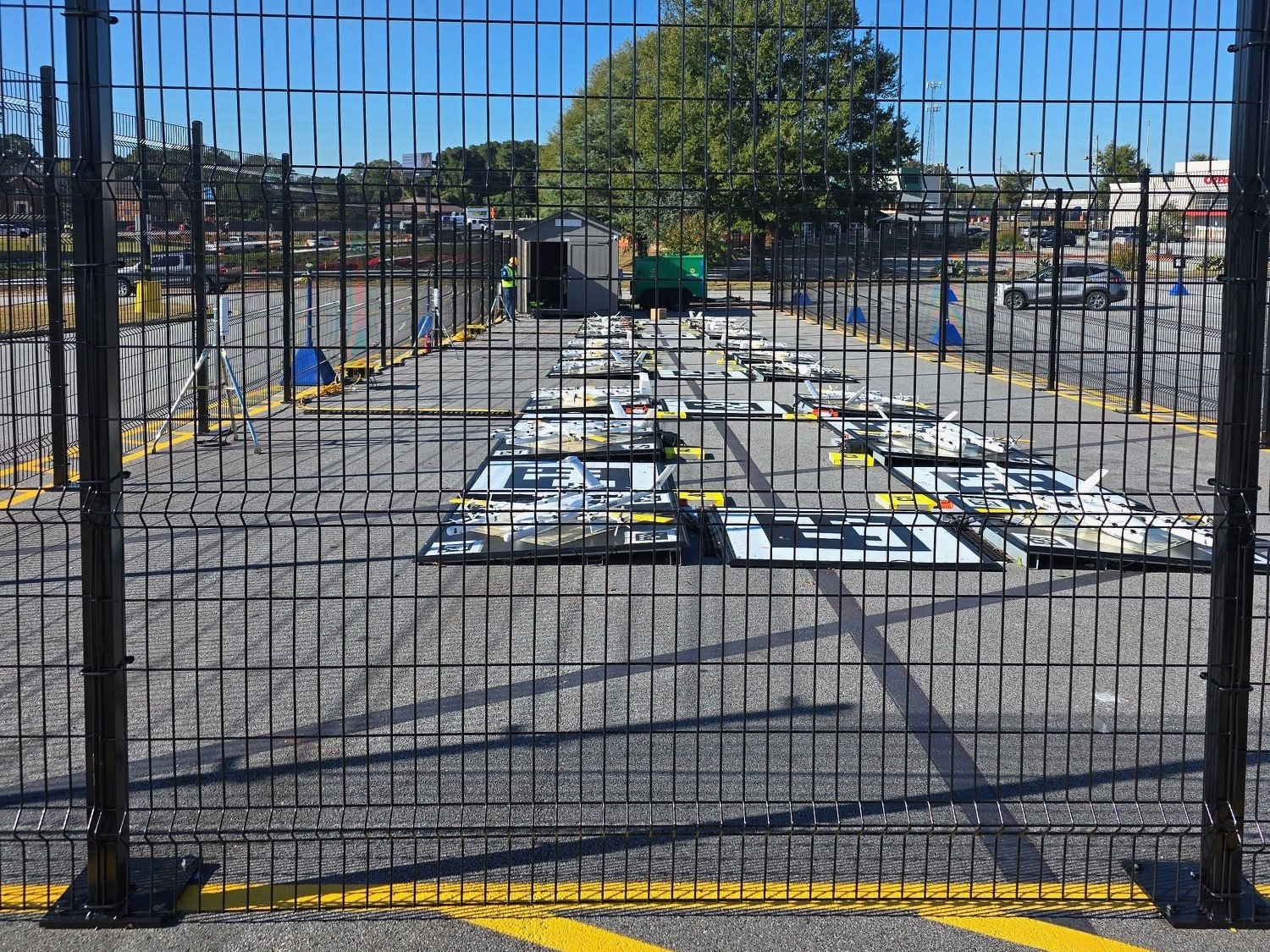
Walmart and drone delivery partner Wing are building a drone delivery hub at a Walmart store in Conyers, Georgia. [Courtesy: City of Conyers]
Gemini Sparkle

Key Takeaways:

  • Walmart and Wing are formally expanding their drone delivery service beyond Dallas-Fort Worth, with recent permit approvals in Georgia (Conyers, Woodstock) and active proposals in North Carolina (Charlotte) and Texas (Kemah).
  • The service utilizes automated electric drones capable of delivering 2.5-5 pounds within a 6-mile radius, operating from compact "nests" at Walmart stores with remote human oversight.
  • The future scaling of drone delivery largely depends on the FAA's proposed Part 108 rule, which aims to establish permanent regulatory frameworks for Beyond Visual Line of Sight (BVLOS) flights.
See a mistake? Contact us.

Walmart and drone delivery partner Wing in June announced plans to expand beyond Dallas-Fort Worth—where they have completed more than 75,000 deliveries since launching in 2022—to Florida, Georgia, and North Carolina. It may not be long before those services arrive.

Last week, the cities of Conyers and Woodstock—both suburbs of Atlanta—announced that they have approved permits that would allow the partners to introduce drone delivery. The permits cover one Walmart store in each location, Wing confirmed in an email to FLYING. The company said it will share more specifics in the near future.


Also last week, the Charlotte Observer reported that Walmart submitted a commercial zoning review for one of its stores in the North Carolina city, detailing the installation of drone delivery infrastructure. The city of Kemah, Texas—a suburb of Houston—said on Friday that representatives from Walmart and Wing will share a drone delivery proposal during a city council meeting on Wednesday.

These moves represent the first formal steps toward the partners’ expansion, which is also planned to include Orlando and Tampa, Florida.

How It Works

Wing’s delivery drones are among the most prevalent in the world, having completed more than 500,000 residential deliveries across three continents. An FAA Part 135 air carrier certificate allows it to operate in the U.S. with certain restrictions.

The fully electric drones are equipped with both vertical lift and cruise motors, which power different sets of propellers for different phases of flight. Its latest model weighs about 11 pounds and can carry up to 5 pounds of food, beverages, prescriptions, or other cargo within a 6-mile radius.

The aircraft fly at about 65 mph and 150 feet in altitude through wind and moderate rain, with functions like flight planning, traffic management, and preflight checks highly automated. Upon arriving at the customer’s location, they automatically check that the area is clear before lowering the package on a tether to a space as small as a picnic blanket. To add a layer of human oversight, remote pilots oversee multiple flights from a central location.

Wing’s ground operation is designed to be compact, fitting within the space of a tennis court. For example, at a Walmart Supercenter in the Dallas-Fort Worth suburb of Frisco—which FLYING visited in 2023—the drone “nest” occupies about two rows of parking spaces in front of the store.

Around that time, Wing had begun introducing its Autoloader, which is now a central component of the system. As its name implies, the mechanism loads orders onto aircraft without human intervention. It can be installed on the side of a building or as stand-alone apparatus, allowing store associates to drop orders at the curb.

Residents of Dallas-Fort Worth may be familiar with Wing drones, which have been operating commercial service there since 2022. Walmart became a partner in 2023, announcing plans to reach 60,000 homes. In 2024, the retailer—which also partners with Wing competitor Zipline—said its drones would cover 1.8 million households, or about three-quarters of Dallas-Fort Worth’s population.

Wing also has smaller operations in Charlotte and Christiansburg, Virginia, where it is trialling app-based drone delivery with DoorDash.

Expanding the Drone Envelope

According to the city of Conyers, a Walmart store at 1436 Dogwood Drive is among the first Atlanta-area locations to be permitted for drone delivery. The city said it “intends to be first in flight,” with construction already underway and deliveries expected to begin “soon.” Wing will conduct public outreach at upcoming city events.

“We’re thrilled this technology that provides convenience of delivery via Wing to Walmart customers in Conyers is here,” said City Manager Kameron Kelley. “The appropriate permits have been issued and site construction, flight testing, staffing and training for the site are underway.”

The city of Woodstock said a Walmart store on Highway 92 will be outfitted with battery-powered drone charging pads, with deliveries expected to begin following “site improvements” by Wing. Notably, both cities said the aircraft would carry just under 2.5 pounds, implying they will use an older Wing variant.

“Woodstock has built a reputation as a city that embraces innovation while keeping community safety at the forefront,” said Woodstock Mayor Michael Caldwell. “This forward-thinking partnership with Walmart and Wing reflects our vision of boldly pursuing what’s next to build a thriving community.”

Per the city of Kemah in Texas, Wing’s Walmart nest will comprise charging equipment, safety fencing, and an autoloader. It added that the service is expected to improve the speed, reliability, and cost of delivery while taking vehicles off the road.

Walmart and Wing in June said the multistate effort would add 100 new stores to their network. Chances are it won’t be their last expansion.

Drone delivery could be poised for an explosion of activity under the FAA’s Part 108 rule, for which it released a proposal in August.

Part 108 would create a new regulatory framework for drones that fly beyond the visual line of sight (BVLOS), which face heavy restrictions due to safety concerns. Operators including Wing and Zipline have temporarily waived these limitations. A final Part 108 rule, though, would establish BVLOS permits and certificates that are tied to new airworthiness and operational requirements. Essentially, it creates a path for operators to secure BVLOS permissions permanently.

Part 108 could have serious implications for delivery drones and the national airspace system more broadly, including authorized flight in controlled airspace. In certain cases, it would grant uncrewed drones the right of way (ROW) over crewed aircraft. And without the burden of visual oversight, they would be able to cover greater distances.

Industry groups such as the Commercial Drone Alliance, of which Wing is a member, said in comments to the FAA that the proposal does not go far enough. Conversely, the Aircraft Owners and Pilots Association (AOPA) and Air Line Pilots Association (ALPA) worry about the safety of granting drones ROW or allowing them to fly near airports.

With the comment period for the proposal closed, the FAA will sift through thousands of concerns and recommendations. The final rule could look very different. But if the agency sticks to the timeline ordered by President Donald Trump in June, Part 108 could be finalized by early 2026.

Jack Daleo

Jack is a staff writer covering advanced air mobility, including everything from drones to unmanned aircraft systems to space travel—and a whole lot more. He spent close to two years reporting on drone delivery for FreightWaves, covering the biggest news and developments in the space and connecting with industry executives and experts. Jack is also a basketball aficionado, a frequent traveler and a lover of all things logistics.
Pilot in aircraft
Sign-up for newsletters & special offers!

Get the latest stories & special offers delivered directly to your inbox.

SUBSCRIBE
