













Register

Visual Departures for IFR

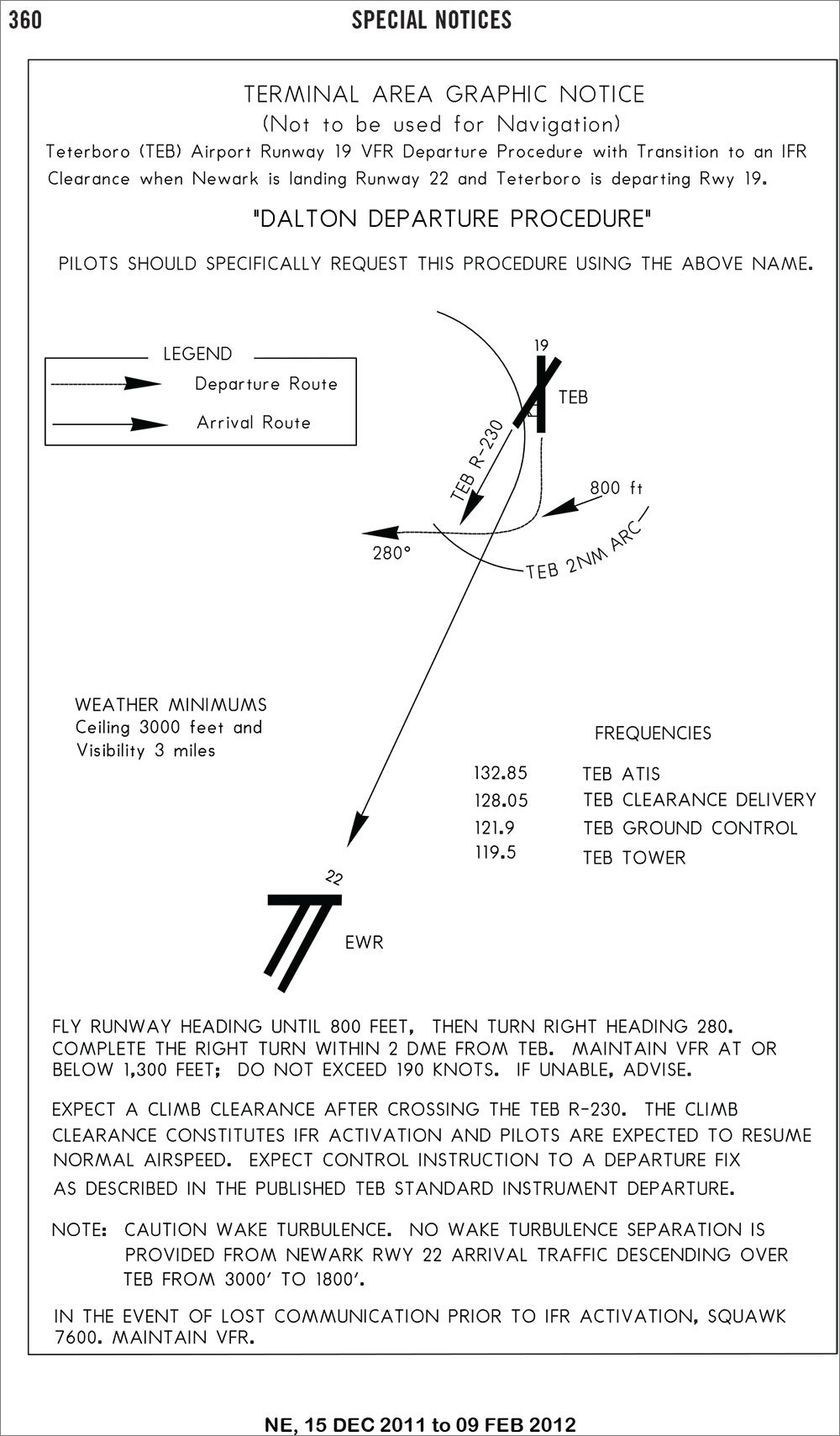
An item recently crossed our desks that has caused some head scratching: Teterboro had a revised charted visual departure procedure for IFR clearances. Of course, everyone knows about SIDs-weve analyzed bunches of 'em in these pages over the years. And most of us will occasionally ask for a VFR departure. Visual approaches (charted or not) are common.


Gemini Sparkle

Key Takeaways:

  • The article introduces charted visual departure procedures as a formal, though lesser-known, component of IFR clearances that require pilots to maintain visual conditions.
  • These procedures are designed to address specific operational challenges, such as avoiding terrain, sensitive areas, or managing dense traffic in busy airspaces like Teterboro.
  • Pilots must request these visual departures, adhere to their own specific weather minima (e.g., 3000-3), and meticulously follow prescribed routing, altitude, and speed restrictions.
  • A notable issue is the FAA's inconvenient placement in A/FDs and crude depiction of these charts, contrasting with more user-friendly presentations by services like Jeppesen.
See a mistake? Contact us.

VISUAL DEPARTURES for IFR
Charted IFR arrival and departure procedures are routine. Charted visual approaches are not uncommon. But a charted visual departure procedure? We didn’t know, either.

An item recently crossed our desks that has caused some head scratching: Teterboro had a revised charted visual departure procedure for IFR clearances. Of course, everyone knows about SIDs—we’ve analyzed bunches of ’em in these pages over the years. And most of us will occasionally ask for a VFR departure. Visual approaches (charted or not) are common.

Ready to Sell Your Aircraft?

List your airplane on AircraftForSale.com and reach qualified buyers.

List Your Aircraft
AircraftForSale Logo | FLYING Logo
Pilot in aircraft
Sign-up for newsletters & special offers!

Get the latest stories & special offers delivered directly to your inbox.

SUBSCRIBE