Turning Setbacks Into Success in Flight Training

Unexpected challenges can become powerful teachable moments, especially during cross-country flights.

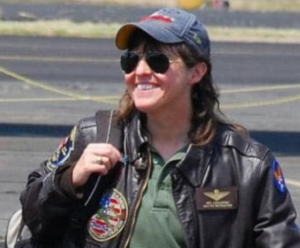
Sometimes the CFI needs to adjust to the learner’s needs, such as when it comes to pilotage in VFR conditions. [Courtesy: Meg Godlewski]
Gemini Sparkle

Key Takeaways:

  • Flight instructors must be adaptable and prepared with backup lesson plans to address unforeseen challenges like weather, mechanical issues, or a learner's unpreparedness.
  • Instead of forcing an unprepared lesson, instructors should pivot to a relevant ground lesson or an adapted flight activity that builds foundational skills and confidence.
  • Effective adaptation, even when deviating from the original plan, can transform unexpected situations into valuable, confidence-building learning experiences for students.
See a mistake? Contact us.

Sometimes flight lessons do not go as planned. This is an important lesson, as one of the most important skills a pilot needs is the ability to adapt and make good decisions.

This is particularly true if you are a flight instructor.

A CFI should walk into each lesson with both a planned and backup activity just in case they run into a challenge, like weather or a mechanical issue with the aircraft. You must always be able to pivot to an activity that is in the best interest of the learner.

This is especially true when it comes to a cross-country flight. There will be times when, for whatever reason, you cannot complete the flight as planned. But you can turn this into a teachable moment.

Sometimes the learner overestimates their skill set or is otherwise unprepared and gets behind the airplane before they even start the preflight inspection. If the learner didn’t complete the required navigation log, be prepared to do a ground lesson on how to correctly fill one out, pull the weather, and do the performance calculations for the aircraft.

You’re not doing the learner any favors by opting to do dual laps in the pattern, especially when the learner has been soloed. It reeks of time building on the learner’s nickel. When you do the navlog ground lessons, finish by giving them a list of places you want them to fly to. And have them practice creating navlogs at home by selecting their route and measuring the distances between checkpoints.

That first dual cross-country flight can be very intimidating. I learned this when I inherited a private pilot candidate from another CFI. The learner and his CFI had made three unsuccessful attempts to do a dual cross-country flight.

According to the CFI, the learner “just wasn’t getting it” and went to pieces when he couldn’t find the checkpoints he selected or perform a ground speed check or perform a divert. The CFI was frustrated, as the learner had taken and passed private pilot ground school, and the instructor, based on the learner’s performance on the stage tests and final, thought he had a good grasp of the skills needed for a cross-country flight.

The learner was facing a challenge bridging the gap between classroom and cockpit. This is not uncommon. He was showing up with a partially or incorrectly filled out navlog and said his CFI would glance at it, scowl, and then rush him into the cockpit to “make the best of it.”

It didn’t help that the class had been months ago, and the learner had forgotten much of what he learned. They often returned to the airport early and did laps in the pattern..

This particular afternoon he had been told to plan a cross-country flight to Washington state’s Chehalis-Centralia Airport (KCLS), approximately 38 nm away. That was pretty much all we had time for that day.

While not the required 50 miles for a legal cross-country, it would give the learner a chance to develop and practice the skills he needed. However, the learner had not completed the navlog because he wasn’t sure how to do it. He was particularly concerned about what to use as landmarks for navigation by pilotage and worried about getting lost.

It was late afternoon, and we didn’t have time to do both a ground lesson to learn to create a navlog and fly the lesson. So I decided the best course of action was for the learner to take us to Tacoma Narrows Airport (KTIW), some 15 nm to the northwest, using pilotage. 

Once we got there, he would learn towered airport operations—another thing he had never done before. There are lots of landmarks along the route, and I figured it would help the learner build some confidence.

We took off to the north, then turned left over Interstate 5 and continued following the shoreline to the west. I kept asking the learner if he could see major structures on the ground, like the Tacoma Dome and the two Narrows Bridges. He did. Did he see them on the TAC chart? He did. 

I was a little surprised and proud of the way he stayed ahead of the airplane, getting the ATIS information and tuning in the tower frequency when we were outside of the Tacoma Class D airspace. With a little bit of coaching, he requested entry into the pattern for touch-and-goes.

Darkness Falls

It was starting to get dark when we departed the pattern to head home. I asked him to head southwest, not east, because I wanted him to do the McChord crossing, which would take us over Joint Base Lewis-McChord (KTCM)  and back to Pierce County Airport-Thun Field (KPLU).

The learner had done so well with Tacoma that I wanted to reward him with the crossing because it’s cool to see the base and those bigger airplanes on the ramp. I told him this, adding that KTCM is a Class D airport, just like KTIW, and it is a simple process to get the transition: Listen to the ATIS, call the tower, get permission and a squawk code, and follow the controller’s instructions.

The learner made the first call-up from approximately 10 miles west of the base, requesting transition from east to west with a destination of Thun Field. The controller gave us a squawk code, asked for an ident, and then requested that we call back  approximately 2 miles west of the airspace.

On the ground the roads were starting to get lit up by the cars. Sunset was close at hand. We prepared the cockpit for night flight, adjusting the instrument panel lights and pulling out flashlights, although we would be on the ground before sunset. It was a just-in-case maneuver.

We appeared to be the only aircraft on the frequency as we approached the shoreline. The learner dutifully made the call as requested and was assigned an altitude of 2,300 feet.

The learner then listened to the automated weather at KPLU on the No. 2 radio and announced we would be landing on Runway 35.

“Let me know when you see the airport,” I said. I could see the white water tower on the east side of the airport in the dusk, so I knew we were still several miles away.

There was a moment or two of silence, then the learner turned us to the south and made a radio call announcing he was entering the downwind for Runway 35 at Thun Field. There were two things wrong with this: We were still on the KTCM tower frequency, and we were over KTCM.

“Look again,” the tower replied. “Tell me what you see.”

The learner looked at me in surprise.

“Look down and tell him what you see,” I prompted.

The learner had his hand on the mic button when he looked, then let out a gasp, followed by, “What are those big planes doing there?”

“They live here, son,” the tower controller replied. “You’re over McChord. You’re about 6 miles west of Thun.”

The student started laughing as I keyed the mic. “Thank you. Student pilot.” I said in my CFI voice.

“Not a problem,” the controller said with a chuckle.

During the postflight debrief, the learner was all smiles. He noted that while we hadn’t done the flight lesson he had been anticipating, he definitely learned a lot on the one we did.

Sometimes it works out that way.

Meg Godlewski

Meg Godlewski has been an aviation journalist for more than 24 years and a CFI for more than 20 years. If she is not flying or teaching aviation, she is writing about it. Meg is a founding member of the Pilot Proficiency Center at EAA AirVenture and excels at the application of simulation technology to flatten the learning curve. Follow Meg on Twitter @2Lewski.

Ready to Sell Your Aircraft?

List your airplane on AircraftForSale.com and reach qualified buyers.

List Your Aircraft
AircraftForSale Logo | FLYING Logo
Pilot in aircraft
Sign-up for newsletters & special offers!

Get the latest stories & special offers delivered directly to your inbox.

SUBSCRIBE