
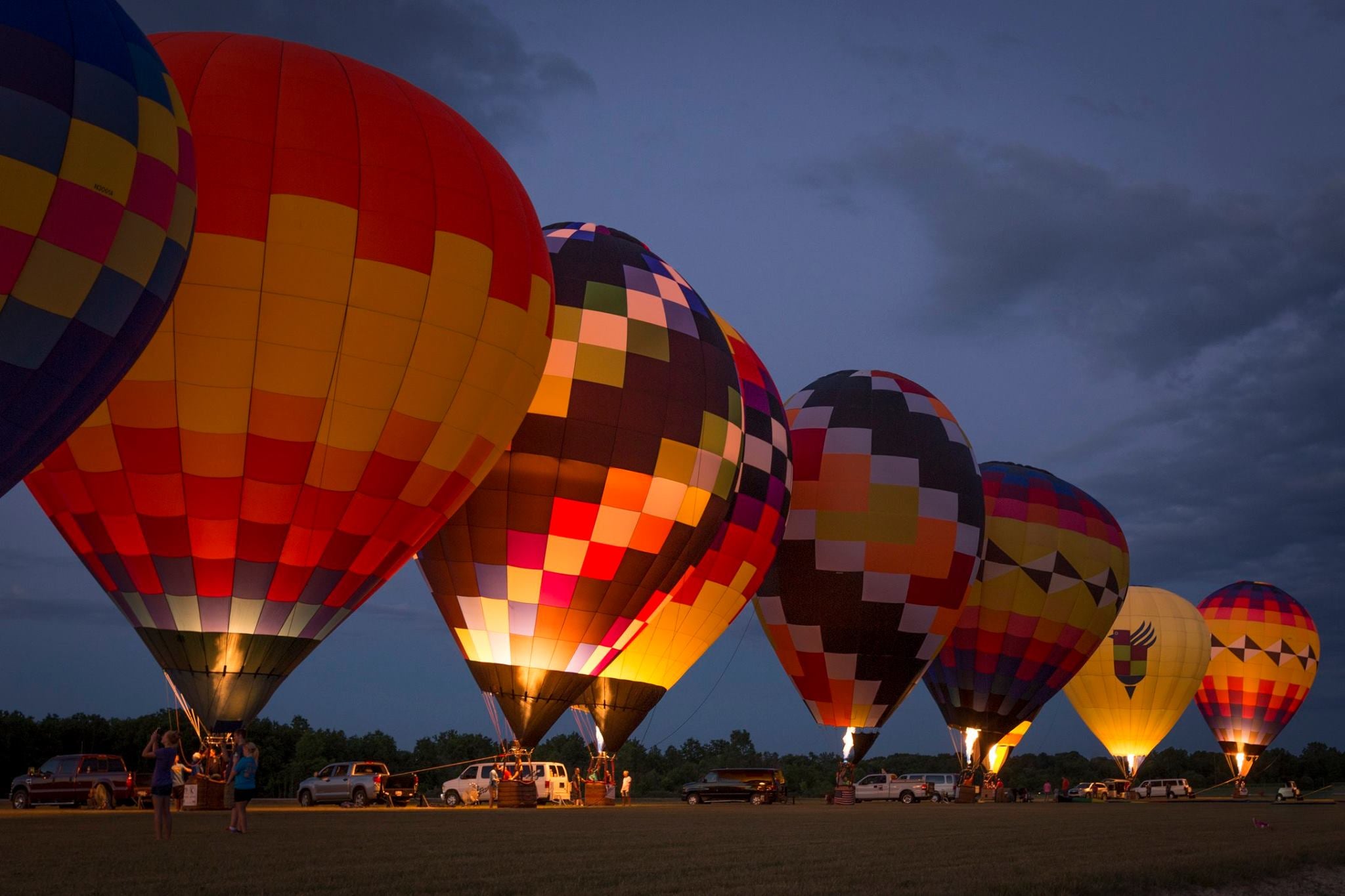


Hot-air ballooning for the purpose of human transport dates back to November 21, 1783, when a silk-and-paper balloon ascended above Paris carrying Francois Pilatre de Rozier and Fancois Laurent, Marquis of Arlanders. It flew for about 25 minutes and covered more than five miles, landing in a farming area outside the city, according to the National Balloon Museum and Ballooning Hall of Fame in Indianola, Iowa.
These inaugural aeronauts rode on a circular platform attached to the bottom of the balloon and fed the craft’s fire by hand through openings in its skirt. For the next roughly 120 years until airplanes came along, when people talked about flying, they meant ballooning. Even today, the basics of hot-air ballooning haven’t changed much since those early days.