Register

Search Results for: maintaining your airplane

Features

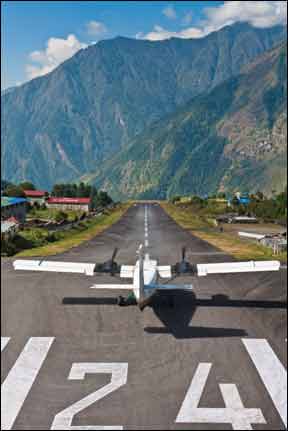
Staying On The Runway

Ever wonder why we often refer to an airport as a “field?” One reason involves the relatively poor handling characteristics of early airplanes. What little was known about aerodynamics back in the day meant most airplanes were fairly unpleasant to fly and handled like the powered kites they were. Takeoffs and landings had to be into the wind, thanks to those abysmal handling characteristics. The airports in use then were, in fact, large fields, always allowing pilots to point into the wind for takeoff and landing. Thankfully, those days are gone, although those airplanes still can be fun to fly. Meanwhile, progress in designing both airplanes and airports has resulted in beautifully engineered facilities and machines capable of using them.
Read More »
General

The B Word

(March 2012) I debated putting words on paper regarding the recent Chapter 11 filing by my airline. Bankruptcy has become so vogue that the flying public now yawns at the notion, knowing that very little will change from their perspective. Frequent flyer miles remain intact. Steerage class food remains inedible. Baggage mishandling remains an everyday […]

Read More »
Training and Proficiency

IFR Training Before the Rating

Max Trescott was the 2008 National Certified Flight Instructor of the Year. Based in Palo Alto, California, he publishes aviation books and software, including Max Trescott’s GPS and WAAS Instrument Flying Handbook and Max Trescott’s G1000 Glass Cockpit Handbook. He teaches in Cirrus and other glass cockpit aircraft, and in Lake amphibians. He can be […]

Read More »
Accident Probes

Zero-Zero Departure

Part 91 operators have a lot of flexibility in their operations not available to commercial flights conducted under Parts 135 or 121. Whenever persons or property is being carried for compensation, different rules apply. One of them involves minimum weather requirements for takeoff under IFR. The non-commercial Part 91 operator, however, has no such restrictions. We can blast off into any weather conditions we want without needing to meet a visibility minimum or having an alternate airport nearby in case of a problem developing shortly after takeoff. With that flexibility, of course, comes some responsibilities.

Read More »
Pilot Proficiency

What Happened to Stick and Rudder?

(December 2011) “Anybody who learns to fly these days in an airplane without a Flight Simulator cockpit, an autopilot and a ballistic parachute is living in the last century,” went the opening gambit from a student pilot I flew with recently. Reasonably current and qualified in a variety of singles and light twins, I admit […]

Read More »
Airmanship

Winter Flying Lessons

On the off chance you haven’t ventured outside in the last couple of months, it’s winter in the Northern Hemisphere. With it comes, of course, bitter cold in some areas, along with snow, ice, sleet, freezing rain, stiff winds and obscured runways. While winter flying can be some of the most satisfying of all, it’s best to approach this time of year with an open mind, a flexible schedule and warm clothing. And, as with so many other things involving aviation, experience counts.

Read More »
Pilot Proficiency

Online Pilot Training and Other Flying Resources

(November 2011) Remember when the examiner handed you your temporary pilot’s certificate and said something on the order of “this is just a license to learn”? Most of us begin, after pocketing our hard-won certificate and no longer under the aegis of our instructor, a period of self-taught learning as we experience the nuts and […]

Read More »
Features

Slips Who Needs ‘Em?

When was the last time you flew a slip? Are slips a necessary maneuver belonging in every pilot’s skill set? Or are they an aerial anachronism, a holdover from earlier flying days, with little application to the modern world? Slips originated in aviation’s early days, when most, if not all, airplanes lacked wing flaps. They were and are used to increase the angle of descent on approach, and to get the airplane’s nose out of the way of the pilot (who often sat well aft) to better see the runway ahead when landing. Given the genesis of the art of slipping, should we still be expected to master it?

Read More »
Pilot Proficiency

Weather or Not

If you don’t venture on sullen skies, You never come to sunkissed valleys. If your palms have never been moist, Your heart has never thrilled. If you have never been afraid, You have never been courageous. Gill Robb Wilson, The Airman’s World When my sister Mary and I started flying, we learned to check aviation […]

Read More »
Pilot Proficiency

In Search of Lost Airspeed

(October 2011) Air France 447 went down in the mid-Atlantic in 2009 because all three of its pitot tubes iced up. Well, not exactly. It wasn’t the loss of functioning pitot tubes that doomed the airplane; it was what the A330’s autopilot, and human pilots, did next. The autopilot — but it would be more […]

Read More »
Pilot in aircraft
Sign-up for newsletters & special offers!

Get the latest stories & special offers delivered directly to your inbox.

SUBSCRIBE