









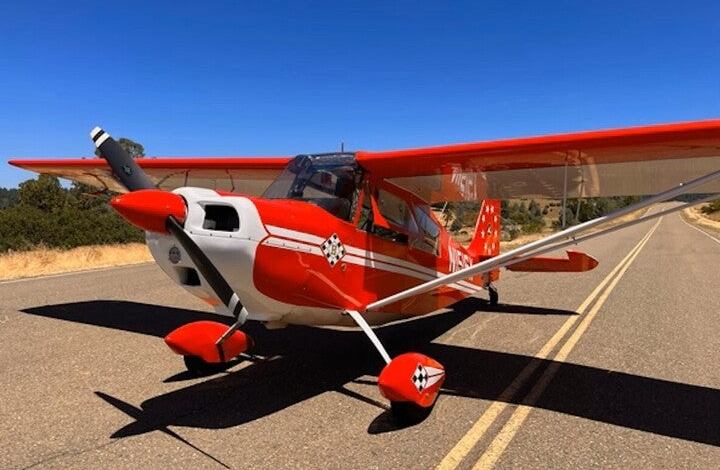
Today’s Top Aircraft For Sale Pick: 1973 Bellanca Citabria 7KCAB
Unlike many vintage taildraggers, this Citabria is designed to handle aerobatics.


Unlike many vintage taildraggers, this Citabria is designed to handle aerobatics.

An experienced, commercially-rated pilot made what could certainly be considered a rookie mistake during his approach to runway 18 at the Jesse Viertel Memorial airport in Booneville, Missouri. The pilot, flying a Bellanca Viking in April 2017, flew the final approach at an extremely low altitude, much lower than normal, on a day without a […]
At about 1400 Central time, the airplane impacted terrain during initial climb after takeoff from a road. Witnesses stated the engine sputtered and the airplane then descended in a nose-down attitude. The non-certificated pilot was fatally injured.
The airplane sustained substantial damage following a loss of engine power and off-field landing at about 1032 Pacific time. The commercial pilot received minor injuries. Visual conditions prevailed. As the airplane climbed through about 2000 feet, the engine suddenly stopped developing power. The pilot reportedly switched to the auxiliary fuel tank shortly before the engine quit.
The airplane was substantially damaged at about 1556 Mountain time when it impacted terrain. The private pilot was fatally injured and the passenger received serious injuries. Visual conditions prevailed.Witnesses reported the accident airplane flew over their location from the north and made a 360-degree left turn, followed by a 180-degree left turn.
The pilot reported his engine began running rough after 1.7 hours of flight. After making a 180-degree turn toward an airport he just passed, the airplanes engine died and the pilot, who was unsure he could make it back to the airport without unduly endangering people on the ground, opted to set down the aircraft in an empty field. The landing was uneventful; however, the aircraft encountered a divot on the landing roll and nosed over on its back.
The airplane was substantially damaged when it descended rapidly from cruise flight and impacted terrain at about 1601 Pacific time. The owner-pilot and the two passengers were fatally injured. According to radar data, the airplane followed a curving course to the southeast for 28 miles after takeoff, then tracked straight for 53 miles on a course of 084 degrees true. Its indicated altitude was 13,500 feet. The airplane then turned south, leveled at about 14,500 feet and flew another 43 miles before it made a course reversal to the left.
At about 1130 Mountain time, the airplane impacted terrain, sustaining substantial damage. The private pilot/owner and his passenger were killed. At the time of the accident, the pilot was flying through an area of multiple layered overcast and broken cloud formations, with light rain. When the aircraft did not arrive at its intended destination, an alert notice for a missing aircraft was issued.
The pilot reported the nosewheel had just touched during a normal, full-stop landing when he lost control. The airplane departed the left side of the runway, impacted airport signage and other obstructions, and came to rest 450 feet to the left of the centerline.
At about 1030 Pacific time, the airplane was involved in a forced landing following a total loss of engine power. The airline transport pilot was uninjured; the commercial pilot receiving instruction sustained minor injuries. The airplane sustained substantial damage to the tail and fuselage. Visual conditions prevailed.

Get the latest stories & special offers delivered directly to your inbox.
SUBSCRIBE