Register

Search Results for: bellanca

Accident Probes

NTSB Reports

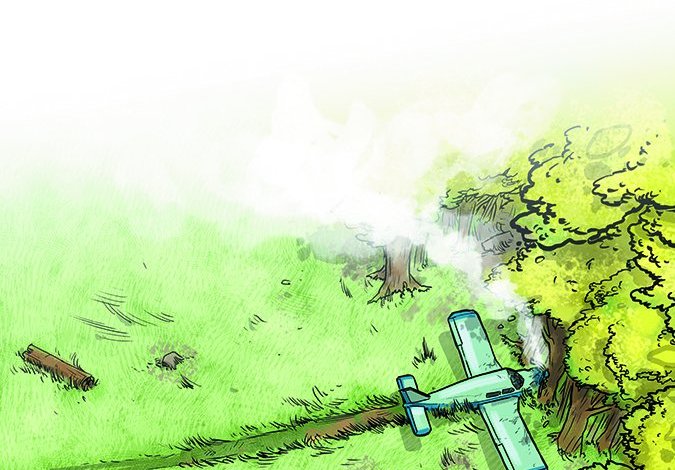
October 1, 2017, Klamath Falls, Ore.Cirrus Design SR22At about 1043 Pacific time, the airplane was destroyed when it impacted terrain while maneuvering in a remote mountainous area. The private pilot and the passenger received fatal injuries. Instrument conditions were reported in the area at the time of the accident.
Read More »
Avionics and Gear

On The Air: October 2017

This August, just before the solar eclipse passed through the U.S., pilots from all over Utah flocked to southern Idaho into the zone of totality. The tower at Ogden Airport was busy, with a single controller handling tower and ground frequencies. As I taxied to the departure runway, several pilots called for clearances.

Read More »
Accident Probes

NTSB Reports

The airplane was destroyed when it impacted terrain at 1159 Eastern time. The solo private pilot was fatally injured. Visual conditions prevailed. The pilot had recently purchased the airplane and was relocating it to a private airstrip near his home. Witness observations were consistent with the airplane flying at low altitude and maneuvering erratically before it impacted. Each witness reported the engine was running prior to impact. The accident…

Read More »
Accident Probes

NTSB Reports: March 2017

After taking air samples at various altitudes, the airplane was returning to its base and overshot a turn to the Runway 36 localizer. Shortly thereafter, the pilot reported an on-board fire. The airplane, which was at 1700 feet, lost altitude rapidly and radar contact was lost. The accident site was consistent with the airplane striking the ground at a high velocity, low angle of impact in a left wing slightly low attitude. There was a ground fire after impact.

Read More »
Technique

Stupid Pilot Tricks

Its that time of year when we who have successfully covered up our own boneheaded mistakes snicker over the antics of those less fortunate flyers who have failed and got caught. This review of NTSB accident reports from 2013 makes no pretense of learning from others mistakes. The following acts of aerial mayhem are a reminder that no matter how bad your own decision making might be, theres always someone eager to lower the bar. We skip fatal accidents and usually give errant student pilots a pass, because their brains arent yet fully developed.

Read More »
Accident Probes

NTSB Reports: December 2016

Except for the main wreckage area, there was no noticeable damage to the fields corn stalks. The cockpit, engine cowling and a majority of the fuselage were consumed by fire, although the wings and empennage were mostly intact. Witnesses reported hearing the engine sputtering, and then heard a thud and saw a fireball. They did not observe the airplane in the air.

Read More »
On the Air

On the Air: December 2016

I periodically fly down to Wings Field in eastern Pennsylvania from my home base in Concord, NH. The direct route takes me through the western portion of New Yorks Class B airspace. I always use flight following for these VFR flights. One time when I was handed off to the controller handling the Newark arrivals this conversation transpired:

Read More »
Accident Probes

NTSB Reports: October 2016

The flight instructor set the airplane up for simulated engine failure by pulling out the carburetor heat control and reducing throttle to 1200 rpm. The student pilot followed emergency procedures, used the checklist and prepared to land. After the carburetor heat control was pushed back in and the throttle advanced, there was a sudden loss of power; efforts to restart the engine were unsuccessful. The airplane collided with the fence during the landing.

Read More »
Accident Probes

NTSB Reports

During his second solo flight, the student pilot encountered a gust of wind during the landing flare. The airplane ballooned and then bounced twice on its nosewheel. After the second bounce, the student pilot applied full power and aborted the landing. The subsequent landing was uneventful and he taxied to the ramp. Post-accident examination revealed substantial damage to the firewall.

Read More »
Accident Probes

April 2016 NTSB Reports

At about 1800 Eastern time, the airplane was substantially damaged when it impacted terrain during final approach. The solo pilot sustained fatal injuries. Visual conditions prevailed. Witnesses indicated the airplane lifted off within the first 1000 feet of the runway then began to bank sharply and reached a 90-degree bank as it climbed to treetop height. While cruising at FL190, the engines manifold pressure dropped from 29 to 15 in. Hg. The pilot arrived over the divert airport and began a circling descent.

Read More »
Pilot in aircraft
Sign-up for newsletters & special offers!

Get the latest stories & special offers delivered directly to your inbox.

SUBSCRIBE