Register

Search Results for: Lear 45

Accident Probes

A Classic Case

I remember the first time I flew in less-than-VFR conditions. I had a very fresh private pilot certificate and was en route in a Skyhawk, probably at 3500 feet msl. There was a shower between me and my destination, dropping visibility to less than three miles. My heading would take me under it and through the rain shaft. There was no traffic around.I could almost see what was on the other side before entering it, so I kept on going. For the experience, of course. I had ground contact throughout, and there was clear air 90 degrees and 15 seconds to my right. Coincidentally, I wasnt far from this months accident site.

Read More »
Accident Probes

NTSB Reports: October 2015

At about 1745 Central time, the airplane lost engine power shortly after takeoff. The airplane impacted trees and was substantially damaged. The solo private pilot was seriously injured. Visual conditions prevailed.The FAA reported the pilot was doing touch-and-goes. The engine lost power and the airplane impacted trees and terrain about a mile southeast of the airport. The airplanes empennage separated from the fuselage, and there was heavy damage to the right wing and fuselage.

Read More »
Pilot Proficiency

Taking Wing: Taildraggers Suck!

It was a typical spring day in Minnesota, warm and clear at last, but with a brisk south wind blowing across the runway. I’d just driven 45 minutes to fly the Cub for the first time since November, and I thought that the wind was still within the plane’s capability. Once I broke ground and […]

Read More »
Aircraft

Like New Cabin-Class Twin: A Cessna 414A Restoration

Getting the airplane of your dreams doesn’t always have to include a stop by the showroom to check out the latest models. For would-be owners who have the time and money to invest in upgrading an aging bird, the possibilities are endless. Longtime pilot and aircraft owner Christophe Jouany recently went through that exact process, […]

Read More »
Pilot Proficiency

Aftermath: How Much Fuel, Really?

The King Air had been airborne for just 30 minutes, en route from Pine Bluff to Bentonville in Arkansas, when it began its descent from 16,500 feet. The weather was clear, and the 3,400-hour private pilot, 72, was on VFR flight following with Razorback Approach at Fort Smith. Nine minutes after leaving 16.5, he told […]

Read More »
Accident Probes

NTSB Reports: September 2015

At about 1705 Eastern time, the airplane touched down short of the intended runway. The commercial pilot sustained a minor injury; the pilot-rated passenger was not injured. The airplane was substantially damaged. Visual conditions prevailed.Abeam the runway threshold on downwind, the pilot lowered wing flaps to the first notch and moved the mixture control to full rich but did not turn on carburetor heat. While on final at 500 feet agl and 80 mph, the next thing he knew they were on the ground. He indicated the airplane descended due to a microburst, but there was no rain shower nearby. He also stated the passenger attempted to add full power, but was too late. He stated he did not stall the airplane.

Read More »
Aircraft

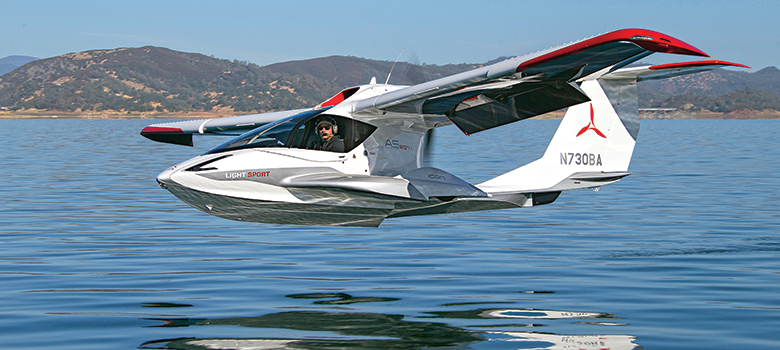
Icon A5 Light-Sport Aircraft Review

I’m generally biased in favor of anything that flies, but truth be told there have been a few light-sport aircraft that I haven’t enjoyed flying. I felt that those airplanes were so light on the controls that it was rather unsettling. While the Icon A5 looks cool, I was prepared for the worst when I […]

Read More »
Pilot Proficiency

Fly Respectfully

When flying into uncontrolled airports, you rely on other pilots in the area to help avoid midair collisions by following the recommended procedures and communicating intentions on the common traffic advisory frequency (CTAF). Without a controller providing guidance, it is important to follow the recommended arrival and departure procedures to minimize the risks. While radio […]

Read More »
Unicom

Negative G?

Dr. Banners article in Julys issue, In-Flight Fires, mentions to bank 45 degrees during an emergency descent to create positive g loading and help offset negative g forces.Question: Generally speaking, why can airplanes withstand (or be certified for) greater positive g load limits than negative? Stated another way: Why are negative g loads more restrictive?Thanks for a great publication!

Read More »
Pilot in aircraft
Sign-up for newsletters & special offers!

Get the latest stories & special offers delivered directly to your inbox.

SUBSCRIBE