Why Twilight Can Be a Complicated Time for Pilots
Do you know the difference between civil twilight, nautical twilight and astronomical twilight?
During the winter months, when the temperatures drop in Northern climes, the sky turns gray and days are cut short as the sun spends more time on the opposite side of the equator, there are fewer opportunities to fly for most of us. Airplanes begin to collect dust, and some engines even get pickled as […]
I overheard a conversation years ago on a Colorado mountain flying trip that really stands out in my mind. It was long before I began running my own mountain trips (I was a hired gun on this one) and it stands out because I lost all respect for one of my colleagues that day, an […]
Learning to fly is simply too expensive, especially for young people … or at least that’s the complaint the industry hears again and again. Julia Lair, a high school sophomore in Sioux Falls South Dakota understands budget concerns, as well as any other fledgling aviator, but she didn’t let the cost become a barrier to […]
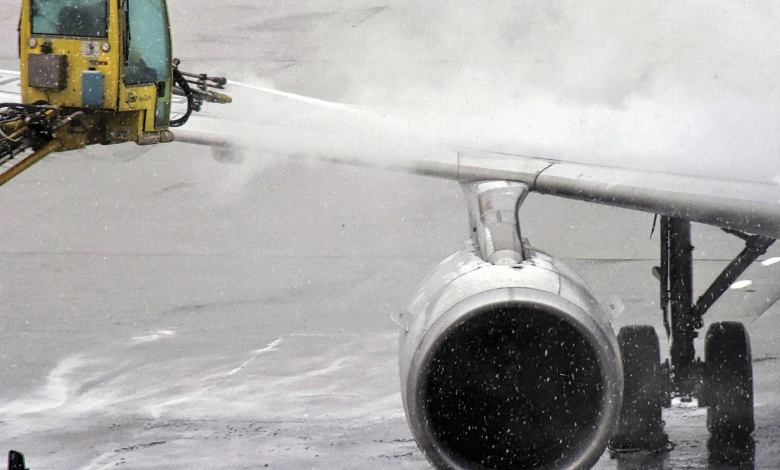
When temperatures dip below freezing, there are many good reasons to preheat the engine. The different metals inside expand with heat at different rates, so quickly cranking up the engine when the pieces and parts are cold can cause damage. Additionally, cold oil doesn’t lubricate the parts as well. Starting the engine at temperatures below […]
The National Transportation Safety Board’s decision to add “loss of control” to its 10 Most Wanted list of safety improvements in 2015 served as another clarion call for help to stem what has become the top killer in airplanes of all shapes and sizes. While pilots losing control of their aircraft is not a new […]
You are planning an IFR flight. Its a route you have flown many times before. You always file direct and most of the time the cooperative controllers give it to you. So you again file direct, toss in a nearby Class B or C as an alternate, and calculate your fuel requirements for a flight to the alternate. Youve met your obligations under 14 CFR 91.167 and 91.169. Or have you?
The first sign of trouble came when the pilots yoke-mounted GPS announced External power lost. Switching to battery. Before the pilot could wrap his head around that, the instrument panel went as dark as the inky night outside. Central Florida is thinly inhabited, offering few ground references. Fighting vertigo but keeping his cool, he knew that his Bonanza was trimmed for straight and level cruise. Using his GPS, he gingerly turned east toward the ocean with well-lit towns and cities hugging the shore, aiming at his home base, Boca Raton airport, KBCT. The engine droned along as if all was right with the world.
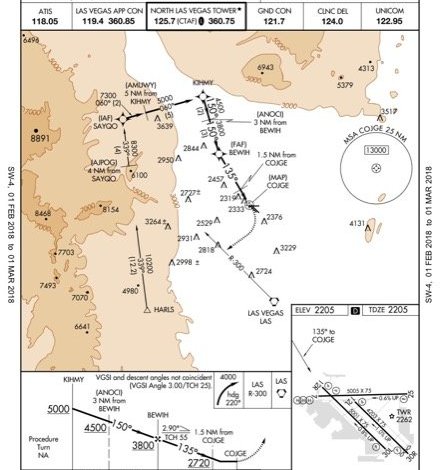
Perhaps its a bias from learning to fly in Colorado, but I never think of Pennsylvania as particularly mountainous. Yet mountain-dodging is what jumped to mind looking at the RNAV (GPS) Rwy 12 into Williamsport, PA (KIPT). Approach designers dont toss in a 26-degree turn at the final approach fix for no reason, nor do they allow another 16-degree turn from the final approach course to the runway-unless they have to.
Models like the NAM, RAP, and HRRR are often considered the cutting edge of weather forecasting on supercomputers. Indeed, these are some of the best forecasting innovations of the past 15 years. They are a class of tools called dynamical models, designed to solve conditions in the entire atmosphere across a large forecast zone. Typically a three-dimensional grid is built with a granularity of several miles, and the equations of motion are solved at each gridpoint to provide us with temperature, pressure, moisture, and wind.