









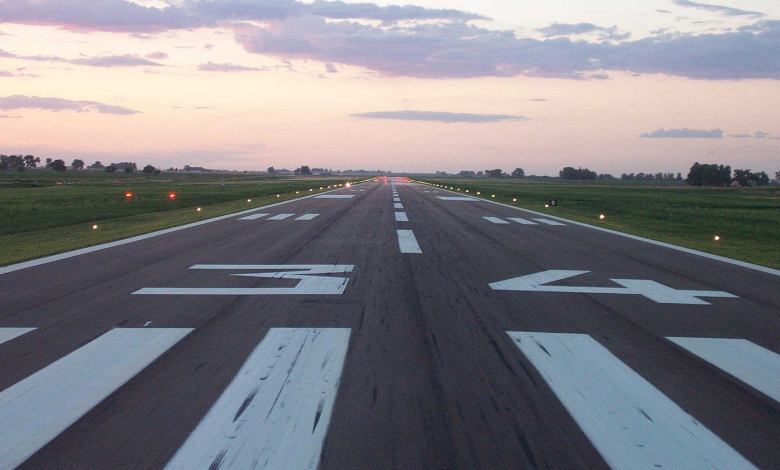
A Case of Losing Power, Far From an Airport
The gospel on turn-backs after a power loss just after takeoff is to continue straight ahead, no matter how uninviting the terrain looks.


The gospel on turn-backs after a power loss just after takeoff is to continue straight ahead, no matter how uninviting the terrain looks.
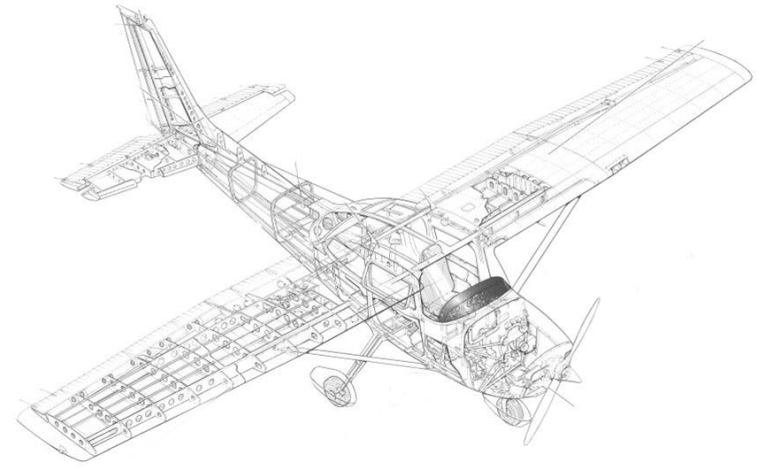
In our March issue, a short article about the Vulcanair V1.0 — an Italian four-seater strongly resembling a Cessna 172 — mentioned that it uses “a steel-frame and aluminum structure, which was the standard for decades.” I beg to differ. It’s true that the Vulcanair has a steel frame under its aluminum skin — I […]

Butte, Montana, and its Bert Mooney Airport (BTM) are nestled snuggly between the Yellowstone and Glacier national parks in the southwestern portion of the state, where copper mining was once the primary economic driver. The Butte VOR-A approach to Mooney Airport seems pretty straightforward, but remember, of course, that any approach without a runway number […]
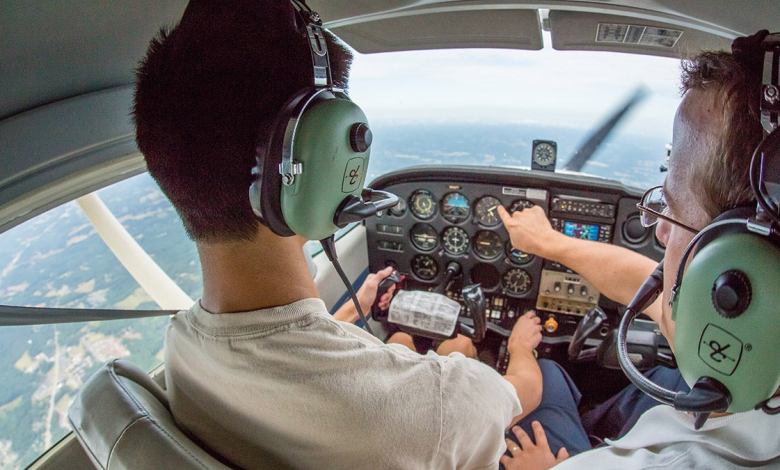
Year after year, the National Transportation Safety Board and FAA nag pilots about accidents caused by “loss of control – in flight,” which usually means a stall. The topic is well covered in training too. Dozens of questions on the subject appear on the knowledge test, and stalls are performed on the practical test and […]

About an hour away from JFK I pressed my truck’s radio button and listened to the XM traffic and weather station. No major traffic issues. Good news. A snowfall was predicted for the return home, but only a couple of inches. Again, good news. Via internet notification I had been unceremoniously assigned the early evening three-day […]

“Hey, can you hand me a ballpoint pen?” “You’ll like this one,” says Cathy, my wife. Sure enough, she’s right. The pen says “Kaiser Air,” complete with phone number and Arinc frequency. I just love these pens, worth little in terms of construction cost, but worth a lot to me. This one is white with […]

Nestled between the Pacific Ocean and the rolling, oak-clad hills of central California lie the fertile farmlands of Salinas, the largest community of Monterey County, with a population of about 160,000. Aptly referred to as the “Salad Bowl of the World” due to the intensity of local agriculture, Salinas is home to many low-income immigrant […]

AWOS: Automated weather observing system. A suite of weather sensors of many different configurations either procured by the FAA or purchased by individuals, groups or airports that are required to meet FAA standards. AWSS — automatic weather sensor system — is functionally the same as ASOS. A state or airport can purchase an AWOS with […]

Establish yourself on the reciprocal of the ILS localizer course, 351 degrees, and fly outbound on the localizer. Since youre outbound on the front course, remember to correct away from the needle on the localizer. (See, Reverse Sensing and Reverse Sensing-HSI in the June and July 2016 issues.) Two minutes is usual. Then turn to the outbound procedure turn heading of 036 degrees. The Instrument Flying Handbook specifies flying that heading for 40 seconds, although many of us were taught to fly it for a full minute. Either is fine so long as you remain inside the limit. Then, make a standard-rate left turn to 216 degrees and join the 171-degree localizer.

The BasicMed exam follows a similar structure to an FAA physical with one big difference. In an FAA medical, the doctor needs to identify if body parts, organ systems and other general things such as blood pressure are: Normal or Abnormal. If the AME finds something abnormal, s/he must provide a narrative. By identifying an abnormality, the AME is making a diagnosis of sorts. In a BasicMed exam, the same body parts and organ systems only need to be examined, but not identified as normal or abnormal, thus no diagnosis is made.

Get the latest stories & special offers delivered directly to your inbox.
SUBSCRIBE