Pilot Proficiency

Stalls Aren’t a Maneuver, They’re an Emergency

Year after year, the National Transportation Safety Board and FAA nag pilots about accidents caused by “loss of control – in flight,” which usually means a stall. The topic is well covered in training too. Dozens of questions on the subject appear on the knowledge test, and stalls are performed on the practical test and […]

Read More »

The Trials and Tribulations of Dealing with a Snowstorm

About an hour away from JFK I pressed my truck’s radio button and listened to the XM traffic and weather station. No major traffic issues. Good news. A snowfall was predicted for the return home, but only a couple of inches. Again, good news. Via internet notification I had been unceremoniously assigned the early evening three-day […]

Read More »

Examining Decades of Accumulated Aviation-Related Treasures

“Hey, can you hand me a ballpoint pen?” “You’ll like this one,” says Cathy, my wife. Sure enough, she’s right. The pen says “Kaiser Air,” complete with phone number and Arinc frequency. I just love these pens, worth little in terms of construction cost, but worth a lot to me. This one is white with […]

Read More »

Every Kid Can Fly

Nestled between the Pacific Ocean and the rolling, oak-clad hills of central California lie the fertile farmlands of Salinas, the largest community of Monterey County, with a population of about 160,000. Aptly referred to as the “Salad Bowl of the World” due to the intensity of local agriculture, Salinas is home to many low-income immigrant […]

Read More »

Everything You Need to Know about AWOS and ASOS

AWOS: Automated weather observing system. A suite of weather sensors of many different configurations either procured by the FAA or purchased by individuals, groups or airports that are required to meet FAA standards. AWSS — automatic weather sensor system — is functionally the same as ASOS. A state or airport can purchase an AWOS with […]

Read More »

Fly the Hook

Establish yourself on the reciprocal of the ILS localizer course, 351 degrees, and fly outbound on the localizer. Since youre outbound on the front course, remember to correct away from the needle on the localizer. (See, Reverse Sensing and Reverse Sensing-HSI in the June and July 2016 issues.) Two minutes is usual. Then turn to the outbound procedure turn heading of 036 degrees. The Instrument Flying Handbook specifies flying that heading for 40 seconds, although many of us were taught to fly it for a full minute. Either is fine so long as you remain inside the limit. Then, make a standard-rate left turn to 216 degrees and join the 171-degree localizer.

Read More »

BasicMed Follow Up

The BasicMed exam follows a similar structure to an FAA physical with one big difference. In an FAA medical, the doctor needs to identify if body parts, organ systems and other general things such as blood pressure are: Normal or Abnormal. If the AME finds something abnormal, s/he must provide a narrative. By identifying an abnormality, the AME is making a diagnosis of sorts. In a BasicMed exam, the same body parts and organ systems only need to be examined, but not identified as normal or abnormal, thus no diagnosis is made.

Read More »

Hurricane Warning

Although hurricanes are easily avoidable since they usually move to the front of the national news cycle, its good to have a working knowledge of them. One day you may find yourself caught in outer spiral bands as you try to move your plane out of danger, or your area may be the new target of a hurricane that deviates unexpectedly. Or perhaps you simply find yourself in the Caribbean in the late summer months with erratic Internet access-possibly a fortunate situation.

Read More »

On The Air: July 2018

I took off from Islesboro (an island off the coast of Maine) in a C-150. I was going south down the coast that took me through the Portland ATC area. I then realized that I was going to fly over Moodys Diner in Waldoboro. This diner was made famous by Maine comedians Bert and I, and again later by Tim Samples.

Read More »

Killer Charts

Jeppesen is updating symbology for STARs and SIDs charts. As part of the change, Jepp contracted with an outside firm to conduct an operational risk analysis. After an in-depth evaluation of the mitigation possibilities TRS recommended to Jeppesen to create a training tutorial.

Read More »
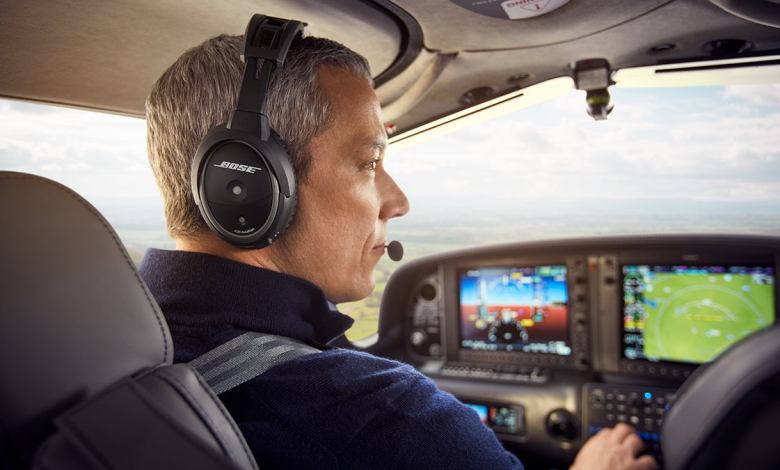
Pilot in aircraft
Sign-up for newsletters & special offers!

Get the latest stories & special offers delivered directly to your inbox.

SUBSCRIBE