














Otto Aerospace—the developer of a nine-passenger, super-midsize business jet that is designed to reduce aerodynamic drag by 35 percent and fuel burn by nearly 60 percent—on Wednesday said it achieved a flight test breakthrough that could accelerate its efforts to field an aircraft by 2030.
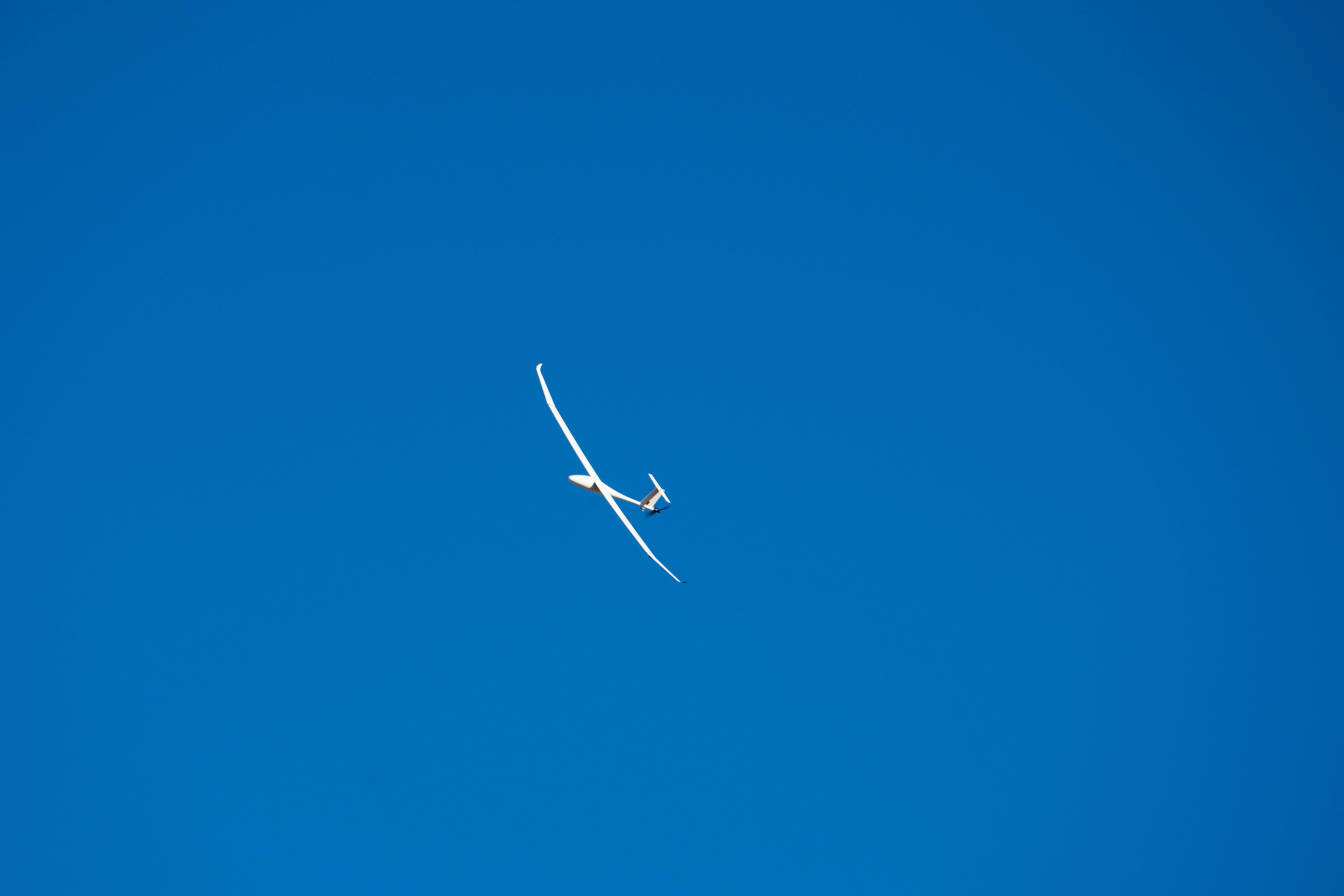
The company said it completed a flight test campaign with a laser-powered, uncrewed drone demonstrator that incorporates transonic, laminar-flow technology—the same that features on its flagship Phantom 3500. Otto said the campaign “validated predicted aerodynamic efficiency” of the laminar-flow system during flight. It plans to use that data to develop the Phantom as well as “future energy-relay [uncrewed aerial vehicle] concepts.”

“This aircraft proved what we’ve modeled for years, that high-efficiency laminar-flow aerodynamics can deliver extraordinary endurance and performance,” said Scott Drennan, president and CEO of Otto, in a statement.
The company’s news release notably did not mention the 35 percent or 60 percent drag and fuel burn reduction targets. FLYING has reached out to Otto for clarification on whether those figures were achieved.
The drone’s development was funded by a two-year Defense Advanced Research Projects Agency (DARPA) contract, awarded in 2024, that supported the agency’s Energy Web Aircraft (EWA) program. Otto designed a laminar-flow airframe for EWA, which investigated aircraft that could recharge their batteries in flight, allowing them to soar indefinitely. The idea was to use laser beams to transmit electric power across long distances.
More recently, Otto used the drone for its own internally funded testing out of Spaceport America over New Mexico’s White Sands Missile Range. Autonomous systems developer Swift Engineering assisted with the campaign, calling it a “breakthrough.”
“The performance demonstrated in flight confirms the promise of laminar-flow aerodynamics to redefine long-endurance efficiency for unmanned systems across defense and commercial applications,” said Hamed Khalkhali, president of Swift.
Flexjet, which ordered 300 Phantom 3500s in September, is the model’s intended launch customer. But Otto is also pursuing opportunities in defense.
Otto’s Approach
Otto CEO Paul Touw told FLYING at the 2025 Paris Air Show that the Phantom 3500 could achieve carbon neutrality two decades ahead of the Paris Agreement’s 2050 target—without using electric or hybrid-electric propulsion.
The aircraft’s two Williams International FJ44 engines will be propelled by gas or sustainable aviation fuel (SAF), which Touw said could reduce emissions by 90 percent compared to traditional jets. But the secret ingredient lies in the airframe.
The Phantom has a highly streamlined fuselage, with smooth surfaces and few external rivets or panel gaps across the entire airframe, not just the wing. That makes the design smooth and reduces turbulent airflow, which is responsible for drag. NASA is also testing laminar flow aircraft technology.
“Everyone was comfortable with turbulent-flow aircraft, and no one was willing to take the risk and dive into the laminar-flow world until we came around,” Touw said.
The Phantom is designed to achieve a top speed of 250 knots and range of 3,500 nm, comparable to the Bombardier Challenger 3500 or Embraer Praetor 500. But its 19,000-pound MTOW is about half of those models. With its combination of light weight and low fuel burn, Otto believes the design will slash operating costs by 43 percent hour compared to super-mid jets that burn jet-A, while also lowering maintenance costs.
The design is windowless, instead using high-definition displays to give passengers a view of the outside world. But it is designed to fit as many as nine passengers standing comfortably, and its 800-cubic-foot cabin would be larger than many aircraft in its category.
Touw said the company aims to begin Phantom 3500 flight testing in 2027, using four production-conforming aircraft. It is targeting FAA Part 23 certification and entry into service by 2030, aiming to produce about 1,600 aircraft in the 2030s.
Touw has estimated the program will cost about $1 billion, with half going toward aircraft development and the rest supporting construction of a final assembly line.

