August 1, 2017, Phoenix, Ariz.Grumman AA-1B TrainerAt about 1300 Mountain time, the airplane was substantially damaged when it impacted terrain shortly after takeoff. Both the flight instructor and student pilot sustained serious injuries. Visual conditions prevailed.According to witnesses, after the airplane lifted off and was in its initial climb to the west, the wings started to rock back and forth. The airplane began to descend, struck the airport's western perimeter fence and collided with terrain before coming to rest on a road bordering the airport.
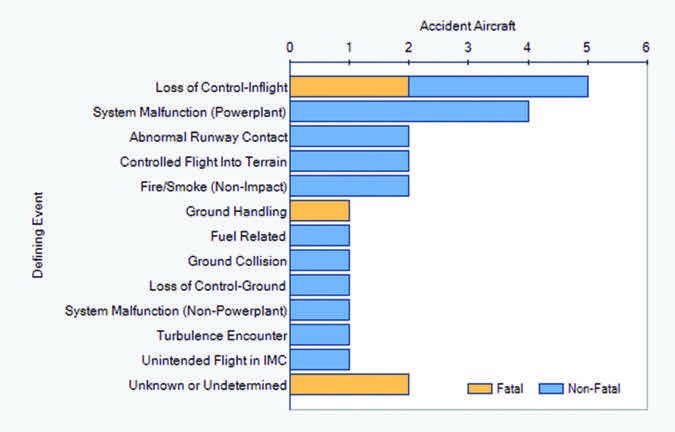
A significant number of incidents involved a loss of engine power, frequently resulting in forced landings or crashes that caused substantial damage and sometimes serious injuries or fatalities.
Several accidents were attributed to a loss of control during critical phases of flight, such as takeoff, landing, or go-arounds, often influenced by pilot experience, environmental conditions, or aircraft unfamiliarity.
Mechanical failures, including issues with engine components, flight control systems, and landing gear, were identified as direct or contributing causes in multiple accidents.
Pilot judgment and decision-making, encompassing factors like improper fuel management, attempts to land on inadequate runways, or flying outside of planned parameters, played a role in various serious incidents.
August 1, 2017, Phoenix, Ariz. Grumman AA-1B Trainer
At about 1300 Mountain time, the airplane was substantially damaged when it impacted terrain shortly after takeoff. Both the flight instructor and student pilot sustained serious injuries. Visual conditions prevailed.
CREATE A FREE ACCOUNT
Sign up to keep reading
Create a free account to continue. Already a member? Sign in below.