











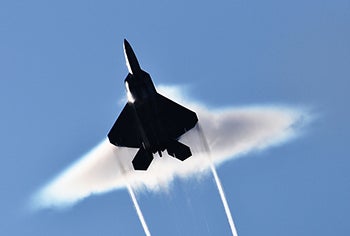


F-22 Crash Report Called into Question

Gemini Sparkle

Key Takeaways:

  • A Department of Defense Inspector General report challenges the Air Force's conclusion that the 2010 F-22 crash, which killed Captain Jeff Haney, was caused by pilot error.
  • The Inspector General's report states the Air Force's original findings were "not supported by the facts," lacked adequate explanation for factors like hypoxia, and contained numerous incorrect references.
  • The report calls on the Air Force to reevaluate its initial accident report, although the Air Force maintains the validity of its original findings.
See a mistake? Contact us.

A report released by the Department of Defense Inspector General on Monday calls into question the Air Force’s analysis of the fatal 2010 F-22 crash — which the military attributed to pilot error — that caused the death of Captain Jeff Haney.

In the new report, the Inspector General blasts the service’s findings, saying they were “not supported by the facts” and do not adequately explain all factors involved in the accident. The Inspector General found the Air Force’s analysis lacking in relation to several elements, including the position of the pilot’s mask throughout the event, the potential effects of hypoxia on Haney and the Emergency Oxygen System activation, to name a few.


The Inspector General went on to say that of the 109 references listed in the Air Force’s accident report, 60 were either wrong or unrelated to the material being referenced.

The Air Force fired back against the rebuke, saying that while portions of the report “could have been written more clearly,” the findings remain valid.

Haney’s F-22 went down approximately 120 nm northeast of Joint Base Elmendorf-Richardson in Alaska during a routine training mission after experiencing an engine bleed air leak malfunction at high altitude. After initiating a descent and pulling the throttles to idle, Haney’s F-22 began a 240 degree roll through inverted, and the aircraft continued to lose altitude until Haney initiated a dive recovery at 5,470 feet, but crashed seconds later.

Half a year after the accident, the entire fleet of fifth generation fighters was temporarily grounded after a slate of incidents involving oxygen deprivation triggered additional safety concerns.

In December 2011, the Air Force issued its accident report, which found, “by clear and convincing evident, the cause of the mishap was the MP’s [mishap pilot’s] failure to recognize and initiate a timely dive recovery due to channelized attention, breakdown of visual scan, and unrecognized spatial disorientation.”

The Inspector General’s report calls on the Air Force to reevaluate the original report and take “appropriate action” in regard to any deficiencies.

Ready to Sell Your Aircraft?

List your airplane on AircraftForSale.com and reach qualified buyers.

List Your Aircraft
AircraftForSale Logo | FLYING Logo
Pilot in aircraft
Sign-up for newsletters & special offers!

Get the latest stories & special offers delivered directly to your inbox.

SUBSCRIBE