Incorporating Relaxation and Luxury Into AirVenture Camping

While not achieving the title of ‘Sensei’ just yet, this airplane owner is getting close.

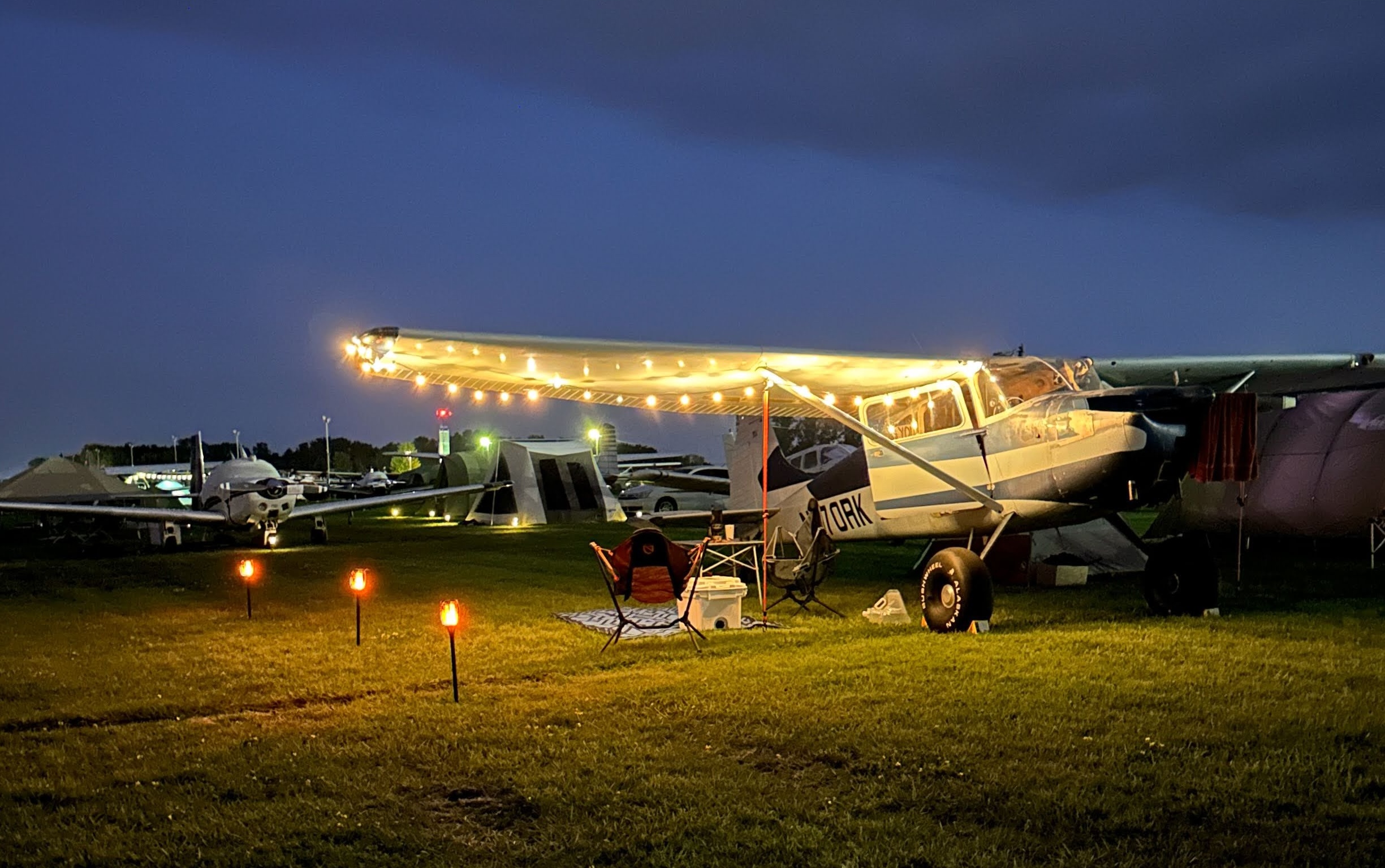
With some thoughtful equipment upgrades and the right mindset, spending a week sleeping on the ground in the Upper Midwest can become more pleasant than expected. [Credit: Jason McDowell]
Gemini Sparkle

Key Takeaways:

  • Inspired by "Ray," an older pilot who exemplified mastery of energy conservation and relaxation, the author has transitioned from a high-energy, minimalist approach to prioritizing comfort and luxury in his own life.
  • This shift is evident in the author's preparations for EAA AirVenture, where he now opts for premium camping gear, including a comfortable cot, a spacious tent, a rechargeable fan, and high-quality espresso equipment.
  • The author also adopts a "Ray-like" strategy for AirVenture arrival, coming a week early to avoid crowds and stress, working remotely from a hotel before leisurely setting up his comfortable campsite.
  • The article chronicles the author's personal evolution towards a more relaxed and comfortable lifestyle, applying these principles to enhance his aviation and camping experiences.
See a mistake? Contact us.

Between high school and college, I was working full-time at a local bicycle shop to earn money for flying while also working part time at my flying club to take advantage of the employee discount. Any and all time off was spent studying and progressing through primary flight training.

Life was in high gear, filled with early mornings, late nights, and widespread exhaustion.

On the other end of the energy spectrum was a club member we’ll call Ray. Ray owned a beautiful Cessna 140 and stubbornly refused to upgrade to captain on the DC-9. This way, he could cling to his No. 1 seniority spot and, therefore, enjoy absurd amounts of time off. His monthly schedule typically involved flying from Detroit to Flint, Michigan, and back twice a month. 

Ray didn’t walk through life—he strolled. If he desired a cold drink from the refrigerator two hangars away, he might casually bring up the topic of icy beverages and then let the mental image steep in everyone’s heads. Minutes later, when the refreshing vision became too much for someone to bear, they would get up to go grab one for themselves, at which point Ray would take them up on the offer to grab one for him.

The most iconic and definitive Ray moment occurred on a beautiful Saturday evening at the fuel pumps, and I was fortunate enough to witness it firsthand.

After finishing a leisurely flight in his 140, he taxied back to the ramp for fuel, only to find a line of three 152s waiting for their turn at the pumps. Anyone else would shut down, hop out, and simply pull their little airplane forward one space at a time (with one hand) as the people ahead finished up.

But not Ray.

Ray remained in his airplane with the windows open, relaxing and enjoying the breeze flowing through the cockpit. When the airplane ahead was pulled forward one space, he started his engine, taxiied forward approximately 20 feet, and then shut down again. He repeated this each time he needed to move forward in line until he finally arrived at the pumps. 

Even at a young age, brimming with energy and motivation, my friends and I recognized that Ray had life pretty well figured out. We grew to admire his absolute mastery of energy conservation and relaxation. Thoroughly inspired, we began referring to him as “Sensei” and strived to someday achieve his mastery of daily life.

Now, as an airplane owner myself, rapidly working my way through my 40s, I’m beginning to recognize some traits that would make Ray proud—most recently, in the form of preparation for EAA AirVenture in Oshkosh, Wisconsin (July 21-27).

Whereas once, I prided myself on my hardy adaptability to adventure and camp in any conditions as a minimalist, I’m now willing to forego the lightest and most compact gear in favor of cushy, comfy camping niceties. Gone are the ultralight tents and sleeping pads from my adventure motorcycling days. In their place are luxurious items that take full advantage of my 170’s cavernous cabin.

My sleeping situation, for example. Rather than using a thin pad that weighs little more than a toothbrush, I’ve upgraded to the most comfy cot in REI’s lineup. Sure, it’s bulky and weighs more, but for a great night’s sleep that tops many hotel beds, it’s 20 pounds of payload well spent. It’s also nice being up off the ground—the cot serves as a bench to sit on in the tent, and should the tent somehow spring a leak in a rainstorm, I won’t be partially submerged on the ground.

One problem—the cot wouldn’t fit into my existing tent. But so deep was my love for it, I ordered a special long version of my Big Agnes tent so it would fit inside. It was expensive, but I regret nothing.

I didn’t stop there. To ensure I can obtain a great night’s sleep even in the muggiest, swampiest Wisconsin nights, I picked up a compact, rechargeable fan to hang from the ceiling of my tent. Even set to the lowest speed, it creates a lovely breeze and is a total game-changer when it comes to sleeping comfort. I generally only have to recharge it once or twice during the week.

On the topic of charging, another game-changer that introduces legitimate luxury to my campsite has been my Anker power station that I reviewed in a previous article. Even with a friend sharing my campsite for the week and guests stopping by to top off their phones, the little powerhouse wasn’t even halfway depleted after a week of AirVenturing. And had I actually run it to zero, I could simply carry it over to an electrical outlet, plug it in, and wait 43 minutes for it to reach 80 percent.

Ray would definitely admire my total unwillingness to compromise when it comes to the luxury of exquisite coffee and espresso.

Earlier this year, a very generous friend gifted me with a 9Barista espresso machine that’s perfect for camping. The inventor and founder, Will Playford, has a Ph.D. in jet engine thermodynamics and used to work at the Whittle Laboratory at Cambridge in England. I can confirm that, when paired with a good grinder and a Jetboil stove, his compact machine produces higher-quality espresso than most coffee shops serve to their customers. 

But perhaps more than anything, I think Ray would admire my arrival strategy. Rather than subject myself to the throngs of traffic being funneled in through the FISK arrival and then clamber for a good place to camp, I simply merge over into life’s easy lane and arrive the week before the big event, long before the crowds arrive.

This, admittedly, is one of the luxuries of being a remote worker. After tying down my plane, I head up to the Hilton on the north side of the field and pay a reasonable nightly rate for a quiet place to work for a few days. Then, at the end of the week, I grab my backpack, walk through the North 40 and Warbirds down to Vintage, and set up camp.

I may not have achieved the title of Sensei just yet, but I think he would be proud.

Jason McDowell

Jason McDowell is a private pilot and Cessna 170 owner based in Madison, Wisconsin. He enjoys researching obscure aviation history and serves as a judge for the National Intercollegiate Flying Association. He can be found on Instagram as @cessnateur.


Ready to Sell Your Aircraft?

List your airplane on AircraftForSale.com and reach qualified buyers.

List Your Aircraft
AircraftForSale Logo | FLYING Logo
Pilot in aircraft
Sign-up for newsletters & special offers!

Get the latest stories & special offers delivered directly to your inbox.

SUBSCRIBE