














5 of the Best Pieces of Gear for Underwing Camping

Whether at AirVenture or sleeping under the stars, here's what you'll want to have with you.

Camping under an airplane tips
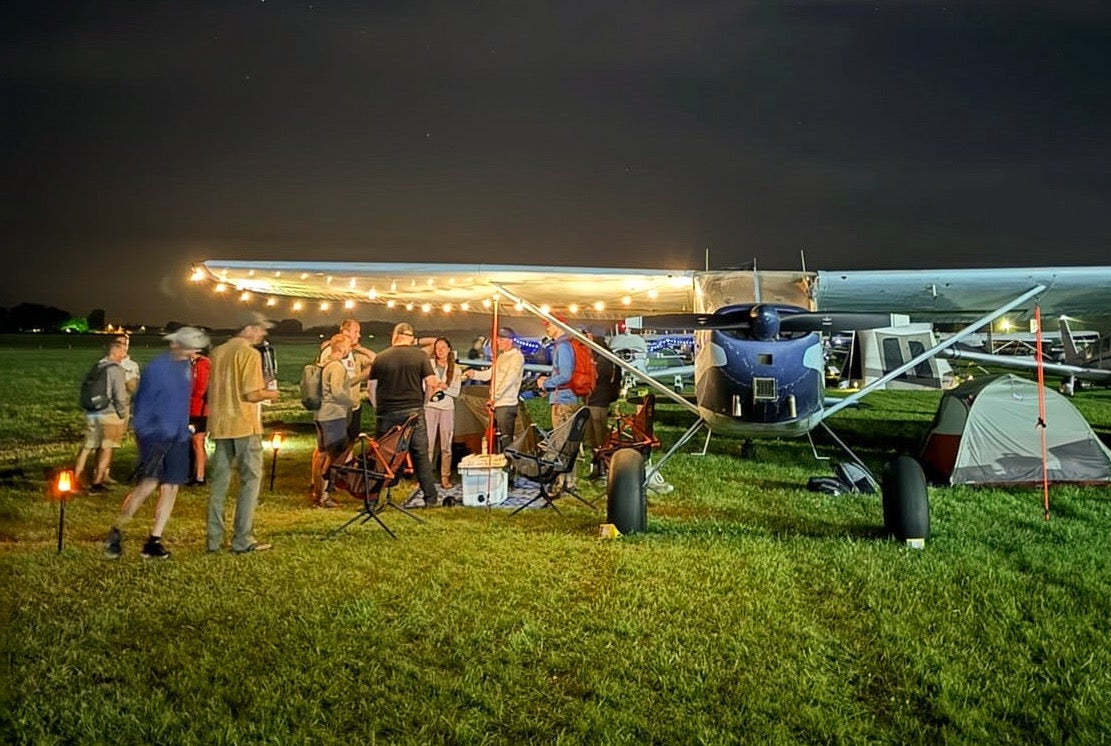
The right gear helps to create the perfect underwing soirée at EAA AirVenture in July at Oshkosh, Wisconsin. [Courtesy: Bella McFarland]
Gemini Sparkle

Key Takeaways:

  • The author's experience at EAA AirVenture has evolved from focusing on aircraft to valuing social connections, prompting the creation of a comfortable "underwing patio" as a gathering spot.
  • Key gear recommendations for enhancing fly-in camping comfort and hospitality include premium reclining camp chairs, warm solar-powered string lights for ambiance, a durable cooler for cold drinks, a versatile camp table, and a robust portable power station for charging devices.
  • Beyond specific items, the article provides a general fly-in camping guide, advising on researching destinations, considering amenities, bringing reliable shelter and essential gear, setting up an inviting camp, managing power needs, and practicing "Leave No Trace" principles.
See a mistake? Contact us.

Over the years, I’ve learned that the more you attend the EAA AirVenture fly-in at Oshkosh, Wisconsin, the more the event becomes about the people rather than the airplanes.

When I first visited in 1998 or so, my mind boggled at the incredible variety of flying rarities on display, and with my cheap film camera in hand, I pursued them all with ferocity. Now, having stalked and captured the most intriguing specimens—and having met new friends every year—AirVenture has become an annual reunion of some of my favorite people in the world.


Historically, I’d spend the week wandering around the grounds, either encountering friends entirely by chance or by arranging various meeting times and locations (1 p.m. in the shade beneath the Piaggio Royal Gull, for example). But now, with an airplane of my own, everything has changed.

Namely, I now make a point to create my very own underwing patio. A gathering place with cool shade, comfy chairs, ice-cold drinks, and pleasant company. Having set up and hosted such meeting spots for three years, I believe I’ve discovered some of the most crucial elements. 

Nemo Stargaze Reclining Camp Chair ($250)

 Stargaze chair under a plane
A unique take on the traditional folding chair, Nemo’s hammock-like Stargaze chair is the most comfy out there. [Courtesy: Jason McDowell]

When it comes to items that separate you from the ground, I believe it’s well worth spending a premium for the good stuff. Tires, mattresses, shoes, rock-climbing rope, and parachutes come to mind. This is a category where the cheapest options can create experiences that are miserable at best or disastrous at worst.

In the world of folding chairs, it seems quality is proportional to cost. After researching and sampling many various options, I’ve finally arrived at the Nemo Stargaze reclining camp chair. While pricey at $250, this is one of those items you buy once and enjoy forever. The perfect design and sleep-inducing comfort endure long after you’ve forgotten about the money you’ve spent. 

READ MORE: Equipment to Buy when Purchasing an Airplane

Like most folding chairs, the Stargaze packs down into a smaller zippered carrying bag. It doesn’t pack down quite as small as some chairs out there, but it’s a worthy price to pay for sublime comfort. It’s also quick and easy to set up, with no tricky fitments or overly tight tolerances to annoy you. At night, to prevent the chair from becoming soaked in dew, it only takes a few seconds to unclip the two anchor points and toss the fabric part into a tent.

I bought a couple of extras for friends, and everyone remarked about how comfy they were. With dedicated pockets for a drink and a phone, everyone settles in, and few look forward to getting back up.

Solar-Powered String Lights ($33)

String lights on a plane
String lights with large bulbs and a warm color temperature make for a charming evening atmosphere. [Courtesy: Jason McDowell]

On a warm summer night with a light breeze and sparkling conversation, it’s really nice to add just a bit of ambiance. In typical camping environments, a campfire is ideal—but with 40 or so gallons of 100LL just overhead, there are better options. 

I’m a fan of the Lepro brand string lights I found on Amazon. With solar power, the lights charge up during the day and then turn on at night. I hang mine up beneath the wing and simply set the small solar panel on top of the plane.

There is one downside. They won’t turn on until the photocell is convinced it’s completely dark out. This is annoying, as I find myself wanting the lights to turn on about an hour or two before they do. Accordingly, I have to use tape to cover the photocell as dusk settles in.

I put up with the annoyance, however, because unlike many string lights out there, the Lepros have a nice, warm, golden glow despite being LEDs. This creates a pleasant atmosphere that you really appreciate after seeing other LED string lights that have a high color temperature.

This year, for example, one camping neighbor’s harsh whitish-blue lights created an atmosphere every bit as charming as a vape shop in a strip mall, whereas my campsite was warm and inviting.

Pelican 30-Quart Elite Cooler ($250)

Pelican cooler in front of a plane
Simultaneously a cooler, ottoman, and coffee table, the Pelican cooler serves multiple purposes. [Courtesy: Jason McDowell]

Icy-cold drinks are critical in hot, humid Wisconsin summers.

The first year I attended AirVenture as an airplane owner, I brought along a cheap styrofoam cooler to keep drinks chilled. It lasted about three days before cracking and being rendered useless.

The subsequent hunt for the perfect cooler was more complex than I expected. I wanted the perfect size—small enough to fit into my back seat for transport, yet big enough to hold a fair amount of beverages. I also decided I wanted one that performed well, as it would be sitting outside in the sun all day, every day.

I decided on the Pelican 30-quart Elite cooler. Compared to the equivalent Yeti, it has thicker walls, and I reasoned this equates to better insulation. It also has more robust latches and features some shallow cup holders on top that make it a decent side table or ottoman when closed.

I ordered white to better reflect the sun throughout the day, and it has performed beautifully. I typically add a small bag of ice once per day, which is more than necessary. Now, two years into ownership, I can’t find a single aspect to complain about.

Alps Mountaineering Camp Table ($80)

Camp table under a plane
Whether used for preparing a meal or keeping items off the ground and within easy reach, a good camp table has many uses. [Courtesy: Jason McDowell]

A good underwing table is the least exciting item on the list but also arguably the most useful.

Whether used to brew coffee, prepare meals, or simply keep everyday items in a handy, orderly state, it earns its keep every day. The trick is finding one that is perfectly sized for GA camping.

At 28 inches square and 27 inches tall, the Alps Mountaineering Camp Table fits the bill. Even better, it quickly collapses into a 7.5-by-4-by-28-inch pouch for transport and, with its aluminum construction, weighs only 6 pounds. The top can be easily removed and hosed off if needed, and while parts of it are plastic, everything appears to be relatively robust and durable.  

I’ve found that a good camp table isn’t truly valued until you’ve used it—and then you have to go without it. Suddenly, things like food, phone chargers, sunscreen, and all the random miscellanea that one compiles throughout the day begin to collect on the ground and in various corners of the aircraft cabin. It’s one item I’m happy to have along on any camping trip.

Anker Power Station ($329-$600)

Power station inside a plane
Roughly the size of two shoeboxes, the Anker C1000 provided twice as much capacity as needed for two people over an entire week of camping. [Courtesy: Jason McDowell]

As airplane campsites at AirVenture lack any kind of power, keeping devices charged has always been a challenge.

Historically, my strategy was to use two small 20,000 mAh power banks, leaving one plugged into a communal charging station overnight—unattended—while using the other. While this did keep my phone charged, it became annoying to monitor the charge levels of each, hoping to find an available outlet at the charging station…and then hoping it wouldn’t grow legs and walk away.

This year, I went nuclear. Not literally, although the power output of my big Anker C1000 1,056 watt-hour (Wh) charging station sometimes has me guessing. While expensive, there is another option at $600, only $100 more than the next smaller option, and I like to err on the side of more capacity.

I wasn’t sure about how much capacity I’d actually need. I knew I’d have a guest in their own tent next to my plane for the week, and I knew that we both wanted to keep our devices fully charged. I also knew that, as a good host, I’d like to be able to offer a top-off to friends stopping by for a visit.

For nine days, I did all of these things—and ended up using less than half of the C1000’s total capacity of 1,056 Wh. So, I clearly overbought. The upside? Now, I know I can run a couple of small fans at future AirVentures to keep cool and keep mosquitos away.

So, based on my own mission requirements, the smaller $500 Anker C800 Plus, with 768 Wh of capacity, would easily suffice while saving me money. For just one person, the even smaller Anker 535, with 512 Wh of capacity, would likely be just fine.

Regardless of which model you choose, having all the power you need right at your airplane for a week or more is a total game changer. 

Fly-In Camping Guide

Embarking on a fly-in camping adventure is a unique way to explore nature while combining the thrill of aviation with the tranquility of the outdoors. Below are some well-rounded tips to ensure a smooth and enjoyable experience when camping underneath your airplane.

Research Your Destination

Before heading out, it’s essential to thoroughly research your camping location. The Recreational Aviation Foundation’s Airfield Guide is an excellent resource for discovering under-the-radar camping spots across the United States. This guide provides detailed information about airstrips, surrounding amenities, and suggested activities, ensuring you have all the necessary permissions to land and camp. Another valuable resource is to directly contact airport managers to confirm if camping is allowed, as some airports may not advertise this option but do allow it.

Consider Amenities

Different airports and airstrips offer varying levels of amenities, from basic setups ideal for those wanting a “rough it” experience to more comfortable settings with showers and barbecue pits. Locations like Kern Valley Airport and Fairbanks International Airport have dedicated campground facilities that enhance the camping experience.

Shelter and Comfort

To enjoy a safe and comfortable stay, bring a reliable shelter. While sleeping bags under the wing can be tempting, a tent or tarp provides essential protection from weather and insects. For added comfort, invest in high-quality camping gear like the Nemo Stargaze Reclining Camp Chair, which offers superior comfort and durability, making it a perfect addition to your underwing camping setup.

Essential Gear

Packing light is crucial due to weight limitations in general aviation aircraft. Besides the basics of clothing, shelter, and food, include a survival kit equipped with a multi-tool, flashlight, signaling device, and first aid supplies. This ensures readiness for any unexpected situations.

Creating a Comfortable Camp

Setting Up Camp

Once settled, turn your campsite into a welcoming space. Consider stringing up solar-powered lights under the wing for ambience without the risk of fire near your aircraft. A portable camp table can be indispensable, keeping your essentials organized and accessible while adding to your overall camp setup.

Power Needs

A portable power station can significantly enhance your camping experience by keeping devices charged without relying on communal charging stations. An option like the Anker Power Station offers ample capacity for multiple devices, ensuring you stay connected and powered.

Leave No Trace

Embrace the ethos of leaving no trace to protect and respect the beauty of backcountry airstrips. Always clean up after yourself, take all trash with you, and leave the site better than you found it, ensuring these unique camping experiences are preserved for future adventurers.

FLYING may earn revenue from the products available on this page and participate in affiliate programs.

Jason McDowell

Jason McDowell is a private pilot and Cessna 170 owner based in Madison, Wisconsin. He enjoys researching obscure aviation history and serves as a judge for the National Intercollegiate Flying Association. He can be found on Instagram as @cessnateur.

Ready to Sell Your Aircraft?

List your airplane on AircraftForSale.com and reach qualified buyers.

List Your Aircraft
AircraftForSale Logo | FLYING Logo
Pilot in aircraft
Sign-up for newsletters & special offers!

Get the latest stories & special offers delivered directly to your inbox.

SUBSCRIBE
