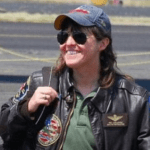
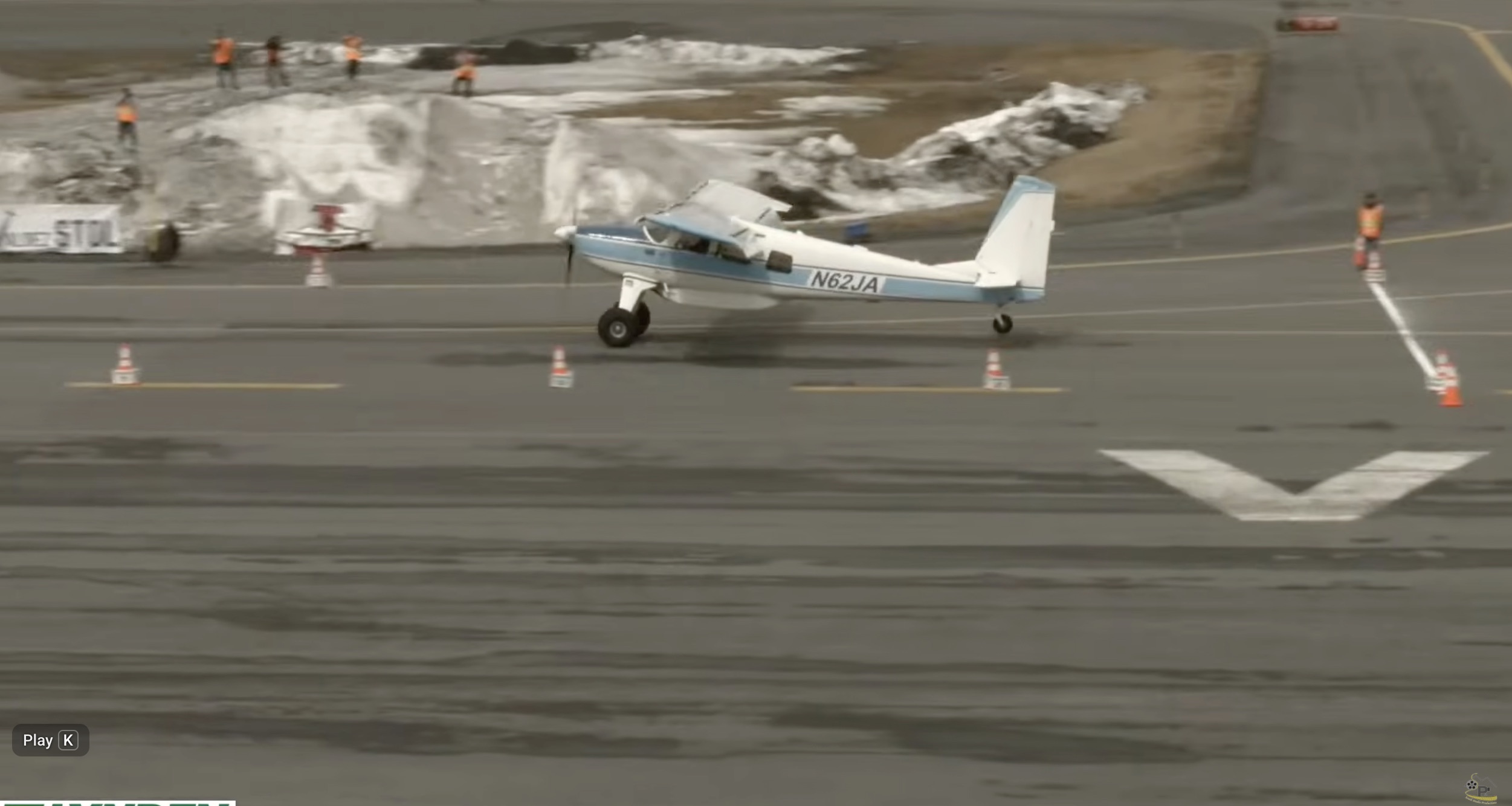
Lukas Stutzer, a fourth-generation Alaskan and co-founder and CEO of Helio Alaska, finished in first place in the Heavy Touring class at the 2026 Valdez STOL Competition on May 9-10.
Flying his 1972 Helio H-295, Stutzer won with a total takeoff and landing distance of 244 feet. He used the same aircraft to claim the same class at Valdez, Alaska, in 2021 at 197 total feet.
STOL—which stands for short take-off and landing—competitions take place around the country and are often well attended as pilots with varying experience levels and aircraft attempt to safely take off and land in the shortest distance possible.
The event, held annually at Valdez Airport (PAVD), is part of the Valdez Fly-In and Air Show. Established in 2003, the event includes elite STOL competition, aerobatic performances, aircraft displays, and family-friendly aviation activities. Pilots come from around the world to demonstrate their skill at precision flying.
- READ MORE: Looking at the Physics of STOL Drag
- READ MORE: Northern Exposure: Indulging an Obsession With Alaska
The Helio is an airframe designed for STOL. In 1948 the prototype was demonstrated flying off a tennis court at Harvard University. The aircraft evolved and went into production by the early 1950s.
During the Vietnam War the aircraft was utilized by the U.S. You sometimes see Helios in vintage military livery on display at airshows and fly-ins.
The design has had several manufacturers. Helio Alaska, Stutzer’s company, began operations in 2019.
The Helio is particularly popular with pilots who operate out of tight spaces and conduct off-airport operations.
Stutzer’s aircraft (N62JA) is equipped with Beringer Aero 10-inch wheels and brakes engineered specifically for the Helio platform.
According to Beringer Aero, the “system delivers up to 30 percent shorter rolling distance and enhanced heat dissipation, critical advantages during high-performance STOL operations and demanding landings.”
Brakes are critically important for short field operations. Student pilots are taught to configure the aircraft for short field takeoff and to line up on the edge of the runway.
While holding the brakes, the pilot applies full power. The pilot releases the brakes and, when rotation speed is achieved, lifts off and usually climbs out at VX (best angle of climb) to avoid “the 50-foot obstacle” at the end of the runway. When landing, the aircraft is configured for minimum controllable airspeed and the power controlled so the pilot can touch safely and apply the brakes immediately.
“Lukas’ performance in Valdez highlights the importance of precision engineering and reliable braking systems in STOL competition,” said Claire Beringer, CEO of Beringer Aero. “We are proud to support pilots pushing the limits of performance and safety.”
Beringer Aero, established in 1985, specializes in the manufacturing of high-performance wheels and brakes for the automobile and motorcycle racing industries. In 2002 the company expanded to the world of aviation.
In addition to the Helio, the company has developed aircraft braking systems for the Pilatus PC-6 and Cirrus SR22. The company’s signature red wheels are recognized worldwide.
Among other innovations Beringer has developed are tubeless wheels, ALIR anti-skid system, and B’FleX landing gear.