Register

Training & Sims

Small World

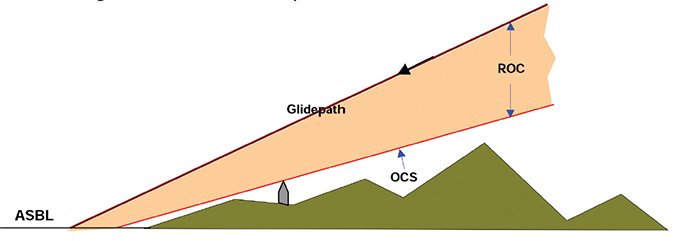
Aviation is a small world; there are a limited number of topics on which one can write. Additionally, journalism is a specific enough trade that when you combine it with aviation, you have a very small world indeed. Thus, its inevitable that there occur certain overlaps and (gasp!) even certain duplications. Granted, this one innocently went too far, but just how many unique articles can be written about a single, odd approach without covering the same ground?

Read More »

Readback August 2016

Certainly following the airways and the MEAs, and then descending over an initial approach fix or hold would be best. I was just thinking of a case when we werent on an airway, like between Keflavik, Iceland (BIKF) and Narsarsuaq, Greenland (BGBW). We wanted to make sure we were above the OROCA and MSAs for that area when we were descending. I guess we could have stayed at our filed FL170 until over the hold, but given that the airport is at sea level we wanted to start a prudently safe descent beforehand.

Read More »

Aircraft Cockpit Proficiency

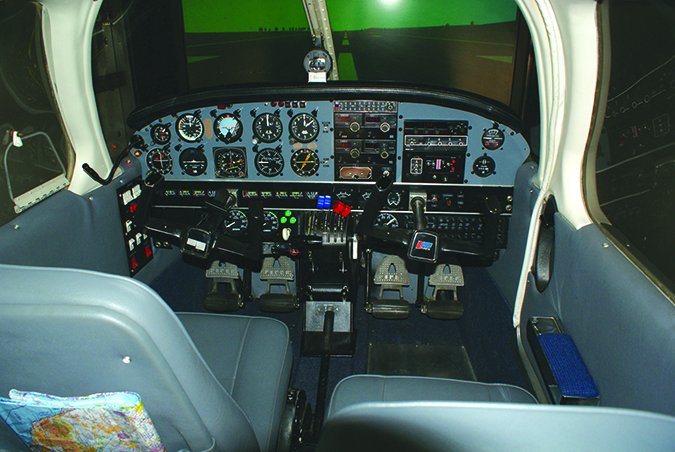
In the age of satellite navigation, electronic instrumentation and multi-function displays with moving maps, each aircraft is different. Just because you can fly an Avidyne Integra-equipped Cirrus doesnt mean you can jump into a Perspective (a.k.a. Garmin G1000) Cirrus. Or, for that matter, even an old steam-gauge Piper. Now we need proficiency not just on an instrument scan and IFR procedures, but on the installed devices as well.

Read More »

Flight Traffic Displays

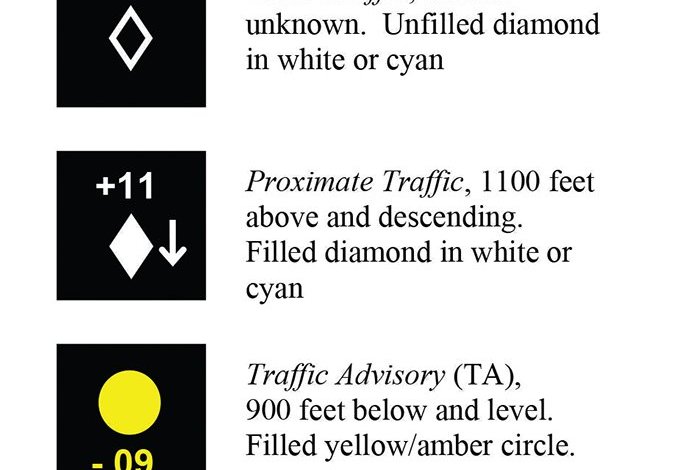
Marginally effective, see-and-avoid is based on the big sky theory; the sky is big and airplanes are small so the chances of running into each other are minimal. Our vision limitations in an airplane combined with massive blind spots foreshadow disaster. In 2014, pilots reported 163 near mid-air collisions. Most involved GA. Who knows how many occurred without either pilot realizing?

Read More »

CFIT on Departure

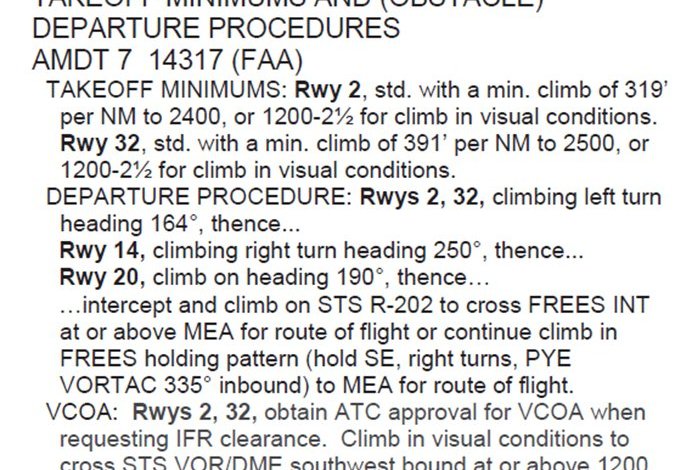
Pilot responsibilities differ from a controllers. The regs state, the pilot in command of an aircraft is directly responsible for, and is the final authority as to, the operation of that aircraft. This authority and responsibility is granted with the intention that its used to ensure safety-a pilots primary obligation. Yet, pilots keep having controlled flight into terrain (CFIT) accidents, often with fatalities. Its the second leading cause of commercial aviation fatalities worldwide. NTSB Board Member Robert Sumwalt described CFIT as the problem that never went away. CFIT frequently occurs at night or in IMC.

Read More »

Missed Approaches

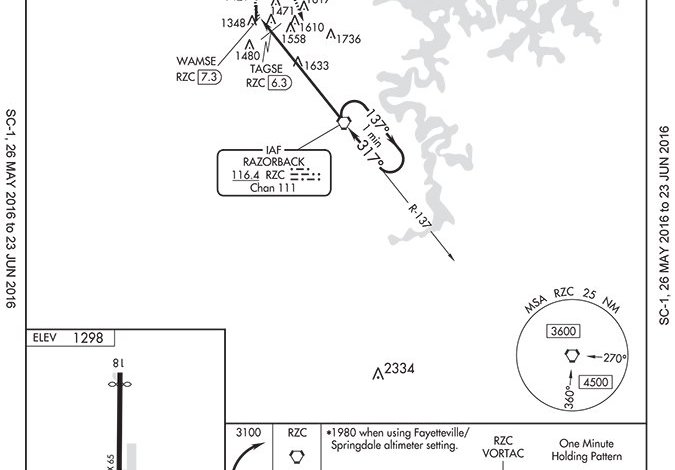
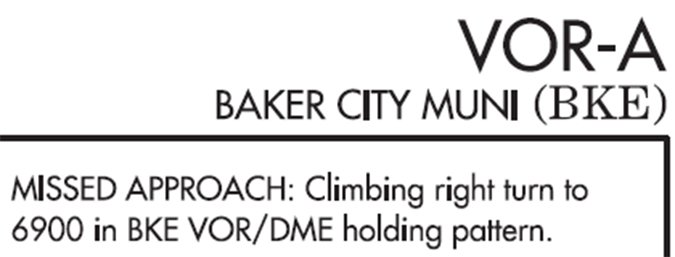
Climbing to hold over an airport to wait for better weather or traffic is nearly always referenced against a VOR that is located on or very close to the airport, so you really cant get lost. Plus, theres at least one runway right below in case of any issues that might develop. Whats more, obstacle clearance is straightforward-poles, towers and trees are only so tall and you dont have to worry about encountering significant terrain rising up from the airport itself.

Read More »

Learn That New Glass

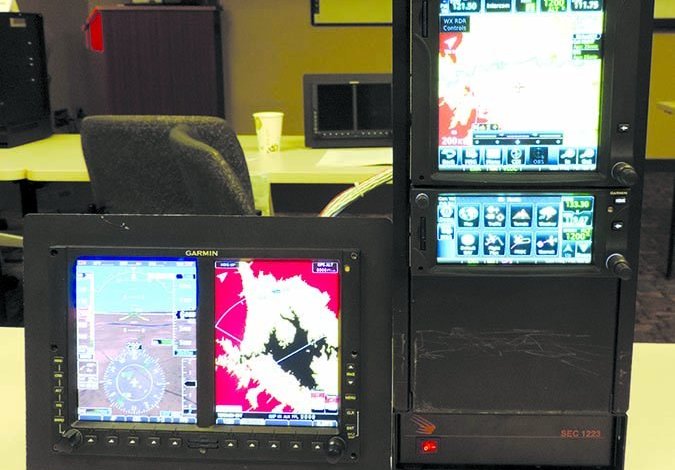
While an integrated system like the G1000 incorporates communication, navigation, engine information, an MFD and PFD, no such certified integrated system is commonly available for retrofit. So, one must look upon retrofit glass as containing at least two components-the navigator and the PFD. Most, however, also incorporate an MFD, making three separate devices you must learn.

Read More »

Dreaded Ramp Check

You will be required to produce your pilots certificate and medical certificate for the FAA inspector. The inspector will also ask to see evidence of your most recent flight review or equivalent (an FAA checkride, for example). Dont worry if you dont have proof of a flight review; its not required to be in your possession. You might score a point by offering to send a copy to the inspectors office, but be prepared to do so.

Read More »

Decision Altitude VS. Minimum Descent Altitude

Its easy to munge DA and MDA into the single concept of minimums. Yet, decision altitude (DA) and minimum descent altitude (MDA) are very different concepts. As the names suggest, DA is a decision point while MDA is the lowest altitude allowed without visuals.

Read More »

There’s An Advisory Circular for That

Advisory Circulars are perhaps the least-read material published by the FAA, quite possibly due to their bureaucratic-sounding name. But if youre willing to go on a little scavenger hunt, youll likely find in-depth information on some of your favorite topics. There are hundreds of ACs, from how to build an airport to the inner workings of airworthiness standards. Of course, most of these have limited appeal, but if you just want some good nuggets about operating in the system, there are plenty of pilot-friendly items, too.

Read More »
Pilot in aircraft
Sign-up for newsletters & special offers!

Get the latest stories & special offers delivered directly to your inbox.

SUBSCRIBE