Register

Training & Sims

New Sim Challenge

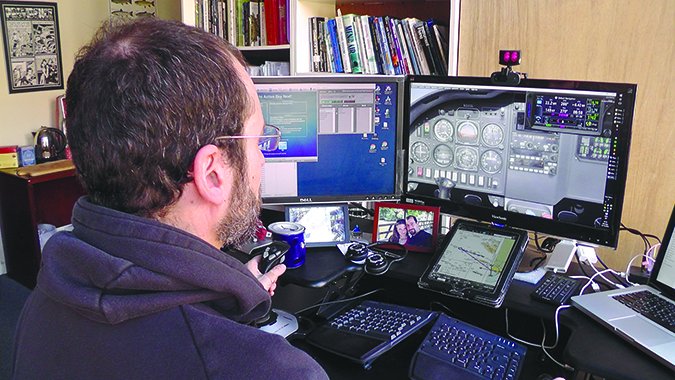
A few months back, Jeff Van West-previous editor of IFR and respected aviation journalist who still hangs around here, you know, kinda like the brother-in-law who needs to get a real job-and I were brainstorming about using a simulator to maintain instrument proficiency. We continue to stress this topic because its an important tool in proficiency. But, as more and more of you are flying simulators-either your own commercial or home-built sims, or one at your FBO or flight school-one common theme is that many of us arent sure what to do once were in the box.

Read More »

IFR Briefing: February 2017

With flashing lights, smoke, and fanfare, Cirrus Aircraft rolled out their first Vision Jet for customer delivery, in late December. The FAA in December finalized new aircraft certification rules for general aviation that are expected to help the industry bring new designs and technology to market more quickly and cheaply. A chartered RJ85 crashed in Cerro Gordo, Colombia, while flying a holding pattern near its destination airport, on November 28. It might have made sense to the company, but nonetheless many aviators found it shocking to see Cessna dispose of its unsold Skycatcher stock, crushing the brand-new airplanes complete with their zero-time Continental engines.

Read More »

Readback: February 2017

Not sure if this is a question or a frustration, but after reading the August 2016 quiz about PIREPs, it made me wonder why there are so few PIREPs in the system. It appears that most reports of icing, tops, and bases that are given to ATC never make it into the PIREP system. Most of us frequently report these conditions when departing or arriving, however I seldom take the time to change frequency and submit an official PIREP. Is there a process or key phrase that we can say to ATC to ask them to submit the PIREP on our behalf. Seems like if a pilot reports icing in climb or in descent to departure or approach, ATC should submit that report as a PIREP.

Read More »

Best Glide Speeds

Perhaps we should cut right to the life-saving takeaway: If youre engine-out in a typical single and gliding into a headwind of 15 knots or more, pitching down to at least 10 knots over published best glide speed will probably extend your glide range. This is true down to short final. Holding best glide into a headwind on short final and see you clearly wont make it? Pitch down and see if that improves things. Just remember to slow back to your normal procedures for the actual landing, using or shedding those extra knots as necessary.

Read More »

The IFR Simulation Challenge

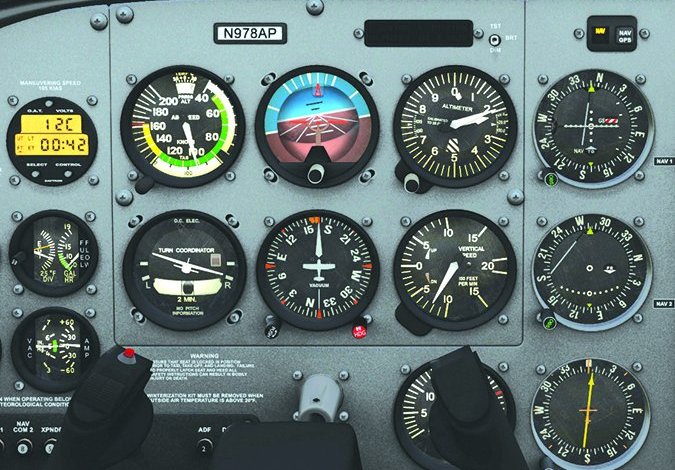
A friend of mine used to work in customer support for a simulator manufacturer. He told me the most common customer support question was: OK, Im sitting at the end of the runway. Now what? Imagine a pilot in the real world pondering an equivalent question. There you are sitting at the end of the runway, engine running, and thinking, Hmm. What should I do with this airplane? Yet thats the abyss many folks face-and turn their backs on-when trying to use a simulator for proficiency.

Read More »

The Spartan Approach

Youre eager for your day trip to meet the gang and head to East Lansing, Michigan for a Spartans football game-provided you can get yourself to Tecumseh, southeast of Michigan State University. No big deal; its less than two hours flight from your home base and youre in your trusty Cessna 182. So far so good, until you actually see whats in store for you.

Read More »

Reader Feedback: January 2017

This gets into how these various Advisory Circulars are updated. Once an AC is issued, its assigned a number and a version letter, such as AC 00-45G, Aviation Weather Services. That version can be revised by issuing changes. So, the full specification of the most recent document is AC 00-45G, Change 2. The main document-original version-is what is returned by the various searches; youve got to dig just a bit further to find the changed versions.

Read More »

DIY Flow and Check

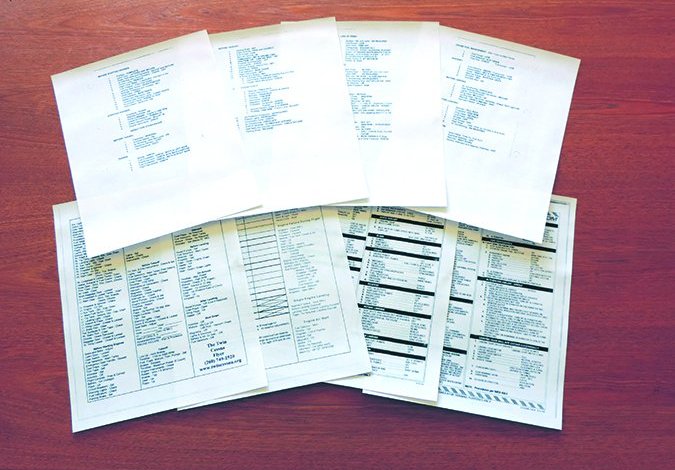
Think about it. Can you do an engine runup without referring to the instructions? You probably already do the entire sequence without referring to the check list. You see, Runup on the paper, so you set the power, check the mags, cycle the carb heat or open the alternate air, cycle the prop and check the ammeter and vacuum meter. Then you look back at the paper and perhaps skip through the next seven or so items because you just did them without looking. Theres a better way.

Read More »

Stupid Pilot Tricks

Its that time of year when we who have successfully covered up our own boneheaded mistakes snicker over the antics of those less fortunate flyers who have failed and got caught. This review of NTSB accident reports from 2013 makes no pretense of learning from others mistakes. The following acts of aerial mayhem are a reminder that no matter how bad your own decision making might be, theres always someone eager to lower the bar. We skip fatal accidents and usually give errant student pilots a pass, because their brains arent yet fully developed.

Read More »

Trust ATC, But Verify

We spend most of our IFR lives wrapped in the warm cocoon of radar coverage, vectored from point to point by the all-seeing presence of ATC. And while controllers are human and occasionally make mistakes, the checks and safety nets in place rarely result in close calls, let alone bent metal. Its also true that when clearances get tight in the final descent to the airport, responsibility is handed over to the pilot.

Read More »
Pilot in aircraft
Sign-up for newsletters & special offers!

Get the latest stories & special offers delivered directly to your inbox.

SUBSCRIBE