Register

Training & Sims

Pilot Monitoring

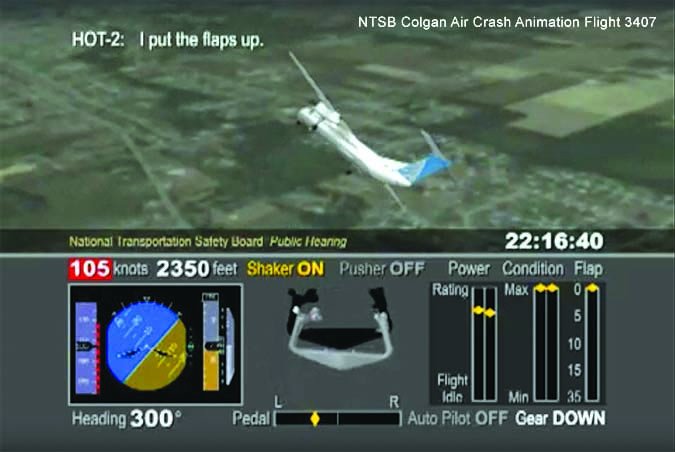
To assume that an aircraft automation system has a will of its own and will try to kill us would be anthropomorphic. Autopilots and other automation systems have not reached that stage of sophistication. Not yet. What can-and too often does-happen, however, is that flight crews turn the flying duties over to the autopilot and relax. With frightening repetition, this ends in disaster.

Read More »

Disobeying the FAA

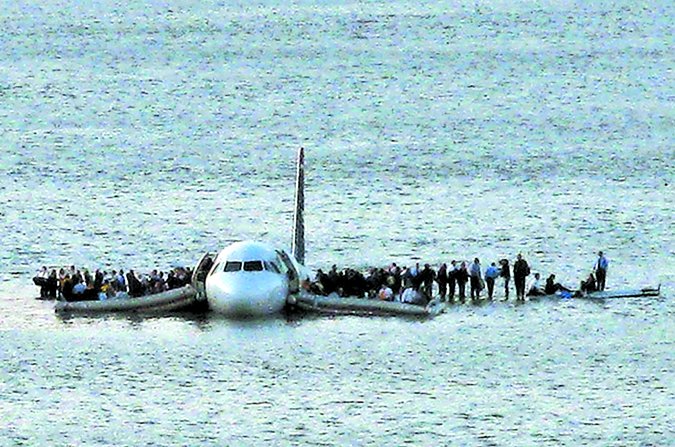
At the end of 2015, the FAA counted 590,039 active certificated pilots. Divide that by the over-18 population of about 248 million people in July, 2015 and we discover that pilots make up just 0.24 percent of the population. If that doesnt mark us as nonconformists, what does? There is a place for out-of-the-box thinking in aviation, even in that most rigid domain of airline aviation. I would rather fly with someone possessing something like Sullys creativity than fly with a living automaton who would have gone right to the FMS looking for a solution while the airplane descended inexorably toward earth. Im certain there are creative cockpit thinkers taking creative and appropriate actions every day. They just dont make the front page.

Read More »

Reader Feedback: December 2016

When I was based at PDK airport, a very busy airport in Atlanta, GA used by many business jets, the tower would routinely route smaller aircraft approaching from the east to cross over mid-field at or above pattern altitude and enter a left downwind for Runway 3L. Doing so while there were other aircraft in the pattern, landing and taking off. The reason was to keep the longer Runway 3R open for business jets landing and taking off. In this instance, a pilot would be crossing over two active runways.

Read More »

Sully-a Hero?

Its been a long time since I provided any primary flight training. But as I recall, once it appears that the student will, in fact, stick with the training long enough to attempt solo flight and hopefully go on to obtain their private pilot certification, we start teaching them in earnest how to handle a power failure. Then, power failures remain an important part of our training for most of the rest of our flying careers.

Read More »

Reader Feedback: November 2016

In the June issue, a reader had a question regarding the TERPZ FIVE departure at BWI. Your response in a lost com scenario was that you should climb to TERPZ at 11,000 then climb to your filed altitude after 10 minutes. I disagree. In the regs, 91.185 offers clear altitude guidance in a lost com situation. It is simply the highest of 3 altitudes-the altitude in your clearance, the altitude you were told to expect, and the highest IFR altitude. No mention is made about waiting for 10 minutes nor about a filed altitude.

Read More »

Reducing the Ruckus

Airports are usually born in the lesser-populated outskirts of their namesake town. Over time, they often find themselves enveloped by suburbs and industry. This close contact inevitably leads to tension, as city populations and aviation traffic demands grow in parallel, spurring a need to reign in the noise. Noise abatement often begins with good neighbor policies-typically voluntary, common-sense practices designed to assuage the locals.

Read More »

Good Pilot Decision Making

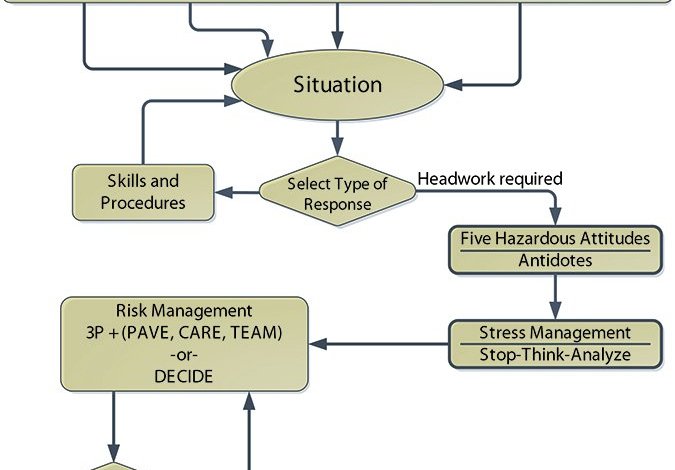
Validating ADM, the AC cites a study where student pilots who received ADM training made 10-50 percent fewer judgment errors than untrained students. This is why the new Airman Certification Standards incorporate a risk management component into every task to promote learning and applying risk management during flight training. Yet learning ADM is challenging in part because much FAA documentation is, frankly, poorly organized and excessively wordy.

Read More »

Seeing Double

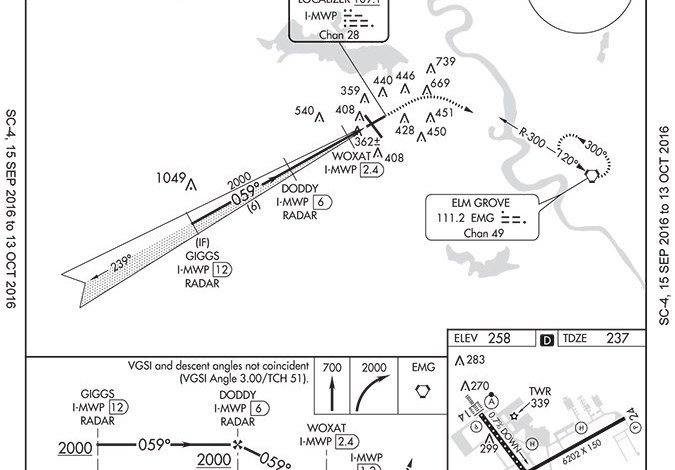
Instrument flight is a game of single degrees, so it should get your attention when numbers dont match. Were used to this when flying VOR radials with GPS. The magnetic declination of the VOR is infrequently updated, while GPS calculates it exactly from the latest data and the current location. This can be disconcerting on a VOR approach where the GPS youre using for situational awareness (or, the actual approach, now that you can) shows a course several degrees off from the chart.

Read More »

Lower Won’t Work

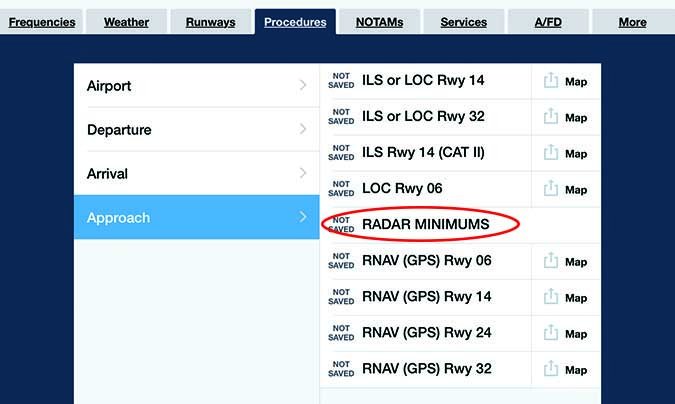
While we usually train by flying right to minimums and then frequently flying the missed, how often in our actual flying do we miss and do it again, or divert to an alternate? How often do we get caught by surprise when the ceiling were expecting to break out of is lower than we thought (or lower than we need)? For those of us operating under 14 CFR Part 91, how often do we consider or actually find ourselves pushing the looser legal limits of landing under IFR?

Read More »
Pilot in aircraft
Sign-up for newsletters & special offers!

Get the latest stories & special offers delivered directly to your inbox.

SUBSCRIBE