Register

Technique

Calling For Help

Flight is a study in contrasts, well beyond the obvious thrust versus drag equation. A brilliant blue sky rife with possibilities and adventure can quickly turn woefully lonely when your aircraft or the people in it are in distress. No good pilot intends for an emergency to happen. Each item on an aircraft checklist, every scan of an instrument and every word of a briefing is one more brick in the wall fending off a potential crisis. Still, even if you followed every procedure perfectly, basic human error, mechanical failure or plain bad luck can plunk you in the deep end of the pool.When youre in the midst of a devolving situation, perhaps youll hear mental echoes of your flight instructors voice. Rely on your training. Go through your checklists. Keep a cool head and resolve the problem to the best of your ability. Whats the most important thing after flying the airplane? Remembering youre not alone up there. Air traffic control has resources at its disposal that can help you put it down safely, and theyre just a radio call away.
Read More »

Bag of Tricks

Teaching teaches the teacher. Ive got over 4000 hours total time and of that over 3000 hours teaching instruments. In that time, my students have taught me quite a bit and Ive picked up a few tricks on my own. Heres a compendium of helpful little tips and tricks.

Read More »

How Old is Too Old?

Many times Ive mentioned that my day job is flying airliners. With flying as a second career for me after 30 years in the computer industry, Im often asked how long I intend to fly. My flip answer has always been, Until I bust a sim check, line check or medical, or until the company pisses me off one too many times. I never thought to add, Until I age out.Im reaching that numerical age where yesterday, according to the FAA, I was suitable to hold responsibility for all those lives in my-thus far-capable hands, but tomorrow I am not. This barrier has caused me a lot of reflection.

Read More »

Readback: March 2015

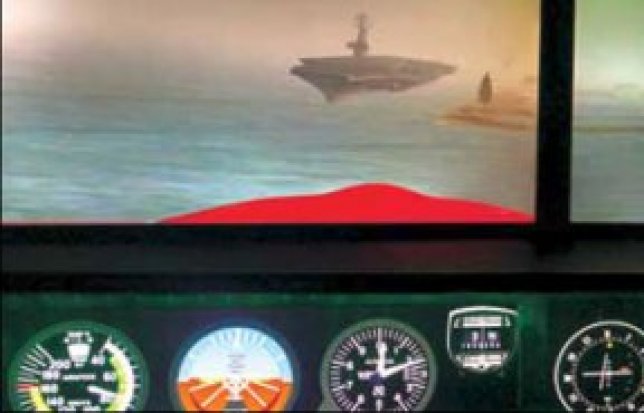
Have any other nitpickers written about the illustration on page 15 of your November 2014 issue accompanying the Simulators Are Not Airplanes sidebar? The author of the very good article writes about how we developed our own VOR approach to a carrier in San Francisco Bay. And the illustration shows a small plane at 200 feet and 75 knots airspeed, headed straight for a carrier deck, apparently on final approach.

Read More »

Read Beside The Lines

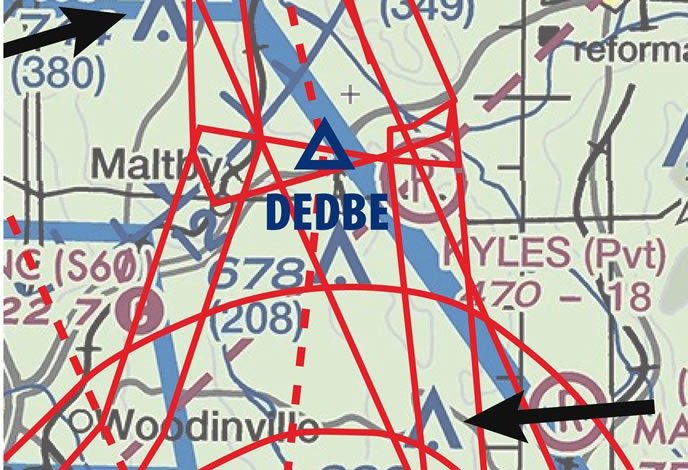
Harvey Field in western Washington State (S43) is one of those almost mythical GA wonderlands. Cloth-clad antiques trundle down a runway that requires mowing while skydivers pack a careworn Caravan for just one more jump. Views of both can be enjoyed from the windows of on-field caf. At least, thats the way it used to be. Its been a while since Ive had the pleasure. Since Ive frequented the field, Harvey has also stepped into the digital age with its own GPS approach. But like the fuel gauges on my buddy Daves Harvey-based Globe Swift, its an imprecise thing. In fact, its a downright odd-looking approach for something starting with the letters RNAV-which should be a clue to anyone flying it that theres probably more going on here than meets the eye. Perhaps literally.

Read More »

What it Takes to Type

Make no mistake about it: Going through a two- to three-week type-rating course is grueling. Many pilots have a strong preference for turboprop aircraft for the explicit reason that no type rating is required. But like the process of flying jets itself, the type course is structured; a specific set of steps impart a specific knowledge to the pilot. The information that must be learned is clear and finite for a type rating. Unfortunately, finite doesnt mean small.

Read More »

The Displaced-Threshold Trap

The pilot of a Baron landing Runway 30R at Bakersfield, Calif., told me this story. The runway is two miles long, but has a 3500-foot displaced threshold.Tower cleared me to land with a Caution wake turbulence behind the departing single-engine Cessna. That didnt sound too bad. As I broke out, I aimed for the standard touchdown point and spotted an airplane ahead.

Read More »

Why Paranoia is Good for Your Longevity

Three days before Christmas in 1994 a Westwind landed in La Verne, Calif., east of Los Angeles, to drop off the mother of brothers who ran In-and-Out Burgers, a popular fast-food chain in California. They had been on a family trip and had their hunting gear on board. The Westwind took off for John Wayne Airport, a short ride south from La Verne. It crashed on short final to Runway 19R, diving vertically into a parking lot near the airport. It exploded and shot off ammunition in all directions. It had encountered a Boeing 757 wake.

Read More »

Readback: April 2010

In response to your article What is Minimum Fuel? (Feb 2010 IFR):I believe that the single most important thing to do at your first thought that you may be running tight on fuel is to slow down to your max range power setting-which is about 40-percent power in most small planes-and lean to 50-degrees lean of peak EGT. This will allow you to fly the longest distance with the remaining fuel before you drop from the sky. The distance is what is important, not the time.

Read More »

Against the Flow

Change is certainly a constant in aviation. Beyond aircraft technological advances, the rules that govern how air traffic control handles those aircraft are also frequently adjusted. One area in particular thats seen significant discussion and change in the past three years is opposite direction operations (ODO). The official Pilot/Controller Glossary defines ODO: Aircraft are operating in opposite directions when: a. They are following the same track in reciprocal directions; or b. Their tracks are parallel and the aircraft are flying in reciprocal directions; or c. Their tracks intersect at an angle of more than 135 degrees.

Read More »
Pilot in aircraft
Sign-up for newsletters & special offers!

Get the latest stories & special offers delivered directly to your inbox.

SUBSCRIBE