










Required Reports
For this look, well cover about half of the reports other than position reports per 14 CFR 91.183(a) that Fred Simonds briefly mentions in his Radar Service Gotchas on page 14. Well thoroughly cover those later.

For this look, well cover about half of the reports other than position reports per 14 CFR 91.183(a) that Fred Simonds briefly mentions in his Radar Service Gotchas on page 14. Well thoroughly cover those later.
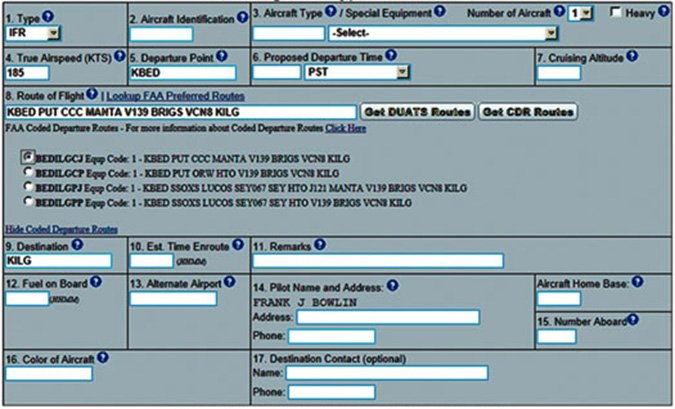
Pilots want ways to mitigate bad weather. The Coded Departure Route (CDR) is one of the least-known such tools in GA, although its been available since 2007. The AIM tells us, CDRs provide air traffic control a rapid means to reroute departing aircraft when the filed route is constrained by either weather or congestion. So, if youd rather not wait, a CDR might be for you.
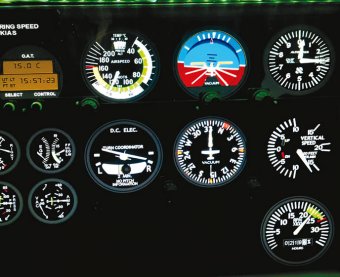
When we started our sim-training business, we thought our strongest selling point would be logging cheaper time, such as the 20 hours of the instrument tickets required 40. We were wrong. The sim is a more efficient pilot training environment and shouldnt be seen as a replacement for the airplane. Time logged is a nice bonus, but the real value is the learning efficiency and effectiveness. Once pilots and CFIs understand this, the training opportunities are vastly expanded.
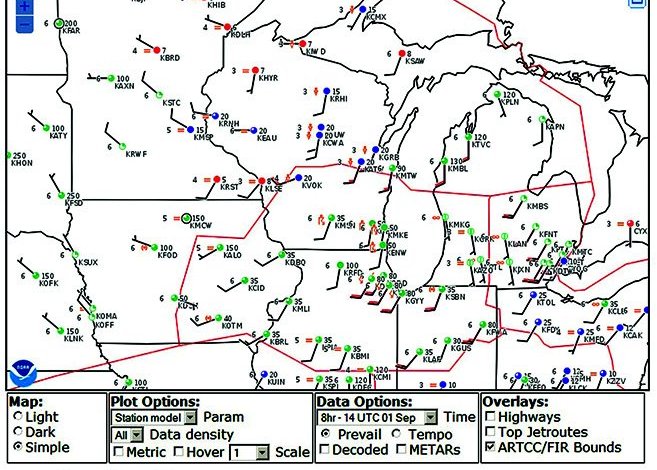
Preflight weather planning has long consisted of calling an FAA Flight Service Station. Years ago, you might have even visited one. But, using the Internet, you can now draw on the same resources that meteorologists use. While the 2000s brought weather data to the cockpit, were now getting some Internet tools to the cockpit via dedicated datalink. Although we cant yet cheaply surf the web at cruise, we connect to the Internet at the FBO, on the ramp and in the plane on the ground, using phones and tablets with WiFi and cellular data.
Remember that web sites outside the FAA and NWS domains should be considered supplementary tools to be used in combination with a weather briefing through official sources.
Toward the end of his excellent article, Gaming the System in the August issue, Mr. Kramer talks of cancelling IFR when the frequency is busy and you have gone into VFR conditions. I have always tried to do this to relieve ATC of unnecessary responsibilities.However, this may be a little different in Bravo airspace. On a westbound flight through Washingtons Class B, I cancelled IFR after passing Baltimore and many of the buildups. The controller thanked me, replying, Maintain VFR, report any changes in course or altitude. A few minutes later I had more buildups in front of me. I reported it, and worked my way through. I have always wondered under circumstances like this if I had returned to IFR what the proper communications would have been in the Bravo air space.
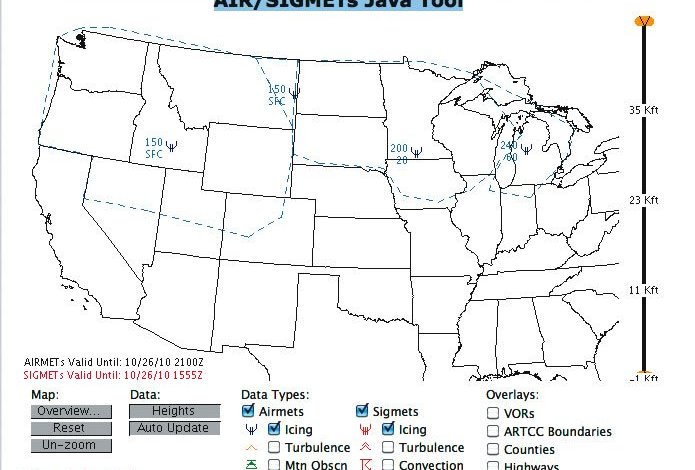
Few pilots know that FAA imposes a hard character limit on text products such as Convective SIGMETs and the Area Forecasts (FA). The Aviation Weather Center (AWC) has a check program for the Area Forecast that counts the number of characters. On busy weather days when these forecasters have a lot to mention in the forecast, they often bust the character count. This forces them to cut from either the text or the synopsis in order to make the size fit through the National Airspace Data Interchange Network (NADIN) hubs. Often the first casualty is the ellipsis (…). Forecasters can use two periods instead of three. Another casualty is the synopsis. Of course, the last resort is to cut from the text of the FA.

Technological advances in aviation are few, slow and occur in small increments. Aside from composite materials, airframes are essentially unchanged over the last 70 years. Engines? Well, there have been a few interesting attempts to modernize, but even the antiquated magneto spark remains dominant. So, the aviator seeking the latest advances has to focus on electronics, which, fortunately, are evolving at a remarkably fast pace.
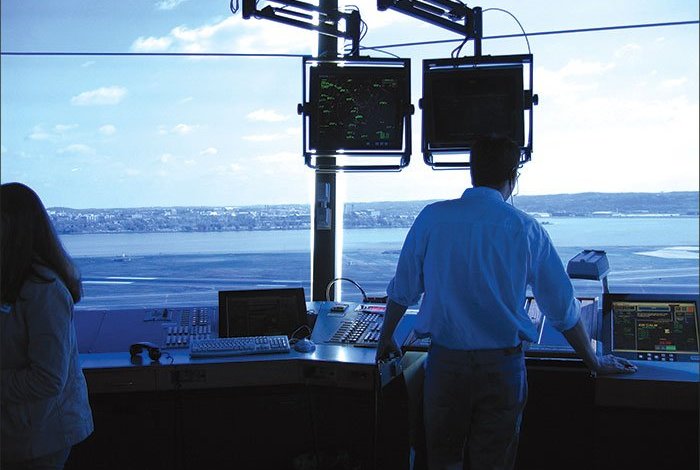
Nutjob. Thats what we all called him. He was one of my trainers at my first tower. Extreme skydiving and off-the-grid adventure travel earned him the title. His not-safe-for-work There I was… stories were legendary throughout our ATC community.
We have all been told old wives tales. Their problem is that they can take on a life of their own. Are the old wives right? Is there a bit of truth to them? Or are they just plain wrong? When it comes to ceilings as part of landing minimums the answer is a bit complicated. It begs the question, are ceilings sealing for instrument pilots or not?

Get the latest stories & special offers delivered directly to your inbox.
SUBSCRIBE