IFR Magazine

On The Air: April 2010

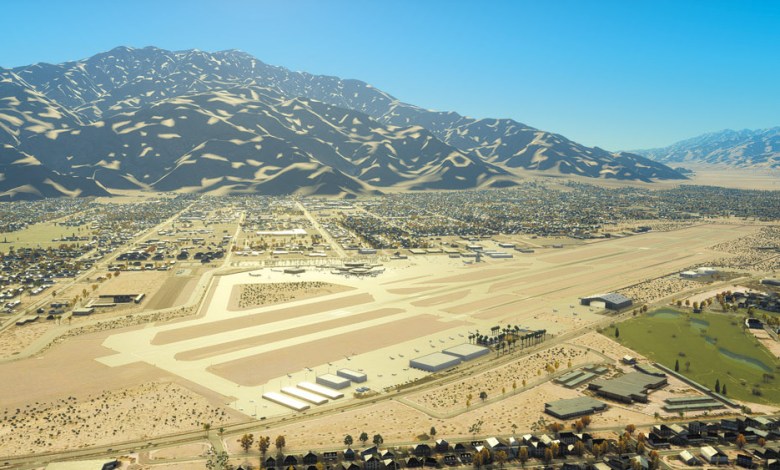
My wife and I were on final to Runway 16 at my home airport, Pickens County, Ga., when another airplane taxied onto the runway without communicating on the radio. With country-western music on the XM, I went missed and politely suggested over the radio that the offending pilot might use his radio, too.

Read More »

Pistons in the System

The needle on my GA-o-meter registered an optimistic uptick this morning. In other words, Im getting more submissions for On The Air, IFRs much-loved back page. Over the past five years at the helm of this magazine (five years exactly with this issue), OTA has been my barometer for how much people are flying light GA and in what way.Theres a predictable uptick every spring and Im beginning to see it. History says it should peak in May and then spike again in August or September. Winter sees fewer submissions, and the ones that do come in are mostly from airline pilots or folks running all-weather aircraft.

Read More »

Readback: April 2010

In response to your article What is Minimum Fuel? (Feb 2010 IFR):I believe that the single most important thing to do at your first thought that you may be running tight on fuel is to slow down to your max range power setting-which is about 40-percent power in most small planes-and lean to 50-degrees lean of peak EGT. This will allow you to fly the longest distance with the remaining fuel before you drop from the sky. The distance is what is important, not the time.

Read More »

What it Takes to Type

Make no mistake about it: Going through a two- to three-week type-rating course is grueling. Many pilots have a strong preference for turboprop aircraft for the explicit reason that no type rating is required. But like the process of flying jets itself, the type course is structured; a specific set of steps impart a specific knowledge to the pilot. The information that must be learned is clear and finite for a type rating. Unfortunately, finite doesnt mean small.

Read More »

The Displaced-Threshold Trap

The pilot of a Baron landing Runway 30R at Bakersfield, Calif., told me this story. The runway is two miles long, but has a 3500-foot displaced threshold.Tower cleared me to land with a Caution wake turbulence behind the departing single-engine Cessna. That didnt sound too bad. As I broke out, I aimed for the standard touchdown point and spotted an airplane ahead.

Read More »

Why Paranoia is Good for Your Longevity

Three days before Christmas in 1994 a Westwind landed in La Verne, Calif., east of Los Angeles, to drop off the mother of brothers who ran In-and-Out Burgers, a popular fast-food chain in California. They had been on a family trip and had their hunting gear on board. The Westwind took off for John Wayne Airport, a short ride south from La Verne. It crashed on short final to Runway 19R, diving vertically into a parking lot near the airport. It exploded and shot off ammunition in all directions. It had encountered a Boeing 757 wake.

Read More »

Cowboys and Cowards

Growing up in the land of conquistadors and cowboys, my opportunities for IMC involved attacking thunderstorms or slipping into shallow ponds of fog. Neither was good for gaining instrument time or icing experience. My instructors and peers shared the same background.

Read More »

A Closer Look

To get a better understanding of the intent of the Airman Certification Standards, lets take a closer look at the holding procedures task under the air traffic control clearances and procedures area of operation.

Read More »

Good-Bye PTS; Hello ACS

If the FARs and the AIM comprise the bible of flying, the practical test standards (PTS) would be favored hymn books. But, just as the worlds religions occasionally modernize themselves, the FAA is getting ready to burn PTSes on the pyre in exchange for a completely new system.The new system, known as the Airman Certification Standards (ACS), is a major overhaul of the certification process effecting every license and rating. Whether youre thinking about adding to your ticket, are an instructor or you simply plan to get an IPC, it would behoove you to know a little about these changes before they arrive. The last thing you want is that deer-in-the-headlight look if the instructor asks you to review the pertinent ACS.

Read More »

Against the Flow

Change is certainly a constant in aviation. Beyond aircraft technological advances, the rules that govern how air traffic control handles those aircraft are also frequently adjusted. One area in particular thats seen significant discussion and change in the past three years is opposite direction operations (ODO). The official Pilot/Controller Glossary defines ODO: Aircraft are operating in opposite directions when: a. They are following the same track in reciprocal directions; or b. Their tracks are parallel and the aircraft are flying in reciprocal directions; or c. Their tracks intersect at an angle of more than 135 degrees.

Read More »
Pilot in aircraft
Sign-up for newsletters & special offers!

Get the latest stories & special offers delivered directly to your inbox.

SUBSCRIBE