IFR Magazine

Readback: March 2015

Have any other nitpickers written about the illustration on page 15 of your November 2014 issue accompanying the Simulators Are Not Airplanes sidebar? The author of the very good article writes about how we developed our own VOR approach to a carrier in San Francisco Bay. And the illustration shows a small plane at 200 feet and 75 knots airspeed, headed straight for a carrier deck, apparently on final approach.

Read More »

How Old is Too Old?

Many times Ive mentioned that my day job is flying airliners. With flying as a second career for me after 30 years in the computer industry, Im often asked how long I intend to fly. My flip answer has always been, Until I bust a sim check, line check or medical, or until the company pisses me off one too many times. I never thought to add, Until I age out.Im reaching that numerical age where yesterday, according to the FAA, I was suitable to hold responsibility for all those lives in my-thus far-capable hands, but tomorrow I am not. This barrier has caused me a lot of reflection.

Read More »

Routing Puzzles

In the December 2014 issue, I answered a question from Tim, a reader, regarding filing an IFR flight plan. DUATS flight planner computer accepted the flight plan but the FSS planner rejected it. That was disconcerting, so we dug into it. This article will explain whats happening and Ill illustrate how different flight planning tools can behave differently with some less common routing elements.

ATC offered Tim a clearance that read KAGC AGC073 HOMEE JST300 JST SEG. ATCs intent was to have Tim depart Allegheny County, PA, join the AGC VORs 073 radial and fly it to HOMEE. Then he would fly southeast on the JST VOR 300 radial to JST. Neither route is an airway and this was not a preferred route. Tim has only VOR and DME (with a VFR GPS) aboard and filed accordingly.

Good intentions notwithstanding, ATC gave Tim a flyable clearance but not one that FSS or Center would accept if you were to file it. A clearance you cant file isnt worth much, and this one fails in two respects.

Read More »

Diverse Vector Areas

Imagine youre departing into a low overcast, and the tower assigned you a heading. ATC has some way to keep you from hitting anything on that vector, right? Yeah…sorta.

Diverse Vector Areas (DVAs) have been established at some larger airports for a safe and standardized way to guarantee obstacle clearance for aircraft departing on radar vectors. DVAs have been surveyed and found to be clear of obstructions on a standard-or published non-standard-climb gradient. Theyve recently started to appear in the terminal procedures publication.

Read More »

Angle of Attack

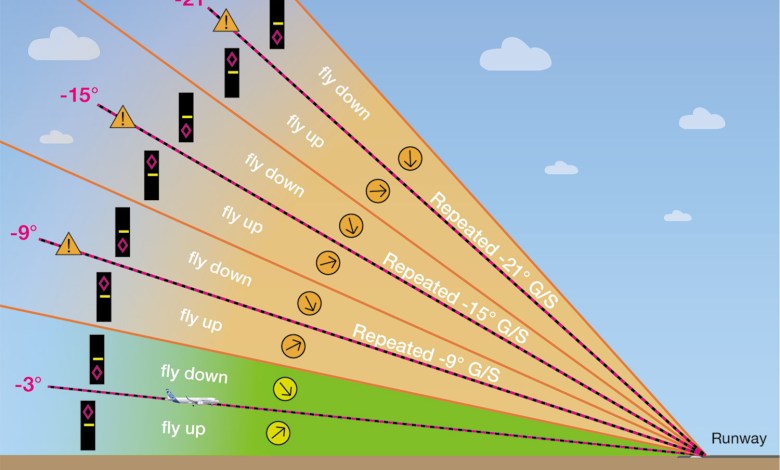
Research by the General Aviation Joint Steering Committee, a group chartered by the FAA to improve GA safety, attributed 40 percent of fatal GA accidents to loss of control in flight. That is more than the next six causes, combined. Many of these accidents resulted from inadvertent stalls and spins. The groups top recommendation for improving safety was installing AOA indicators in GA airplanes.

When it comes to flying a wing, only one thing matters-angle of attack (AOA). For airplanes, we add power to that wing and get performance. While power is accurately displayed via engine instruments, AOA is an enigma fleetingly glimpsed through airspeed and attitude. The books state that airplanes can stall at any attitude, yet our training confuses that information. Practicing stalls at one G teaches us that stalls occur when a certain attitude is reached. The results are troubling.

But, just slapping an AOA indicator on the glareshield wont magically solve these problems and make you a better or safer pilot. Strategic planning and tactical techniques enable AOA systems to effectively battle lift.

Read More »

Loud, Clear, No Fear

Our main airport has several flight schools and they keep us air traffic controllers quite busy. Its easy to tell when they get a new batch of students-those first radio calls for VFR clearances and eventual taxi and takeoff are usually halting, uncertain affairs, dragging on as students parrot their instructors without truly understanding the lingo. It can be almost as painful for us as for the student.

Clumsy as those first steps may be, the subsequent journey will hopefully lead each student to true proficiency on the radios. Its not an easy road at times, especially once each advances into instrument training. The amount of radio communication and multitasking may be overwhelming at first.

Read More »

Read Beside The Lines

Harvey Field in western Washington State (S43) is one of those almost mythical GA wonderlands. Cloth-clad antiques trundle down a runway that requires mowing while skydivers pack a careworn Caravan for just one more jump. Views of both can be enjoyed from the windows of on-field caf. At least, thats the way it used to be. Its been a while since Ive had the pleasure. Since Ive frequented the field, Harvey has also stepped into the digital age with its own GPS approach. But like the fuel gauges on my buddy Daves Harvey-based Globe Swift, its an imprecise thing. In fact, its a downright odd-looking approach for something starting with the letters RNAV-which should be a clue to anyone flying it that theres probably more going on here than meets the eye. Perhaps literally.

Read More »

Proficiency in Pieces 2.5

Previously, Ive described a practice of regular recurrent training in two articles: Proficiency in Pieces, in the July 2007 issue of IFR, and its follow-up, Proficiency in Pieces 2.0 in April, 2012. This program is a simulator-based recurrent training program in which you specify the minimums to which you want to train, and then design a specific training program tailored to your exact requirements, while assuring that your target performance meets or exceeds that prescribed in the regulations for your flying-Part 91 or even Part 135.

Im now writing about Proficiency in Pieces for a third time, partly to re-emphasize the idea. It has worked very well for me and others I know. More importantly, I want to fully stress what I have found to be, for me, a cornerstone of it that is missing in articles by others about their approach to personal sim training-the use of a qualified instructor to conduct the training.

Read More »

Listen Up

Talking on the radio is, of course, only half of the equation. It goes without saying that if youre flying in new airspace and into a new airport, youve got to be actively listening for your call sign and related instructions. What may not be so obvious is maintaining that same level of attentiveness when youre flying in your own backyard.

I got a perfect illustration of this just a few weeks ago on a pretty VFR morning. I was training a new controller on Ground. We had a pair of aircraft waiting to cross the active runway: Piper Meridian 45J at Hotel, and Lear Jet 86C much further down the runway, holding short at Bravo. The Lear driver was a local, who flew out of our airport nearly every day.

Read More »

Briefing: April 2010

The AOPA Air Safety Foundations annual Nall Report found an increase in accidents involving amateur-built aircraft. The statistics from 2008 showed the highest rate of fatal accidents and fatalities in 10 years. The 27-percent lethality rate in these accidents was 10 full percentage points higher than that for accidents in type-certificated airplanes, according to the report.

Read More »
Pilot in aircraft
Sign-up for newsletters & special offers!

Get the latest stories & special offers delivered directly to your inbox.

SUBSCRIBE