IFR Magazine

Filling in the Gaps

When I trained for my private pilot certificate, 91.103 was drilled into my head. Each pilot in command, it says, shall, before beginning a flight, become familiar with all available information concerning that flight. The core of that is straight from the Boy Scouts: be prepared. Now, as an air traffic controller, it concerns me when pilots arent aware of major issues affecting their flight. Sometimes we controllers have to be the voice of reason, preventing a pilot from doing something that may not be in his best interest. Other times, we have to hold his hand and walk him through a new situation. Thankfully, the vast majority of our operations are routine. Its the remainder that can make things interesting. Facing an underprepared or overzealous pilot can test a controllers knowledge of his rules, his airspace, and his ability to think outside the box to find a safe, legal solution.

Read More »

Briefing: September 2015

EAA hosted one of its busiest Oshkosh shows ever in July, with record numbers for aircraft arrivals and campers. Near-perfect weather for the entire week kept the airplanes flying. The show hosted for the first time a B-52, and an Airbus A350 XWB from the test fleet was open for tours. All the usual daily airshows, forums, and events kept visitors busy nonstop. Aircraft designer Burt Rutan returned after an absence of several years to talk about his new SkiGull amphibian design, and Icon delivered their first A5 amphib LSA to EAAs Young Eagles. Yingling Aviation, based in Wichita, debuted a new remanufactured 172, and Vulcanair, from Italy, introduced a newly FAA-certified twin turboprop.

Read More »

On The Air: September 2015

After accepting an approach clearance while in the soup, I let out loud to myself, Yea-Ha! as I turned to intercept the inbound course. Twenty seconds or so later, the controller let me know I had been clogging up the frequency with a stuck mic. Oops.

Read More »

Readback: September 2015

I was reviewing the December 2014 issue of IFR. On page 5, in the Readback section, you mentioned the importance of Chapter 17 in the Pilots Handbook of Aeronautical Knowledge. Which edition of the handbook were you referring to? My edition does not have a Chapter 17. Which topic were you emphasizing? Id like to get the correct edition of the handbook so I can review the material you were mentioning?

Read More »

Got Rights?

Of the many tens of thousands of FAA employees, most are conscientious hardworking folks who want to do a good job. Nonetheless, the FAA has a reputation for overly aggressive, yet seemingly arbitrary enforcement action by certain individuals in positions of authority over pilots. A quick read through 14 CFR Part 91 offers a near-infinite number of ways a pilot can run afoul of the FAA with little to protect us. About our only defenses are a legal assistance plan like the AOPA offers and the wholly pilot- and safety-focused Aviation Safety Reporting System (ASRS). (If you dont know about ASRS, download, read and study AC-0046E. Now. My meager words here can wait.)

Read More »

Whats In a Route?

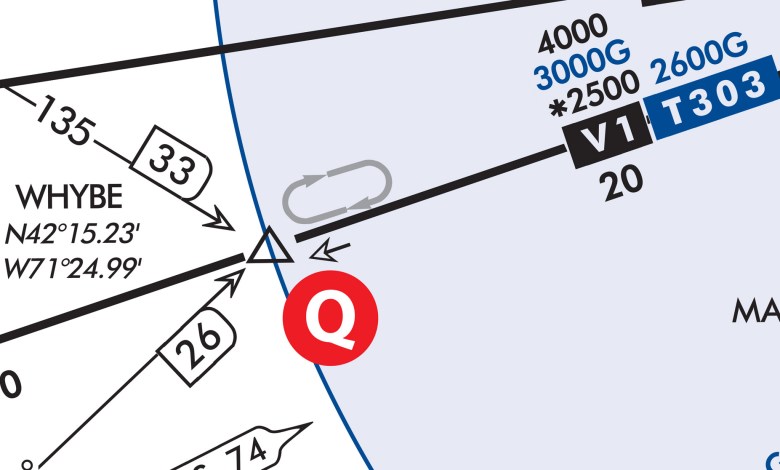
In the not-too-distant past, routes were so simple, werent they? It seemed like all you had to know was the difference between low-altitude Victor airways, and high-altitude Jet routes. These VOR-based routes shaded in black on enroute charts were joined by blue-shaded RNAV-based routes over a decade ago. Low altitude T-routes, high altitude Q-routes, and low altitude helicopter TK-routes have become quite common, and will likely eventually outnumber VOR-based routes. (Where an RNAV route is co-located with a VOR-based route, it is sometimes called a joint route.)

Read More »

Is Route Planning Dead?

A pilot working on his instrument rating asked if it would be better to carefully plan a route or simply file direct. Some of his buddies recommended researching the route and filing via airways, while others suggested just filing direct and being done with it. Of course, for instrument students, the best resource is your instructor, but let us put this question into perspective.We now live in a world where its simple to navigate directly to any point on Earth. As recently as about 25 years ago, there was no question because there was no simple way to navigate distances direct. (VOR/DME-based RNAV filing was certainly a fun exercise though.)

Read More »
Pilot in aircraft
Sign-up for newsletters & special offers!

Get the latest stories & special offers delivered directly to your inbox.

SUBSCRIBE