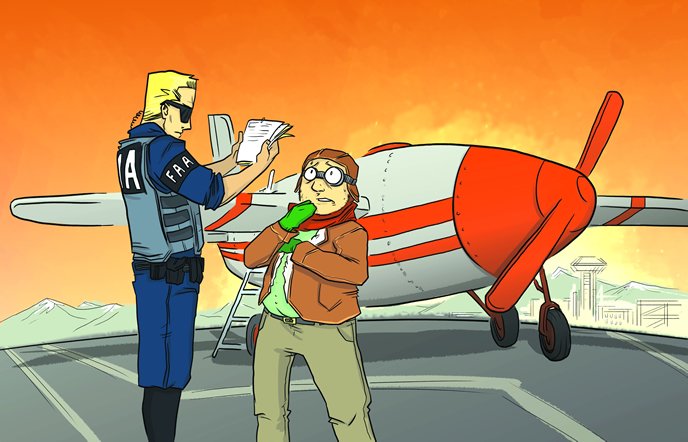
Of the many tens of thousands of FAA employees, most are conscientious hardworking folks who want to do a good job. Nonetheless, the FAA has a reputation for overly aggressive, yet seemingly arbitrary enforcement action by certain individuals in positions of authority over pilots. A quick read through 14 CFR Part 91 offers a near-infinite number of ways a pilot can run afoul of the FAA with little to protect us. About our only defenses are a legal assistance plan like the AOPA offers and the wholly pilot- and safety-focused Aviation Safety Reporting System (ASRS). (If you dont know about ASRS, download, read and study AC-0046E. Now. My meager words here can wait.)
The FAA has a history of aggressive and seemingly arbitrary enforcement actions against pilots, with limited legal protections for those under investigation.
The initial Pilot's Bill of Rights (2012) was enacted to provide pilots with basic due process rights, including timely notification of investigations, information about the allegations, protection against adverse inferences, and access to air traffic data.
The proposed Pilot's Bill of Rights 2 (S.571) seeks to further strengthen pilot protections, most notably by abolishing the third-class medical certificate requirement for most recreational flying and promoting more flexible resolution of FAA cases.
Of the many tens of thousands of FAA employees, most are conscientious hardworking folks who want to do a good job. Nonetheless, the FAA has a reputation for overly aggressive, yet seemingly arbitrary enforcement action by certain individuals in positions of authority over pilots.
CREATE A FREE ACCOUNT
Sign up to keep reading
Create a free account to continue. Already a member? Sign in below.