













Register

Down By The River

Gemini Sparkle

Key Takeaways:

  • Underestimating the speed of weather deterioration and the operational range of a fast aircraft led the pilot to quickly enter hazardous, unexpected snow conditions far from his home base.
  • The pilot ignored multiple warning signs, including worsening snow and EFB alerts, and made poor decisions by passing up safe landing opportunities due to minor inconveniences.
  • The incident underscores the critical importance of maintaining instrument currency, understanding local weather effects, and correctly interpreting EFB data to manage unexpected meteorological challenges safely.
See a mistake? Contact us.

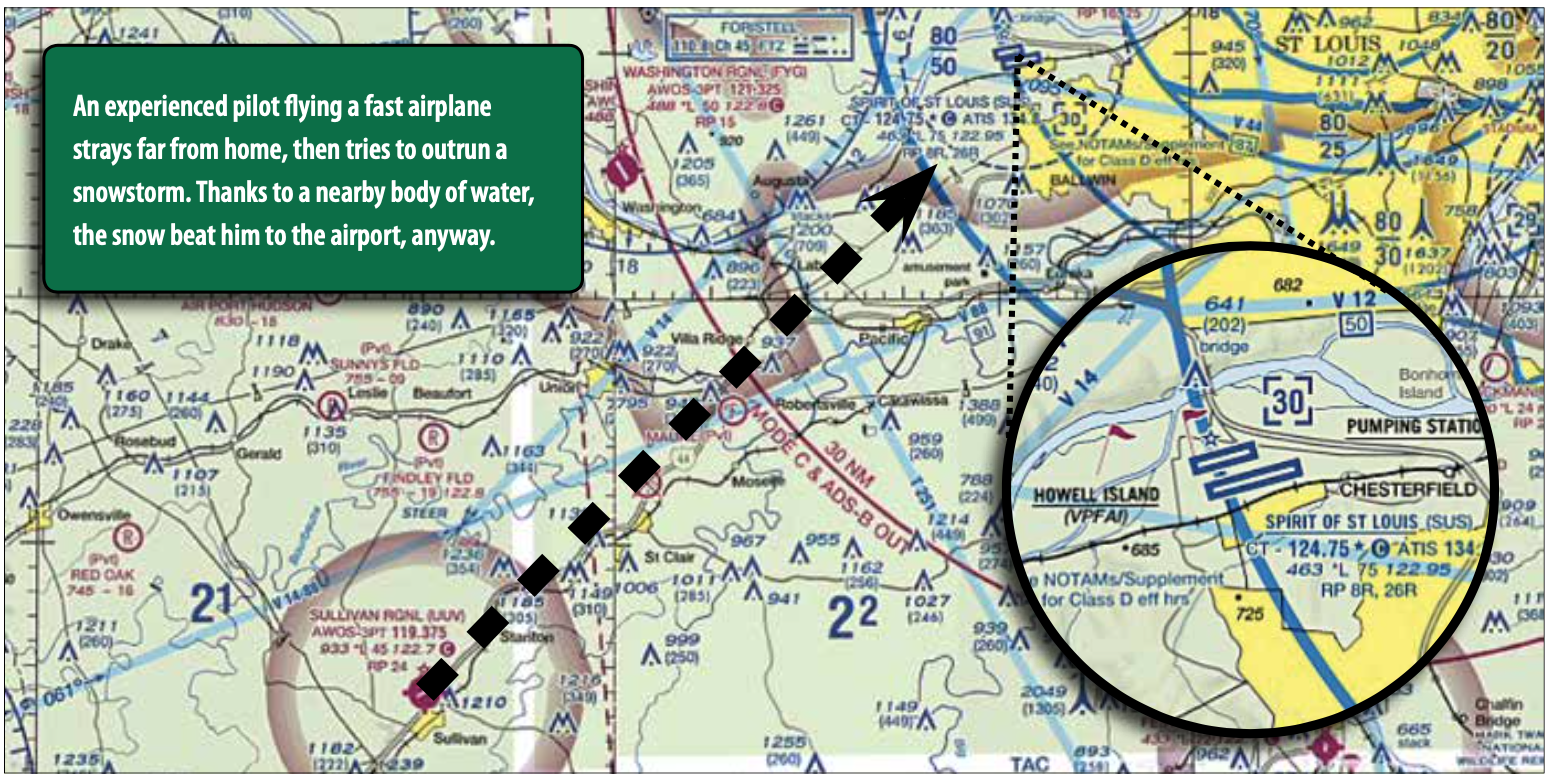
It was a December afternoon at Spirit of St. Louis airport (SUS), about 1400 local time. Sunny, with scattered clouds, cool. The weather forecast had the word “snow” in it, starting about 1800, which would be after dark, but right now it was sunny. Snow? Seemed like a long way off.

Turns out it wasn’t. I incorrectly reasoned that since I would only be doing touch-and-goes at airports located maybe 25-30 miles from SUS, if the weather started to get bad, I could quickly return home and be on the ground before, well, before what happened…happened.


Ready to Sell Your Aircraft?

List your airplane on AircraftForSale.com and reach qualified buyers.

List Your Aircraft
AircraftForSale Logo | FLYING Logo
Pilot in aircraft
Sign-up for newsletters & special offers!

Get the latest stories & special offers delivered directly to your inbox.

SUBSCRIBE