
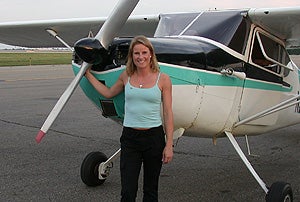


It is no wonder Cessna called the revolutionary tricycle landing gear Land-O-Matic when the company introduced it on the Cessna 172 in 1956. Tricycle equipped airplanes are simply easier to land. But that doesn’t mean that tailwheel aircraft are not worth flying. With the increased nose up angle of the fuselage, the propeller is further from the ground, so taildraggers are much better suited for grass, dirt and gravel runways. They often also have good slow flight characteristics, and can land and take off in short distances. That’s why many small airplanes that land on the ground in Alaska (there are plenty of seaplanes up there) have tailwheels. These types of airplanes are also worth flying because they are so unforgiving that flying them will force you to become a better pilot.
I was pondering the value of tailwheel flight as I was sitting in the back of an airliner the other day. I flinched when the pilot botched what should have been a perfect landing. The approach was stable, the touchdown smooth, but once we were on the ground the airplane started moving left and right as if we’re going down a slope strapped to downhill skis. I could visualize the pilot up front, pushing rudders left and right putting way more force into them than necessary. Some airline pilots could learn a lot from taking a couple of flights in a tailwheel-equipped airplane.