











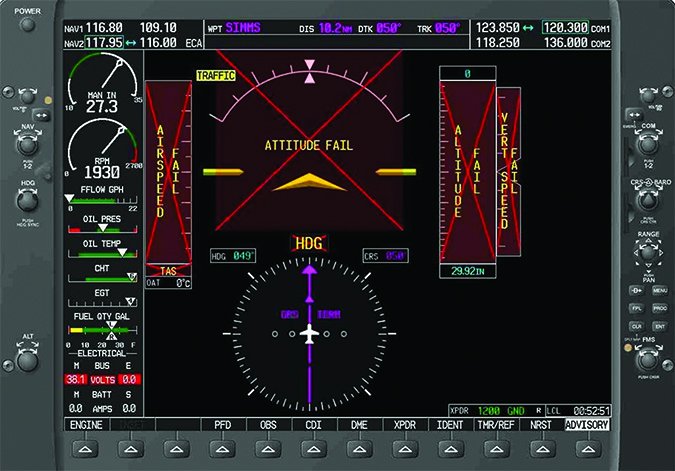


You may think your avionics stack is not a safety-critical system because it often is perfectly legal to fly without it. But once you turn on a radio, it becomes an integral part of your aeronautical decision making. Most of the time, thankfully, everything works. But stuff does happen, and things do break or don’t work as they should. Many failures can be caused by interactions between the various pieces of equipment installed in your panel, or by devices you and your passengers brought aboard.
Radiofrequency interference, RFI, can disrupt navigational signals, causing VOR/LOC needles to inaccurately drift or your GPS to generate an error. Some failures are obvious, but some are insidious and pilots may not have full knowledge of the problem, what’s causing it and, most important, how to fix it, at least temporarily. The only thing worse than no radio is a half a radio, i.e., one that works well enough to dupe you into using it even though its broadcasts are unreadable or its signals unreliable. I recently learned more about these kinds of problems than I ever wanted, thanks to an avionics upgrade.

