Aviation Safety

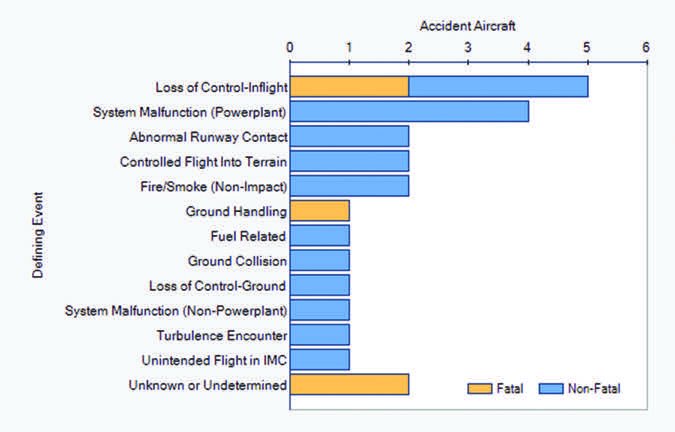
Huerta: 2017 May Be The Safest Year Yet

When FAA Administrator Michael Huerta told attendees at the agencys October 24, 2017, General Aviation Summit it looks like 2017 will end up being our safest year yet, he also took something of a victory lap. As Huertas five-year term nears its end in January, he and his team are taking some credit for what everyone hopes will be a distinct improvement in aviation safety. And since the airline accident rate essentially is zero, that…

Read More »

Say Approach Request

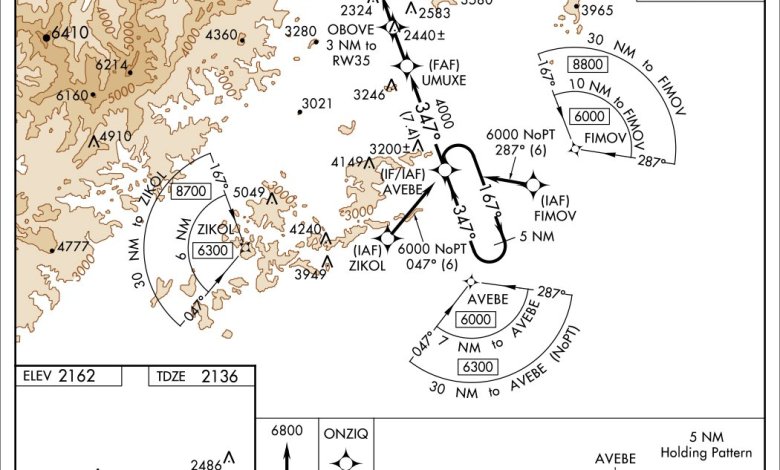
In less than 25 years, the miracle of GPS has transformed how even the smallest and least expensive aircraft navigates. Thanks to the wide area augmentation system (WAAS) in the U.S. and similar technologies deployed in other countries, GPS is more accurate, more reliable and more repeatable than what came before. If you need proof, look no further than comparing the faithful instrument landing system (ILS) to its WAAS GPS-based equivalent, the LPV (localizer performance…

Read More »

When To Switch Tanks?

In the Top Five Tips and Traps article of the November 2017 issue, I disagree slightly with the statement that once an engine is started, take off on the selected tank and only switch to another one while airborne. The premise is a good one, but I have been in the habit of immediately switching tanks after engine start. My theory being that if the engine started fine on one tank, that tank is probably fine.

Read More »

Advancements

In another forum, I recently complained that much of the technological advancement the general aviation industry has seen in my flying career manifests itself only in the instrument panel, not in the airframe or the powerplant. The evidence supporting my complaint is rather abundant, and my own airplane-manufactured in 1966-is something of a poster child.

Read More »

New To The Airplane

Even relatively simple airplanes, those with welded-down landing gear and a fixed-pitch propeller, can have complicated systems. Most of the time, everything works as intended by the manufacturer and all is well. On rare occasions, however, equipment failures occur. When that happens, its easy to say that excellent systems knowledge will save the day. The reality is somewhat different, and pilots often do not have the time or third hand with which to look up systems information in the airplanes documentation.

Read More »

NTSB Reports

August 1, 2017, Phoenix, Ariz.Grumman AA-1B TrainerAt about 1300 Mountain time, the airplane was substantially damaged when it impacted terrain shortly after takeoff. Both the flight instructor and student pilot sustained serious injuries. Visual conditions prevailed.According to witnesses, after the airplane lifted off and was in its initial climb to the west, the wings started to rock back and forth. The airplane began to descend, struck the airport’s western perimeter fence and collided with terrain before coming to rest on a road bordering the airport.

Read More »

Download the Full November 2017 Issue PDF

Im not a native Floridian, so I generally pay great attention to local weather forecasts when they include the words tropical storm or hurricane followed by someones first name. And because Ive never seen such weather-beyond the occasional tropical low that spreads relatively benign wind and rain across the state-Ive decided its a life experience I can do without. So it was in September with Hurricane Irma.

Read More »

FAA Targets Incorrect Surface Landings

On July 7, 2017, an Airbus A320 operating as a scheduled Air Canada passenger flight and conducting a night visual approach to Runway 28R at the San Francisco International Airport overflew other airliners positioned on a taxiway and awaiting takeoff clearance. As we wrote in our October 2017 issue, Runway 28L was closed at the time; its lighting was turned off and a 20.5-ft-wide lighted flashing X (runway closure marker) was at its threshold. The Airbus lined up for its landing on parallel Taxiway C, which had four air carrier airplanes on it awaiting takeoff clearance-a Boeing 787, an Airbus A340, another Boeing 787 and a Boeing 737. Subsequent investigation reveals the Airbus crew advanced its thrust levers for a go-around when the airplane was about 85 feet above the taxiway; the minimum altitude recorded on the FDR once the go-around was initiated was 59 feet agl. The Boeing 787 is 55 feet 10 inches high.

Read More »

Airports In The Dark

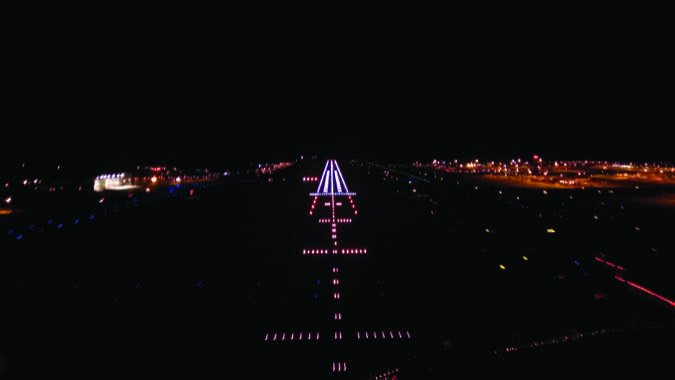
Over the years, Ive flown in and out of a specific airport on numerous occasions, day and night. Its a well-equipped facility, featuring a tower and a local approach control, along with scheduled service, multiple gates, two full-service FBOs and three runways. The nearby attractions are interesting when I want to stop, the food choices are excellent and the airport is a great choice for conducting practice approaches. Theres only one problem: I cant find it at night.

Read More »

IO-520s

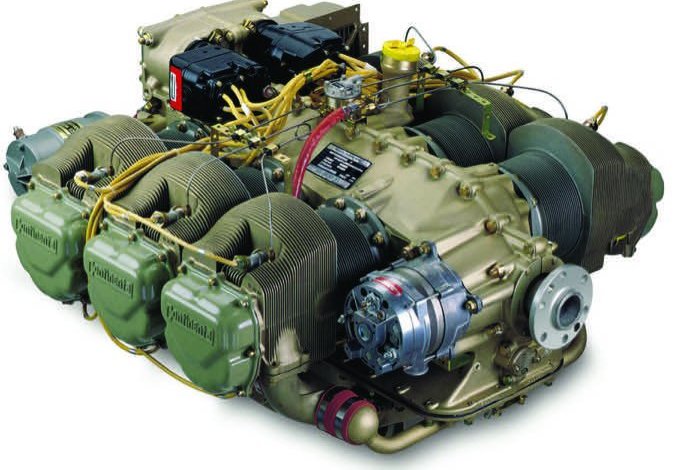
Beechcraft Model F33A Bonanza/IO-520Cracked Magneto Impulse CouplingDuring a 500-hour magneto inspection, the impulse coupling was discovered to have cracks in its flyweight base plate. The cracks were detected using magnetic particle inspection and appear to have originated from the sharp-cornered feature of the base plate that forms the full advance stop. Slick p/n M3050.Part total time: 565.0 hours

Read More »
Pilot in aircraft
Sign-up for newsletters & special offers!

Get the latest stories & special offers delivered directly to your inbox.

SUBSCRIBE