













Register

Say Approach Request

In less than 25 years, the miracle of GPS has transformed how even the smallest and least expensive aircraft navigates. Thanks to the wide area augmentation system (WAAS) in the U.S. and similar technologies deployed in other countries, GPS is more accurate, more reliable and more repeatable than what came before. If you need proof, look no further than comparing the faithful instrument landing system (ILS) to its WAAS GPS-based equivalent, the LPV (localizer performance…

Gemini Sparkle

Key Takeaways:

  • WAAS GPS (LPV) approaches offer precision comparable to ILS (e.g., 200 ft AGL minima) and have become significantly more prevalent, with GPS-based procedures expected to eventually replace many traditional ILS approaches.
  • The choice between ILS and LPV often depends on available aircraft equipment and its operational status; GPS navigators provide flexible minima options (LNAV/VNAV) when full LPV isn't possible or ground-based equipment is degraded, and can substitute for other required navigation aids like ADF or DME.
  • Operational considerations such as challenging terrain, potential icing conditions, and the specific design of missed approach procedures (e.g., climb profiles and altitudes) play a crucial role in determining the most suitable approach for a given flight.
See a mistake? Contact us.

In less than 25 years, the “miracle” of GPS has transformed how even the smallest and least expensive aircraft navigates. Thanks to the wide area augmentation system (WAAS) in the U.S. and similar technologies deployed in other countries, GPS is more accurate, more reliable and more repeatable than what came before. If you need proof, look no further than comparing the faithful instrument landing system (ILS) to its WAAS GPS-based equivalent, the LPV (localizer performance with vertical guidance) approach. In typical configuration, either one can take us down to 200 feet agl and a half-mile visibility. There are other similarities, of course, including how we fly them. But which is better?

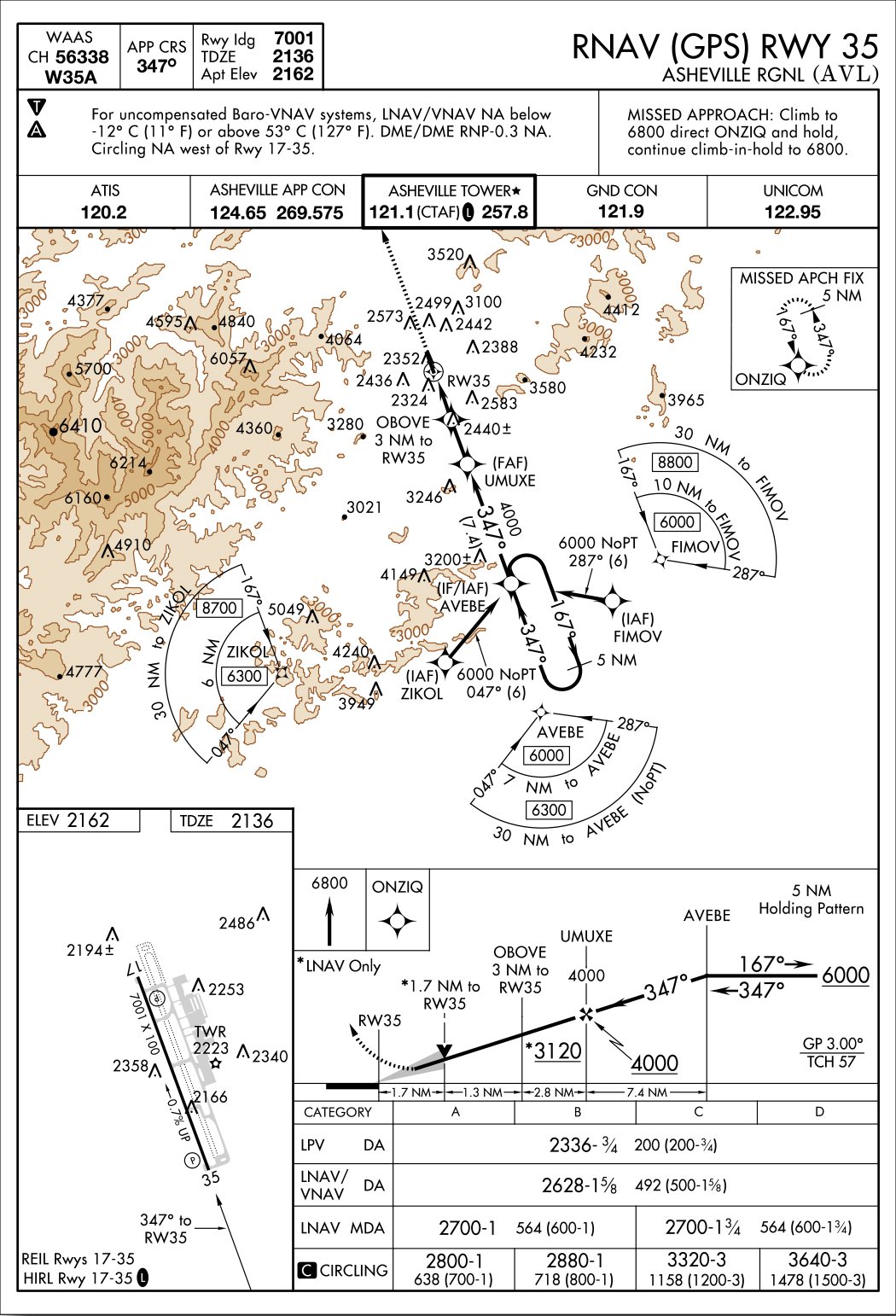
Some pilots are convinced the steadier signal digital GPS provides—when compared to the waviness of the analog ILS localizer and glideslope components—makes WAAS-enhanced approaches a no-brainer, even when there’s an ILS serving the same runway. At the same time, there’s something rather simple and perhaps romantic about an ILS. But when ATC wants to know which approach you’re requesting, do you automatically choose the newfangled GPS procedure or do you go with the old standby, the ILS? Which is best? As with so many things in aviation, it depends. By way of explanation, we’ll take close looks at two procedures serving the same strip of pavement, Runway 35 at the Asheville (N.C.) Regional Airport. Approach plates for both procedures are reproduced on this and the opposite page.


Ready to Sell Your Aircraft?

List your airplane on AircraftForSale.com and reach qualified buyers.

List Your Aircraft
AircraftForSale Logo | FLYING Logo
Pilot in aircraft
Sign-up for newsletters & special offers!

Get the latest stories & special offers delivered directly to your inbox.

SUBSCRIBE