Aviation Safety

Flying The Big Engine

By the time a typical aircraft has a few years under its belt, its been modified from what rolled out of the factory. It might be additional or replacement avionics, a climb prop, vortex generators, auxiliary fuel tanks or a more powerful engine. It might be something relatively simple, like a ski tube or an external power port. For example, both my Beech Debonair and the Aeronca Champ Im a partner in have seen performance-enhancing mods since they were new.

Read More »

IFR Route Changes

Sitting around and talking with pilot friends, you hear nonstop talk about aircraft and equipment. Eventually, someone always brings up ATC in conversation. Pilots argue among themselves more intensely than Socrates debating Plato. One question that new and even veteran pilots bring up is why, when they file an IFR flight plan, that their clearance is usually never as filed but includes a route change of some sort.

Read More »

Laters And Waiters

In the decade-plus since the coming ADS-B mandate became a thing for U.S. aviation, those whose operations will be affected have fallen mainly into two camps: early adopters and those who put it off as long as possible. In this binary world, I freely admit to being something of an early adopter. And despite some cool-and less expensive-new gear on the market, Im happy with my choice to equip with ADS-B in 2016. Its likely those who have taken a wait-and-see attitude also are happy.

Read More »

Rusty Pilots

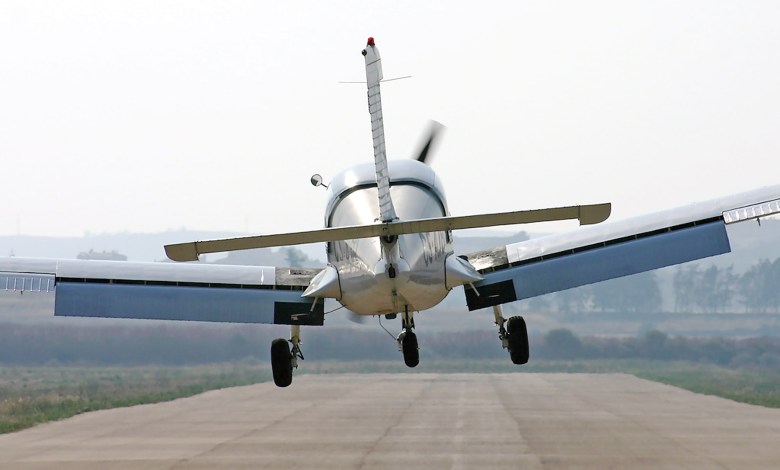
The weight of the engine is only significant in that it is part of the center of gravity of the aircraft, which naturally lies aft of the main gear in a taildragger. Therein lies the problem, especially while landing. That center of gravity, without interference, will travel in a straight line when in motion, according to Newtons First law, which is often called inertia. It is imperative that we keep the airplane (longitudinal axis) tracking and aligned with that same straight line.

Read More »

The Top Five Things To Get Right

Everything we do in life carries risk. An undesired outcome often is influenced by factors we cant control-someone running a stop sign, for example, or a perfectly good engine deciding to fail. But many other risks of a specific activity can be anticipated. Its why we wear a helmet when riding a bicycle, or earn our instrument rating if we regularly fly an airplane beyond the traffic pattern. Serving as a pilot in command offers many ways to increase our risks, but it also brings opportunities to mitigate them.

Read More »

Behind The Curve

The only time Ive performed what I consider to have been a for-real high-altitude takeoff, it went fine. I was at Albuquerque, N.M.s Double Eagle II airport, elevation some 5800 feet. It wasnt the middle of summer, but it was a warm, sunny fall afternoon. I dont recall which runway I used, but it offered more than enough length for my Debonair, which carried only me, some gear and full fuel. As Id been trained, I leaned the engine before the takeoff and let the airplane fly itself off the runway. I handled it gently until gaining enough airspeed to establish a proper climb and I had some altitude.

Read More »

NTSB Reports

After a low pass over the field, the pilot returned to land. On final approach, he was blinded by [the] sun and the tailwheel hit vines growing near the airstrip, causing the airplane to stall. The left wing, left main landing gear and propeller were damaged during the hard landing. According to the NTSB, [b]ecause the pilot did not hold a current pilot certificate, nor did he meet the medical certification requirements, he was not legally authorized to act as pilot-in-command of the airplane at the time of the accident.

Read More »

Five Reasons Not To Fly A Coupled Approach

And like every other technology, autopilots have their limitations. For one, they have to be set up correctly-along with the navigation equipment-to reliably follow a heading and descend along a glidepath. Details like when to take over from the autopilot, how you might handle an equipment failure-if you notice it-and even whether to let Otto fly the missed approach or do it yourself need to be worked out ahead of time. Thats the short version of why we might want to consider hand-flying the approach. Lets expand on them.

Read More »

Power And Pitch

If youre like me, youve been watching the ongoing saga of Boeing and its 737 MAX. The gist of it for our purposes is that the new MAX versions of the 737 are powered by larger-diameter engines than the type was originally designed to accommodate. Since the 1980s-when Boeing switched from the types original low-bypass Pratt & Whitney JT8D engines to the CFM International CFM56-the reduced ground clearance when mounting high-bypass powerplants featuring improved fuel economy has required flattening the bottom of the cowlings. It was cheaper and easier than redesigning the landing gear, which is too short to accommodate the larger engines.

Read More »

Diesel Additive Again Contaminates Jet Fuel

After noting that five incidents of aircraft uncommanded roll events with the ATLAS activated have been reported to EASA and the FAA, the U.S. agency on May 24 issued an airworthiness directive (AD) grounding Cessna CitationJet 525, 525A and 525B models equipped with Tamarack active load alleviation system (ATLAS) winglets. The action is related to an EASA AD and is mandatory continuing airworthiness information (MCAI) issued by the aviation authority of another country to identify and correct an unsafe condition on an aviation product.

Read More »
Pilot in aircraft
Sign-up for newsletters & special offers!

Get the latest stories & special offers delivered directly to your inbox.

SUBSCRIBE