Aviation Safety

Busting the Bravo

It was a good day for flying, and I had agreed to fly a fellow pilot/neighbor and his wife an hour or so away so he could conduct some personal business. The destination airport was a non-towered facility southwest of and outside a nearby piece of Class B airspace. Our flight down was uneventful and […]

Read More »

Strut Stuff

American General AA-5A Cheetah Debonded Nose Landing Gear Strut The nose landing gear strut debonded at the nose fork bearing spindle. Spindle and strut are bonded via a hot-bond agent while in an autoclave. Suspect debonding occurred due to unreported hard landings and extreme stress due to improper ground handling. Part total time: 3081.0 hours […]

Read More »

NTSB Reports: August 2020

May 2, 2020, Palmyra, Ill. Yakovlev Yak-52 At about 1600 Central time, the airplane was destroyed when it struck terrain during an impromptu aerobatic maneuver. The solo pilot was fatally injured. Visual conditions prevailed. A pilot-rated witness observed the airplane make a low pass down the runway toward the south at 20-30 feet agl. He […]

Read More »

The Unstretchable Glide

The thing about airborne emergencies is that there are not that many scenarios in which using the radio will help. Sure, getting lost or trying to find better weather come to mind, but most emergencies depend on the pilot or crew to resolve them without external help. Failure of a single-engine airplane’s powerplant is an […]

Read More »

FAA Extends Its Deadline Extensions

Acknowledging that the Covid-19 pandemic shows few signs of abating and that meeting currency requirements and renewing expiring medical certificates poses additional risk of infections, the FAA on June 25 published a revision to its April 30 special federal aviation regulation (SFAR) 118 designed to allow flight operations of many types to continue. As we […]

Read More »

Preflighting Propellers

One way to tell if a pilot is serious about his responsibility to conduct a thorough preflight is if he (and it’s always a he) looks at a propeller, notes that it’s still attached and walks right by it to the other wing’s fuel drains. Even if it’s a relatively simple all-metal, one-piece, fixed-pitch affair, […]

Read More »

Is Vmc Fixed or Variable?

For the most part, flying a multi-engine airplane is just like flying a single. Until an engine fails. When transitioning from a single to a conventional twin, pilots spend most of their training learning to handle engine failures and to eke out what little performance remains. In conventional twins we’re likely to fly, that means […]

Read More »

Striking Behavior

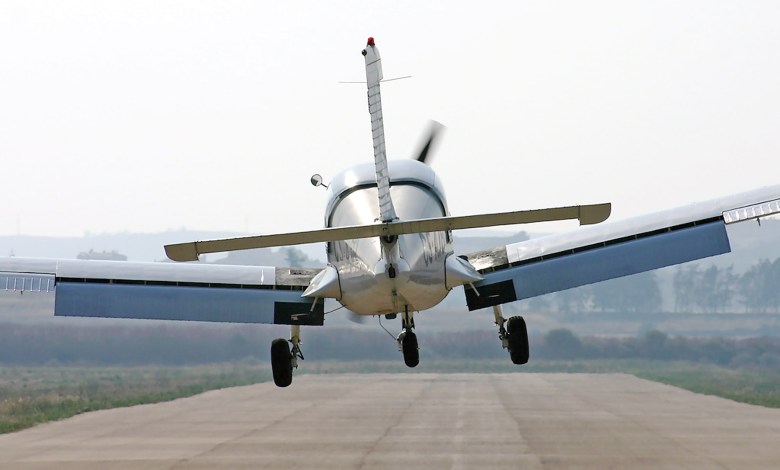
Unless you’re flying a tailwheel-equipped airplane, you really don’t want the tail to touch the ground. It’s potentially dangerous, not to mention embarrassing. And a tail strike—when the tail section of an airplane contacts the surface while taking off or landing—can result in significant damage to the aft section of a tricycle-gear airplane. The good […]

Read More »

Oxygen Questions

In June’s article, “Restoring Performance,” Mike Hart writes, “There is no practical difference between aviator’s breathing oxygen and oxygen used for medicine or welding.” While he does explain the difference now in regards to medical oxygen as compared to the 1950s, I’ve read that industrial oxygen, should not be used due to the impurities in […]

Read More »

Editor’s Log – Complacency

I don’t know about you, but I haven’t been flying as much as I normally do this time of year. The reasons are many, but the bottom line is I’m not getting airborne as much as I used to. I suspect there are more pilots like me who, among other things, might not have anywhere to […]

Read More »
Pilot in aircraft
Sign-up for newsletters & special offers!

Get the latest stories & special offers delivered directly to your inbox.

SUBSCRIBE