













Busting the Bravo

Gemini Sparkle

Key Takeaways:

  • An experienced pilot inadvertently entered Class B airspace without clearance during a return flight due to inadequate planning for a different route than the inbound leg.
  • The air traffic controller was understanding, but the pilot filed an Aviation Safety Reporting System (ASRS) report as a precautionary measure.
  • The incident highlighted the critical importance of thoroughly planning every flight segment, even for experienced pilots, to avoid airspace violations.
See a mistake? Contact us.

It was a good day for flying, and I had agreed to fly a fellow pilot/neighbor and his wife an hour or so away so he could conduct some personal business. The destination airport was a non-towered facility southwest of and outside a nearby piece of Class B airspace. Our flight down was uneventful and my neighbor was able to conclude his business.

The route back to home plate I put into my GPS navigator was to an outlying airport to the east, so I could top off with some cheap gas. As a result, the route was oriented slightly more to the north than had been the inbound flight. 

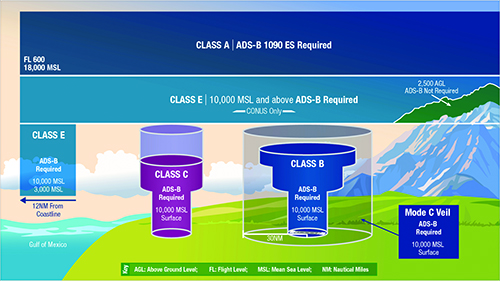
After an uneventful run-up and takeoff, we soon were climbing to cruising altitude and I engaged the autopilot in navigation mode to head toward the gas stop. As I normally do on such flights, I brought up the local Tracon’s frequency and requested flight following. After I was identified, the controller informed me I had entered his Class B airspace without a clearance.

Initially, I protested that he had me confused with another airplane, of which there were several nearby. But he was adamant and, after glancing at my GPS navigator’s moving map, I saw the active leg had indeed sliced a small arc off the Bravo airspace. As luck would have it, our climbout coincided with the Class B’s upper tier. The controller was right; I had busted his Bravo.

I immediately apologized. He was cool with it, though, and basically said not to worry. Later, when he handed me off to the next sector, I thanked him profusely. He wished me a good day and never shared a phone number I should call later. I breathed a sigh of relief. Once back on the ground safe and sound, I filed a report with NASA’s Aviation Safety Reporting System (ASRS), just in case someone changed their mind.

I consider myself a safe, conscientious pilot, and I had never before exposed myself to an airspace violation like that. Looking back, the episode resulted from my failure to adequately plan the return flight, which wasn’t the same as the inbound portion, even though I knew the Class B airspace was nearby. If I had looked more closely at my new route, I would have remained clear of the Bravo.

[su_box title=”Learning Experiences” box_color=”#1345e5″]

Have you encountered a situation or hazardous condition that yielded lessons on how to better manage the risks involved in flying? Do you have an experience to share with Aviation Safety’s readers about an occasion that taught you something significant about ways to conduct safer flight operations? If so, we want to hear about it.

We encourage you to submit a brief (500 words) write-up of your Learning Experience to Aviation Safety for possible publication. Each month, Aviation Safety publishes a collection of similar experiences sent to us by readers. Sharing with others the benefit of your experience and the lessons you learned can be an invaluable aid to other pilots.

You can send your account directly to the editor by e-mailing it to avsafetymag@gmail.com. Put “Learning Experience Submission” in the subject line; add your name and daytime telephone number at the bottom of the e-mail.

Your report will be considered for publication in the Aviation Safety’s readers’ forum, “Learning Experiences,” and may be edited for style and length. Anonymity is guaranteed if you want it. No one but Aviation Safety’s editor is permitted access to the reports. Your name and telephone number are requested only so that the editor can contact you, if necessary.

While we can’t guarantee your submission will get published, we can guarantee that we’ll closely review and consider using it.

All Learning Experience submissions become the property of Aviation Safety and may be republished.

[/su_box]

Ready to Sell Your Aircraft?

List your airplane on AircraftForSale.com and reach qualified buyers.

List Your Aircraft
AircraftForSale Logo | FLYING Logo
Pilot in aircraft
Sign-up for newsletters & special offers!

Get the latest stories & special offers delivered directly to your inbox.

SUBSCRIBE
