Aviation Safety

Emergency Takeoffs

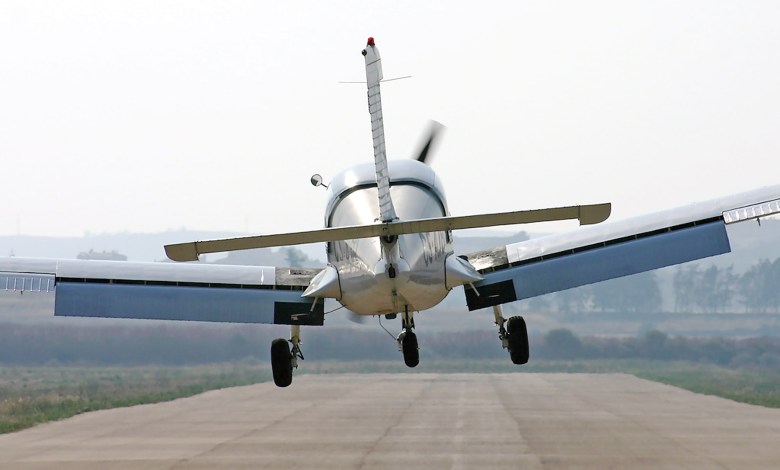
It’s always been curious to me how the lion’s share of GA training emphasizes landings over takeoffs. Smoothly returning to Earth certainly requires some skill and practice, and often serves as a common yardstick for non-pilots of how good the pilot is. But takeoffs also require skill and practice, and come with some different challenges. […]

Read More »

GA: Extend Looming FAA Deadlines Further

As we reported last month, in late April the FAA released special federal aviation regulation (SFAR) 118, “to enable individuals to continue to exercise their airman certificate privileges during the national emergency” associated with the Covid-19 pandemic. “Without this final rule, certain individuals will not be able to continue exercising privileges in support of essential […]

Read More »

Oil Filter Inspection

One of the easiest and most worthwhile tasks pilots can perform to maintain their airplanes is changing an engine’s oil and filter. It’s allowed by the FAA under the preventive maintenance provisions of FAR Part 43 Appendix A, it usually doesn’t require special skills and typically can be accomplished by one person in less than […]

Read More »

Hot Fun In The Summertime

Each season presents its own set of weather challenges. In winter, icing may be more prevalent, along with low ceilings, freezing precipitation and snow-covered runways. Tailwinds can be epic; so can headwinds. Spring and fall can be mirror images, but both often come with good-weather clouds and great visibilities, plus gusty winds and constant change. […]

Read More »

What’s Your Angle?

In our April issue, we explored the theories of generating lift from Bernoulli and Newton, and how neither of them alone fully explains how airfoils work. Bernoulli’s basic understanding of low pressure above an airfoil is correct, but the math is wrong and his assumptions are faulty. He also doesn’t explain inverted flight. Meanwhile, Newton […]

Read More »

Cleared For The MSA?

Not long ago, I was conducting a two-day, six-flight, expanded instrument proficiency check (IPC) with the owner of an A36 Bonanza. We were above an undercast at 7000 feet en route from Wichita, Kans., to Emporia Municipal (EMP), a non-towered airport a short 25 minutes to the northeast. Had the skies been clear, we would […]

Read More »

NTSB Reports

April 1, 2020, Sequin, Texas Beechcraft M35 Bonanza At about 1340 Central time, the airplane sustained substantial damage during a precautionary landing. The pilot and passenger were uninjured. According to the pilot, after the initial power reduction following takeoff, he heard a continuous “loud exhaust popping” noise. The pilot decided to return to the airport […]

Read More »

Rust Removal

Owing to work and family responsibilities, as well as weather and scheduled maintenance, I hadn’t flown my trusty Cessna 210 for a couple of months. When I finally found the time and energy, I picked a nice, clear day to go renew my relationship with the airplane. The flight was restorative and long overdue. It […]

Read More »

Propellers

Cessna 208B Grand Caravan Out Of Balance During cruise, aircraft experienced excessive vibration. Reducing propeller speed cleared the vibration for a short time but as the flight continued, vibration returned. Declared an emergency and landed without incident. External visual inspections failed to note defects. Propeller (p/n 3GFR34C703) was dynamically balanced with 28.4 grams of weight. […]

Read More »

Environmental Risks

Environmental risks, one of the four broad hazard categories the FAA identifies in its PAVE acronym (see the sidebar at the bottom of the opposite page), typically involve weather and terrain, but also can include traffic, navaids, obstacles and even wake turbulence. When several such hazards are present at the same time, they can easily […]

Read More »
Pilot in aircraft
Sign-up for newsletters & special offers!

Get the latest stories & special offers delivered directly to your inbox.

SUBSCRIBE