Aviation Safety

April 4, 2009, Englewood, Fla., Vans RV6A Experimental

At about 1435 Eastern time, the airplane crashed into trees and was substantially damaged. The private pilot/owner was killed and the passenger received serious injuries. Visual conditions prevailed. Witnesses observed the airplane at what they estimated to be about 300 feet AGL perform what appeared to be an aerobatic maneuver and then disappear from sight.

Read More »

April 3, 2009, Northport, Fla., Cirrus Design Corp. SR22

The airplane incurred minor damage during a forced landing at 1850 Eastern time following an engine failure. The airline transport pilot and the two passengers aboard were not injured. Visual conditions prevailed. The airplane was operating IFR as a Part 135 on-demand air taxi flight. About 10 minutes after takeoff, with the airplane level at 6000 feet, the pilot noticed engine oil pressure had dropped. About two minutes later, the engine began to run rough and oil pressure dropped further. Shortly after, the engine quit and the pilot made a forced landing to a road. During the landing rollout, the right wing hit a road sign.

Read More »

April 5, 2009, Mastic Beach, N.Y., Curtiss Wright P-40N

The airplane collided with the Atlantic Ocean at 1325 Eastern time about mile offshore. The commercial pilot was fatally injured. Visual conditions prevailed. The pilots son later said the flights purpose was to practice aerobatics, and he was on a nearby beach with a handheld radio acting as a “safety guide.” All communications with the accident airplane were “normal.”

Read More »

April 5, 2009, Camarillo, Calif., Liberty XL

At about 1130 Pacific time, the airplane lost the majority of its left side cockpit door during cruise flight. Separated door components impacted and dented the airplanes left stabilator, causing minor damage. Visual conditions prevailed. Neither the flight instructor (CFI) nor the private pilot was injured. According to the CFI, the airplane was cruising in level flight at about 4000 feet MSL when the left door “popped open” minutes after the airplane entered an area of moderate clear air turbulence. The door separated from the airplane and the CFI took control of the airplane. Despite full power, level flight could not be maintained. The pilots were able to land without further mishap.

Read More »

Tire Tech

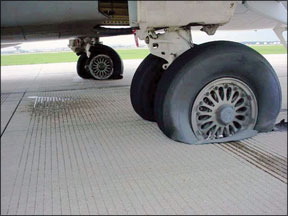
Few pilots pay much attention to their tires. They kick them a couple of times before lighting the fire, or put air in them when they look really low, but thats about it. Thats a little cavalier to us, considering those three (or more, if youre lucky) small, round, rubber donuts not only support the airplanes weight, but also supply the friction necessary to follow the yellow brick road and stop when you get to its end. As part of a project for sister publication Aviation Consumer, we recently had the opportunity to speak with industry executives about tires and tire failures, as well as a myriad of other related topics, while researching why aircraft tires fail. We found that, short of suffering a puncture, paying close attention to the airframe manufacturers recommended inflation pressure is your best bet to prevent tire failures. We also found that, to understand why proper inflation is key, we need to understand how these tires are made. The basic light-plane tire isnt that much different from the ones your grandparents used on their Model T. The current standards for aircraft tires are embodied in the FAAs Technical Standard Order (TSO) C62e, last revised in 2006 (that TSO only addresses tires; inner tube standards are set by the Society of Automotive Engineers). Instead of the radial-ply tires common on modern automobiles, your light airplanes tires likely are a bias-ply design, where the internal fabric cords are sandwiched between two layers of rubber and laid diagonally-at 30- and 60-degree angles to the tires centerline-and extend from bead to bead. Additional plies are laid opposite to each other. This contrasts with a radial-ply tire, a technology widely used by larger, faster aircraft. Its based on plies laid from bead to bead but at right angles to the tread.

Read More »

First Time Out

We like our airplanes panel. Sure-theres a lot of stuff on the market today that simply wasnt available the last time we spent any real money at an avionics shop. But the existing equipment gets us where we want to go with very little drama. En route, George does most of the flying, while we follow along on the big-screen color moving map, then hand-fly whatever approach is appropriate, whether a visual, an ILS or something in between. We have stereo music supplied by an iPod or other device, headsets to match and a portable Garmin GPS navigator with Nexrad weather capability. We also carry a poor mans electronic flight bag-a Windows-based tablet computer-with approach procedures and other materials for pre-flight planning or airborne use. Itd be tough to get lost. It wasnt always that way: When we first bought the airplane, color moving maps were rare and one hadnt been installed in it yet, even though we had a second-generation GPS navigator, and there was no backup artificial horizon, like now. The flip-flop radios are new, also, as is the dual ILS capability. A couple of years after all that stuff was installed, a close friend asked, “How long did it take you to learn using this equipment?” That question took us back to the first flight with the moving map, which mostly included a series of jerky turns in various directions as we told the system different and competing combinations of things we wanted it to do while the autopilot tried to follow along. It was a “heads-down” flight: We paid much more attention to the toys than to the airplane and who/what was nearby. “Were still learning,” was the reply.

Read More »

Safe, Legal Or Proficient?

Up until about 10 years ago, I was a typical private pilot. Id built up about 1000 hours over 30 years of flying and even managed to add an instrument rating after about four false starts and uncounted times passing the written. I flew as much as 150 hours a year and as little as 10 years between flights. But I kept the passion, the interest, and continued vowing that someday Id actually fly as much as I wanted. Does this story sound familiar? It probably describes a great number of us. Stuff happens. Finances, work, family and other recreational pursuits-life-all get in the way. Yet, somehow, we find a way to keep flying, if perhaps not as much as we might like and certainly not as much as we should. This can create some interesting currency challenges. Consider an all-too-common scenario. A typical instrument-rated private pilot mentioned above finds theres a thin layer between cruise altitude and the destination. Our bold pilot tries to recall all his recent instrument operations and concludes that legal currency is, well, past. Continuing a bit further looking for a hole in the layer, he finally concludes there isnt one. The layer began about 50 miles back and fuel projections raise concern about making the additional 100-mile round trip to get under the layer. Now what? Well, in defense of our friend, the forecast didnt call for the overcast, so this isnt a clear lack of planning. Its not uncommon to fly above a layer and find it has disappeared as you near your destination. Of course, the opposite is true as well. Obviously, there was an opportunity to prevent this problem by simply ducking under the layer when it appeared. But, that raises the whole specter of scud-running for 50 miles-a notorious killer of pilots and destroyer of airplanes. None of this helps the present situation, though, of being on top of a solid layer, not being instrument-current and not having enough fuel to comfortably get under it.


Read More »

Performance Planning

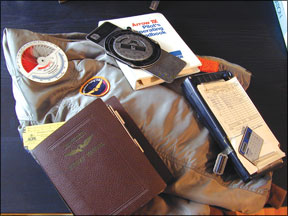
Every year, takeoffs and landings account for over half the pilot-related accidents, according to the AOPA Air Safety Foundation. While poor technique accounts for some of them, many accidents could have been prevented if the pilot had consulted available documentation to determine the airplanes performance. But before any of that can happen, we need to ensure we know how to evaluate current conditions. To assist students in determining performance data, I have them use a takeoff and landing data card on which is all the information a pilot should need to evaluate takeoff and landing performance. The card is also useful for instructors who are in the position of flying multiple aircraft models or versions. As an example, in a recent period I flew four different versions of Cessna 172s (one with the airspeed in MPH, another in knots, a third with the 180-HP STC and still different V-speeds; the fourth was a Thielert diesel conversion-you get the idea). Keeping the numbers straight for these and other different airplanes can be a challenge without a reference card. Lets look at whats important to evaluate, and how to go about assembling your own data card. The first item is to evaluate weight and balance, factors directly affecting any aircrafts performance. That an overloaded airplanes performance will decrease as its fuel consumption increases should not be news to any pilot. Too, one loaded outside its center of gravity (CG) range will handle differently, and will likely be dangerously unstable. In either case, the plane will not perform in a predictable manner and the pilot is in uncharted, dangerous waters. Step one is to get the aircrafts empty weight and moment. This sounds simple and straightforward, but I have seen incorrect aircraft weight sheets in logbooks. When I went back and checked the maintenance logs, I found a difference of over 200 pounds. Airplanes of the same make and model do not weigh the same. Dont forget basic empty weight consists of the aircraft, unusable fuel and oil.

Read More »

Getting Higher

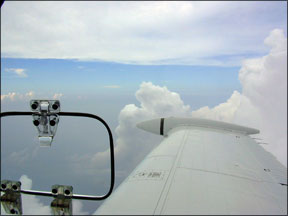
I doubt I ever flew higher than 4500 feet while earning my private pilot certificate. I remember 9000 feet as “high-altitude flying” when working on my instrument rating. Perhaps it was a function of the training environment, or a result of piloting low-powered airplanes. I think more likely it is expediency and the “little-plane” mindset that causes most training to be done at lower altitudes. Which begs the question: Are there any advantages to flying higher up, and if so, how should pilots plan for higher-altitude flight? Many pilots have found theres a “sweet spot” for cross-country flying, above the general crowd but below the realm of turbine airplanes, where traffic is scarce but the advantages are many. This is flight in the mid-teens (of altitude), which Ill define as anything from about 12,000 feet to 17,500 feet MSL. Here youll avoid much of weathers worst, enjoy almost-certain direct-to routing and overfly the majority of “ATC required” airspace. What are the advantages of flying between 12,000 and 18,000 feet? Probably the biggest one is youll usually find clear air. I find the mid-teens to be especially advantageous when flying in areas of forecast thunderstorms-usually youll be above the general haziness and murk abounding on the muggy days that promote thunderstorm development, allowing you to see and maneuver around the big build-ups from dozens of miles away. Mid-teen flying often puts you in less turbulent air than the skies down below, and the airs much cooler, improving pilot and passenger comfort. Its much less stressful to cruise in VMC, so mid-teen flying can reduce fatigue and workload. Be careful, however, to avoid overflying weather thats outside the certified capability of your airplane, or that youre not equipped or experienced enough to handle if an engine or instrument malfunction forces you to descend from your planned cruising altitude (see the sidebar, “Unplanned Descent,” on page 14).

Read More »
Pilot in aircraft
Sign-up for newsletters & special offers!

Get the latest stories & special offers delivered directly to your inbox.

SUBSCRIBE